
ATD Blog
Creating a Mentoring Culture: A Conceptual Tool
Mon Jun 24 2013
Content
When it comes to mentoring, everyone is interested in sustainability. The days of flash-in-the-pan mentoring efforts are long gone—it is a luxury few can afford in today’s workplace.
When it comes to mentoring, everyone is interested in sustainability. The days of flash-in-the-pan mentoring efforts are long gone—it is a luxury few can afford in today’s workplace.
Content
Help is on the way!
Help is on the way!
Content
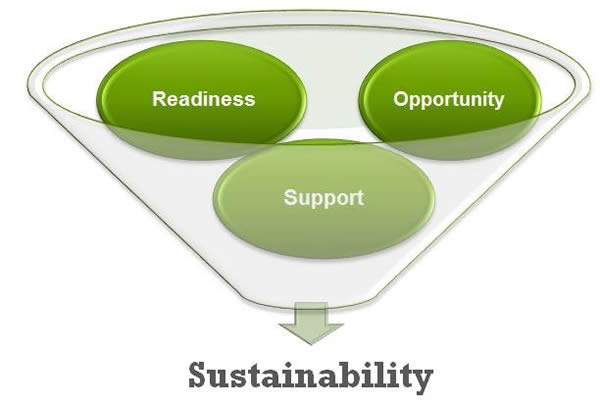
The ROS model provides a prescriptive and diagnostic tool for creating a sustainable mentoring culture and evaluating your organizational mentoring efforts. You can use the model in two ways: proactively, to analyze if you have the right elements in place as you plan, and reactively, to determine what elements you may be missing. The model consists of three components: readiness, opportunity, and support.
The ROS model provides a prescriptive and diagnostic tool for creating a sustainable mentoring culture and evaluating your organizational mentoring efforts. You can use the model in two ways: proactively, to analyze if you have the right elements in place as you plan, and reactively, to determine what elements you may be missing. The model consists of three components: readiness, opportunity, and support.
Content
Readiness
Readiness
Content
Readiness is an iterative process. It needs to be created at every level of the organization, including with the individuals administering mentoring programs, leaders supporting organizational mentoring, and participants (mentor and mentee) and people supporting the participants (HR manager and supervisor). Readiness also must continually be recreated. Mentoring programs morph over time, and new players come on board. Unless you recreate readiness, past participants might assume that the program they signed onto is the same as it always was. Unless you recreate readiness, your leaders may be promoting an old program.
Readiness is an iterative process. It needs to be created at every level of the organization, including with the individuals administering mentoring programs, leaders supporting organizational mentoring, and participants (mentor and mentee) and people supporting the participants (HR manager and supervisor). Readiness also must continually be recreated. Mentoring programs morph over time, and new players come on board. Unless you recreate readiness, past participants might assume that the program they signed onto is the same as it always was. Unless you recreate readiness, your leaders may be promoting an old program.
Content
Strategies for creating readiness
Strategies for creating readiness
Content
Make the business case. People put more energy behind an effort when it aligns with the strategic direction of the organization.
Make the business case. People put more energy behind an effort when it aligns with the strategic direction of the organization.
Content
Get everyone on the same page. This helps manage expectations.
Get everyone on the same page. This helps manage expectations.
Content
Define goals and success factors. You won’t be able to measure your success without them.
Define goals and success factors. You won’t be able to measure your success without them.
Content
Articulate roles and responsibilities. You can’t hold people accountable unless they know for what they are accountable.
Articulate roles and responsibilities. You can’t hold people accountable unless they know for what they are accountable.
Content
Establish criteria for selecting your participants. Arm twisting doesn’t work. Qualify your participants.
Establish criteria for selecting your participants. Arm twisting doesn’t work. Qualify your participants.
Content
Questions to ask: What are our strengths and weaknesses as an organization when it comes to creating organizational readiness? What have we have learned from our experiences that will help us create readiness for mentoring in our organization?
Questions to ask: What are our strengths and weaknesses as an organization when it comes to creating organizational readiness? What have we have learned from our experiences that will help us create readiness for mentoring in our organization?
Content
Opportunity
Opportunity
Content
A mentoring culture generates multiple learning opportunities, settings, and processes to foster cognitive affective and behavioral learning. A mentoring culture honors all of the mentoring that goes on within an organization. It doesn’t treat one type as less important than another. It honors the uniqueness of the learner and offers opportunities to enhance the competence and capabilities of those engaged in mentoring, whether they are experienced at it or not.
A mentoring culture generates multiple learning opportunities, settings, and processes to foster cognitive affective and behavioral learning. A mentoring culture honors all of the mentoring that goes on within an organization. It doesn’t treat one type as less important than another. It honors the uniqueness of the learner and offers opportunities to enhance the competence and capabilities of those engaged in mentoring, whether they are experienced at it or not.
Content
Questions to ask: What specific opportunities currently exist that we can build on to engage people in learning through mentoring? What opportunities can we create that will serve the varied and diverse mentoring needs of the people in our organization?
Questions to ask: What specific opportunities currently exist that we can build on to engage people in learning through mentoring? What opportunities can we create that will serve the varied and diverse mentoring needs of the people in our organization?
Content
Strategies for providing mentoring opportunities
Strategies for providing mentoring opportunities
Content
Plan “with” rather than “for.” It promotes ownership.
Plan “with” rather than “for.” It promotes ownership.
Content
Create opportunities to promote formal and informal mentoring. Help people become more competent and comfortable in both types of mentoring.
Create opportunities to promote formal and informal mentoring. Help people become more competent and comfortable in both types of mentoring.
Content
Identify venues for sharing best practices. It raises the bar for everyone.
Identify venues for sharing best practices. It raises the bar for everyone.
Content
Offer a continuum of mentoring education and training opportunities. There are many teachable moments in a mentoring relationship. Identify them and capitalize on them.
Offer a continuum of mentoring education and training opportunities. There are many teachable moments in a mentoring relationship. Identify them and capitalize on them.
Content
Think outside of the box. New types of mentoring are popping up all of the time: group mentoring, cohort mentoring, reverse mentoring, peer mentoring, mosaic mentoring, and flash mentoring, for example.
Think outside of the box. New types of mentoring are popping up all of the time: group mentoring, cohort mentoring, reverse mentoring, peer mentoring, mosaic mentoring, and flash mentoring, for example.
Content
Support
Support
Content
Organizational mentoring requires multiple supports—some are visible to the eye, others are not. Many of the same functions that are necessary to support mentoring relationships–listening, structure, positive expectations, advocating, and making the learning relationship special–are important when it comes to managing the mentoring process. The goal, in the final analysis, is to provide the right kind of support that helps everyone and the organization become successful at mentoring.
Organizational mentoring requires multiple supports—some are visible to the eye, others are not. Many of the same functions that are necessary to support mentoring relationships–listening, structure, positive expectations, advocating, and making the learning relationship special–are important when it comes to managing the mentoring process. The goal, in the final analysis, is to provide the right kind of support that helps everyone and the organization become successful at mentoring.
Content
Questions to ask: What structures and practices currently exist that function particularly well to support learning? What additional structures and practices do we need to put in place to support mentoring?
Questions to ask: What structures and practices currently exist that function particularly well to support learning? What additional structures and practices do we need to put in place to support mentoring?
Content
Strategies for building support
Strategies for building support
Content
Monitor progress and measure results. When you get your results, broadcast the news. There is nothing like having data to validate your efforts.
Monitor progress and measure results. When you get your results, broadcast the news. There is nothing like having data to validate your efforts.
Content
Recognize, reward, and celebrate mentoring. This creates a demand for mentoring and increases its value and visibility.
Recognize, reward, and celebrate mentoring. This creates a demand for mentoring and increases its value and visibility.
Content
Strengthen your infrastructure. Make sure that you provide financial, technological, and human resources, as well as time and leadership to support mentoring.
Strengthen your infrastructure. Make sure that you provide financial, technological, and human resources, as well as time and leadership to support mentoring.
Content
Provide a continuum of support. Think strategically about the kind of support you need to provide, when to provide it, and to whom.
Provide a continuum of support. Think strategically about the kind of support you need to provide, when to provide it, and to whom.
Content
Provide development opportunities for your mentoring coaches and coordinators. They need to grow and develop, too.
Provide development opportunities for your mentoring coaches and coordinators. They need to grow and develop, too.
Content
For more on mentoring, check out the free ASTD webcast, Mentoring: What You Need to Know and Do , this Wednesday, June 26 at 1 p.m. ET.
For more on mentoring, check out the free ASTD webcast, Mentoring: What You Need to Know and Do, this Wednesday, June 26 at 1 p.m. ET.