
ATD Blog
What the Brain Sees
Thu Sep 06 2012

Content
Eighty percent of arguments over graphics start from the incorrect assumption that what my brain sees is the same as what your brain sees. (Okay, I made that percentage up… As far as I know there's been no definitive study on the root causes of arguments over graphics.)
Eighty percent of arguments over graphics start from the incorrect assumption that what my brain sees is the same as what your brain sees. (Okay, I made that percentage up… As far as I know there's been no definitive study on the root causes of arguments over graphics.)
Content
What we do know is that certain conditioning, physical, and genetic attributes account for variations in visual perception. Recognizing even common phenomena such as change blindness, color blindness, and blind spots can fortify our design decisions to help learners “get” key instruction.
What we do know is that certain conditioning, physical, and genetic attributes account for variations in visual perception. Recognizing even common phenomena such as change blindness, color blindness, and blind spots can fortify our design decisions to help learners “get” key instruction.
Content
Change Blindness
Change Blindness
Content
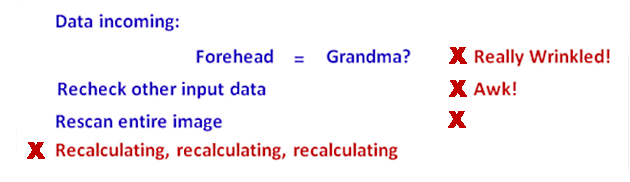
Some current theories about how we process visual data explain why all of us are often slow to register changes in familiar objects. According to the theories of Jeff Hawkins and others (see Resources), as soon as identification of an image is authenticated, the brain moves on to other visual stimuli. If they could talk, the brain's visual processing munchkins might sound like this:
Some current theories about how we process visual data explain why all of us are often slow to register changes in familiar objects. According to the theories of Jeff Hawkins and others (see Resources), as soon as identification of an image is authenticated, the brain moves on to other visual stimuli. If they could talk, the brain's visual processing munchkins might sound like this:
Content
CCL\_brain\_munchkins-01.png
CCL\_brain\_munchkins-01.png
Content
So what does all this mean for our design of instructional graphics? We need to:
So what does all this mean for our design of instructional graphics? We need to:
Content
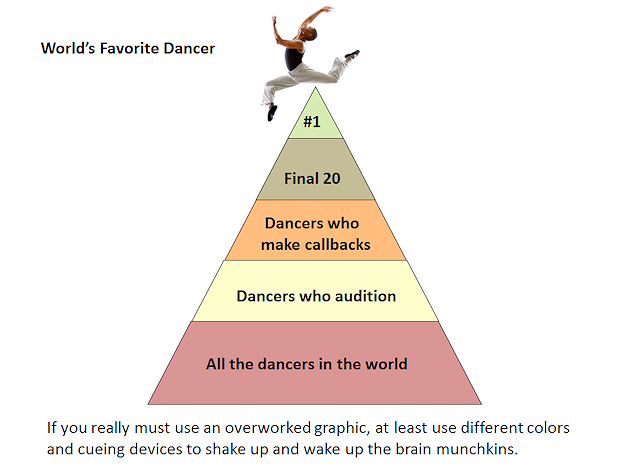
Avoid overused graphics to communicate new information. If you have to use them, be sure to use new graphic elements (color, contrast, or formatting) to highlight what’s new.
Avoid overused graphics to communicate new information. If you have to use them, be sure to use new graphic elements (color, contrast, or formatting) to highlight what’s new.
Content
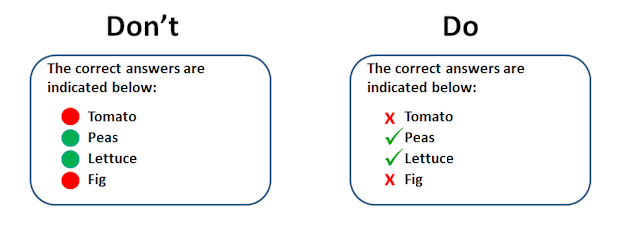
Be wary of arguments over colors. Remember rods and cones. Your counterparts may simply not be equipped to see everything you do or you them. Make sure your instructional graphics do not rely solely on color for discrimination tasks.
Be wary of arguments over colors. Remember rods and cones. Your counterparts may simply not be equipped to see everything you do or you them. Make sure your instructional graphics do not rely solely on color for discrimination tasks.
Content
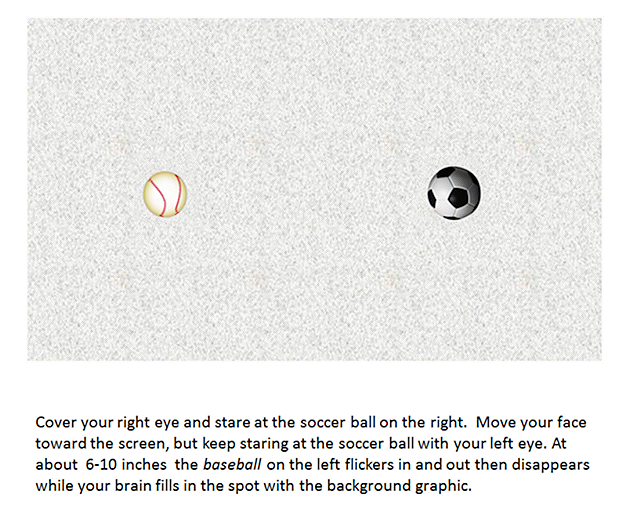
Provide ample time to view complicated graphics, especially in videos. Give your learners time and cues to absorb all the details in the visual field. Otherwise, with too brief an exposure, the brain will fill in that blind spot to the best of its ability… but what it fills the spot in with may not be your intention.
Provide ample time to view complicated graphics, especially in videos. Give your learners time and cues to absorb all the details in the visual field. Otherwise, with too brief an exposure, the brain will fill in that blind spot to the best of its ability… but what it fills the spot in with may not be your intention.
Content
In sum, we need to avoid relying on our own perceptions of colors, shapes, and arrangements as the only measures of what our learners will see. Design instructional graphics that succeed regardless of visual perception differences in change blindness, color discrimination, or blind spots.
In sum, we need to avoid relying on our own perceptions of colors, shapes, and arrangements as the only measures of what our learners will see. Design instructional graphics that succeed regardless of visual perception differences in change blindness, color discrimination, or blind spots.
Content
Resources
Resources
Content
For more on change blindness:
For more on change blindness:
Content
Hawkins, Jeff (2004). On Intelligence . New York: St. Martin’s Griffin, p. 129
Hawkins, Jeff (2004). On Intelligence. New York: St. Martin’s Griffin, p. 129
Content
For more on the tetrachromats:
For more on the tetrachromats:
Content
Greenwood, Veronique. June 18, 2012. “Humans with Super-Human Vision,” Discover Magazine . http://discovermagazine.com/2012/jul-aug/06-humans-with-super-human-vision/
Greenwood, Veronique. June 18, 2012. “Humans with Super-Human Vision,” Discover Magazine. http://discovermagazine.com/2012/jul-aug/06-humans-with-super-human-vision/
Content
http://news.softpedia.com/news/Half-of-the-Women-See-More-Colors-than-the-Rest-of-the-People-58351.shtml
Content
For more on the blind spot:
For more on the blind spot:
Content
Eagleman, David, 2011. Incognito: The Secret Lives of the Brain , New York: Pantheon, p. 24
Eagleman, David, 2011. Incognito: The Secret Lives of the Brain, New York: Pantheon, p. 24
Content
Gregory, Richard and Cavanagh, Patrick (2011). “The Blind Spot” Scholarpedia, 6(10):9618. http://www.scholarpedia.org/article/The\_Blind\_Spot
Gregory, Richard and Cavanagh, Patrick (2011). “The Blind Spot” Scholarpedia, 6(10):9618. http://www.scholarpedia.org/article/The\_Blind\_Spot