
ATD Research: Building a Talent Development Structure Without Borders
About
Content
Talent development (TD) is central to advancing strategic goals, sustaining competitive advantage, and building organizational agility in an increasingly dynamic business environment. Since 2014, there has been a significant increase in literature on talent management and talent development, with annual publications nearly tripling. This surge signals a widespread acknowledgment across industries that effective talent strategies have become a strategic necessity rather than a discretionary effort.
Talent development (TD) is central to advancing strategic goals, sustaining competitive advantage, and building organizational agility in an increasingly dynamic business environment. Since 2014, there has been a significant increase in literature on talent management and talent development, with annual publications nearly tripling. This surge signals a widespread acknowledgment across industries that effective talent strategies have become a strategic necessity rather than a discretionary effort.
Content
As organizations respond to accelerating technological change, global market shifts, and evolving workforce demographics, the emphasis on developing and managing talent has intensified. The expanding body of academic and practitioner-focused work points to a clear consensus—well-executed talent initiatives are key to improving employee engagement, retention, and capability, all of which are critical drivers of long-term organizational performance.
As organizations respond to accelerating technological change, global market shifts, and evolving workforce demographics, the emphasis on developing and managing talent has intensified. The expanding body of academic and practitioner-focused work points to a clear consensus—well-executed talent initiatives are key to improving employee engagement, retention, and capability, all of which are critical drivers of long-term organizational performance.
Content
In 2015, in partnership with Rothwell & Associates, ATD published groundbreaking research that named and defined 39 talent development functions in a broad framework. The original study was intended to be a guide that allowed organizations to rearrange, remove, and add functions to fit their needs.
In 2015, in partnership with Rothwell & Associates, ATD published groundbreaking research that named and defined 39 talent development functions in a broad framework. The original study was intended to be a guide that allowed organizations to rearrange, remove, and add functions to fit their needs.
Content
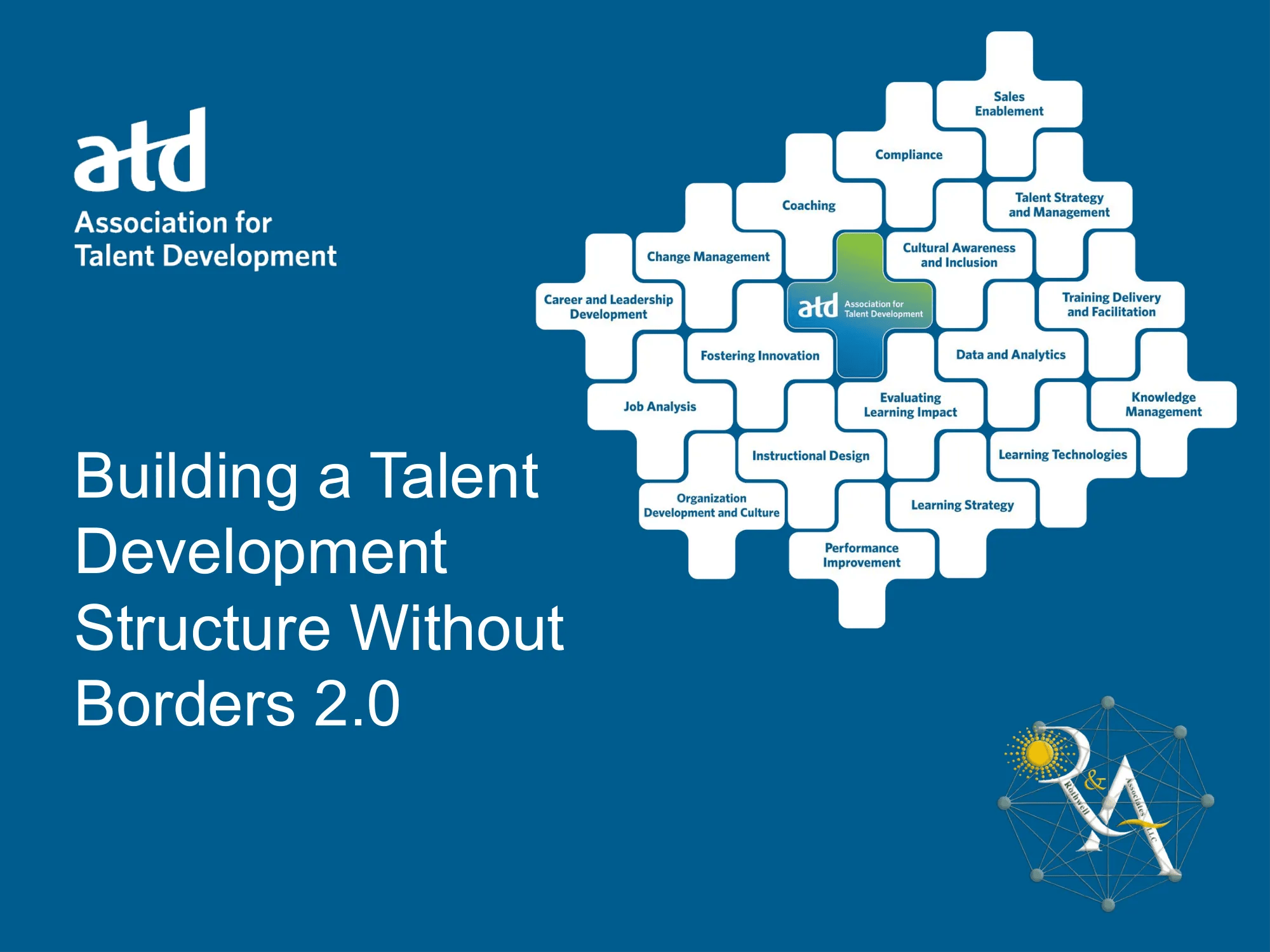
In this updated study, ATD, along with Rothwell & Associates, determined that some of the original 39 talent development functions were no longer relevant to the field—and were able to parse the 39 to 18 functions. This should provide talent development departments with a lens to focus on effectively developing employees, while keeping the larger organizational strategy and goals in mind. The purpose of this research is to describe the functions of talent development that organizations can use to build their own individualized talent development structures.
In this updated study, ATD, along with Rothwell & Associates, determined that some of the original 39 talent development functions were no longer relevant to the field—and were able to parse the 39 to 18 functions. This should provide talent development departments with a lens to focus on effectively developing employees, while keeping the larger organizational strategy and goals in mind. The purpose of this research is to describe the functions of talent development that organizations can use to build their own individualized talent development structures.

Building a Talent Development Structure without Borders Report