
ATD Blog
6 Critical Practices for First-Level Leaders
Tue Apr 02 2019

Content
For the first time, a vast majority of people are reporting to first-level leaders, who now assume unprecedented influence and responsibility. At FranklinCovey, we define “first-level leaders” as people leading a team of individual contributors who themselves have no direct reports. They’re the connection between top-level strategy and executing on the frontline.
For the first time, a vast majority of people are reporting to first-level leaders, who now assume unprecedented influence and responsibility. At FranklinCovey, we define “first-level leaders” as people leading a team of individual contributors who themselves have no direct reports. They’re the connection between top-level strategy and executing on the frontline.
Content
We recently surveyed hundreds of first-level leaders , and found that only 19 percent felt very prepared for leadership when they were first offered the position. In fact, research in the Harvard Business Review shows that on average, managers take on a leadership role at age 30, but they don’t receive leadership training until they’re age 42. Despite the unquestionable importance of their role, they’re often the least experienced, least trained, and least invested in—but they’re the new performance linchpin in your organization.
We recently surveyed hundreds of first-level leaders, and found that only 19 percent felt very prepared for leadership when they were first offered the position. In fact, research in the Harvard Business Review shows that on average, managers take on a leadership role at age 30, but they don’t receive leadership training until they’re age 42. Despite the unquestionable importance of their role, they’re often the least experienced, least trained, and least invested in—but they’re the new performance linchpin in your organization.
Content
My FranklinCovey colleagues and I have spent decades researching leadership, and we’ve shrunk the bewildering world of first-level leadership down to the six highest-leverage practices.
My FranklinCovey colleagues and I have spent decades researching leadership, and we’ve shrunk the bewildering world of first-level leadership down to the six highest-leverage practices.
Practice 1: Develop a Leader’s Mindset
Content
Many of the paradigms that got you promoted won’t make you successful as a leader. For example:
Many of the paradigms that got you promoted won’t make you successful as a leader. For example:
Content
My own work comes first.
My own work comes first.
Content
I’m responsible for my own performance and outcomes.
I’m responsible for my own performance and outcomes.
Content
My validation comes from recognition of my own performance.
My validation comes from recognition of my own performance.
Content
When you become a leader, your definition of results needs to change. You need to see them differently. As an individual contributor, your results were the work you did. But as a first-level leader, your job is not to get results on your own, but with and through others.
When you become a leader, your definition of results needs to change. You need to see them differently. As an individual contributor, your results were the work you did. But as a first-level leader, your job is not to get results on your own, but with and through others.
Content
You’re still responsible for hitting your personal benchmarks, but they take a back seat to ensuring that your direct reports hit their benchmarks, while they grow, learn, and even become leaders themselves. In other words: your people are your results.
You’re still responsible for hitting your personal benchmarks, but they take a back seat to ensuring that your direct reports hit their benchmarks, while they grow, learn, and even become leaders themselves. In other words: your people are your results.
Practice 2: Hold Regular One-on-One Meetings
Content
Strategically planned and executed one-on-one meetings are arguably the best way to ensure that your team members are choosing a high level of engagement and are connected to you as their leader. Unfortunately, one-on-ones—if we hold them at all—often end up as status updates.
Strategically planned and executed one-on-one meetings are arguably the best way to ensure that your team members are choosing a high level of engagement and are connected to you as their leader. Unfortunately, one-on-ones—if we hold them at all—often end up as status updates.
Content
In contrast, effective leaders use one-on-ones to coach. They create the conditions for engagement by meeting regularly with each team member, drawing out issues through open-ended questions and empathic listening.
In contrast, effective leaders use one-on-ones to coach. They create the conditions for engagement by meeting regularly with each team member, drawing out issues through open-ended questions and empathic listening.
Content
Coaching questions encourage reflection and invite team members to do the majority of the talking and to solve their own problems.
Coaching questions encourage reflection and invite team members to do the majority of the talking and to solve their own problems.
Content
Instead of asking, “Are you liking your job?” ask, “What do you like about your role? What would you like to see change?”
Instead of asking, “Are you liking your job?” ask, “What do you like about your role? What would you like to see change?”
Content
Instead of asking, “Everything going okay?” ask, “What’s the biggest challenge you’re facing right now?
Instead of asking, “Everything going okay?” ask, “What’s the biggest challenge you’re facing right now?
Content
Instead of saying, “Here’s what I’d do . . . ” ask, “How did you approach this situation last time? Why do you think that worked (or not)?”
Instead of saying, “Here’s what I’d do . . . ” ask, “How did you approach this situation last time? Why do you think that worked (or not)?”
Practice 3: Set Up Your Team to Get Results
Content
Great leaders plan goals with their teams rather than for them, and they delegate tasks without the extremes of abandoning or micromanaging. They shift from telling team members what to do, to aligning their work to greater purposes and supporting their efforts.
Great leaders plan goals with their teams rather than for them, and they delegate tasks without the extremes of abandoning or micromanaging. They shift from telling team members what to do, to aligning their work to greater purposes and supporting their efforts.
Content
Define your most important goals—and make sure they align to your own leader’s priorities.
Define your most important goals—and make sure they align to your own leader’s priorities.
Content
Track progress with a simple and easy-to-view scoreboard.
Track progress with a simple and easy-to-view scoreboard.
Content
Hold brief but regular accountability meetings to review the scoreboard as a team.
Hold brief but regular accountability meetings to review the scoreboard as a team.
Content
Delegate so you aren’t shouldering the work alone. Clarify expectations upfront, and allow some breathing room for your team to make mistakes and grow.
Delegate so you aren’t shouldering the work alone. Clarify expectations upfront, and allow some breathing room for your team to make mistakes and grow.
Practice 4: Create a Culture of Feedback
Content
Every leader must summon the courage and the consideration to provide actionable, specific, and sometimes tough feedback to your team. Frankly, you don’t have the right to be a leader if you’re not willing to step out of your comfort zone and provide people with feedback.
Every leader must summon the courage and the consideration to provide actionable, specific, and sometimes tough feedback to your team. Frankly, you don’t have the right to be a leader if you’re not willing to step out of your comfort zone and provide people with feedback.
Content
Learn how to balance courage and consideration when delivering feedback.
Learn how to balance courage and consideration when delivering feedback.
Content
Pay attention to how team members prefer reinforcing, positive feedback. Praise specific behaviors and describe the impact.
Pay attention to how team members prefer reinforcing, positive feedback. Praise specific behaviors and describe the impact.
Content
Deliver redirecting feedback, which acknowledges that a team member can move toward stronger performance with some guidance. Redirecting feedback lets someone know that a behavior, attitude, or result needs to improve—and you believe they can. You deliver redirecting feedback because you’re invested in your team members.
Deliver redirecting feedback, which acknowledges that a team member can move toward stronger performance with some guidance. Redirecting feedback lets someone know that a behavior, attitude, or result needs to improve—and you believe they can. You deliver redirecting feedback because you’re invested in your team members.
Content
Seek feedback about yourself by making it safe for your team members to tell the truth about you.
Seek feedback about yourself by making it safe for your team members to tell the truth about you.
Practice 5: Lead Your Team Through Change
Content
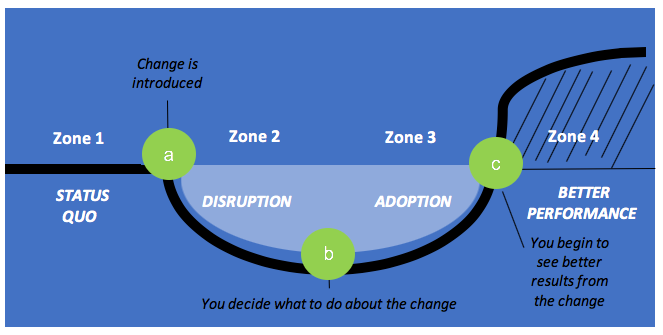
Too often we focus on the mechanics of change—processes, tasks, and training—when we should be addressing the emotional aspect of change. We’ve created a simple and actionable model to help you diagnose your team’s responses to ongoing change, as well as your own, and move everyone through to better performance.
Too often we focus on the mechanics of change—processes, tasks, and training—when we should be addressing the emotional aspect of change. We’ve created a simple and actionable model to help you diagnose your team’s responses to ongoing change, as well as your own, and move everyone through to better performance.
Content
Zone 1: Status Quo . You and your team are doing work as usual before the change occurs, and everyone is relatively comfortable.
Zone 1: Status Quo. You and your team are doing work as usual before the change occurs, and everyone is relatively comfortable.
Content
Zone 2: Disruption . Emotions run high and results suffer as everyone reacts to the news and its implications. It’s a time of great stress and uncertainty.
Zone 2: Disruption. Emotions run high and results suffer as everyone reacts to the news and its implications. It’s a time of great stress and uncertainty.
Content
Zone 3: Adoption . Resistance and stress turn to acceptance, and for others, resignation (sometimes literally). You and your team turn your energies to changing behaviors and learning new ways of doing things.
Zone 3: Adoption. Resistance and stress turn to acceptance, and for others, resignation (sometimes literally). You and your team turn your energies to changing behaviors and learning new ways of doing things.
Content
Zone 4: Better Performance . The change initiative has largely been implemented, and ideally, you and your team are getting better results than before the change.
Zone 4: Better Performance. The change initiative has largely been implemented, and ideally, you and your team are getting better results than before the change.
Practice 6: Manage Your Time and Energy
Content
As you progress on your leadership track, you must decide how you're going to work, balance your life, and renew yourself simultaneously. Establish the patterns now that will serve you long term. Resist the natural temptation to neglect your health, professional development, or personal life.
As you progress on your leadership track, you must decide how you're going to work, balance your life, and renew yourself simultaneously. Establish the patterns now that will serve you long term. Resist the natural temptation to neglect your health, professional development, or personal life.
Content
Manage your energy by optimizing the five drivers of energy: sleep, relax, connect, move, and eat.
Manage your energy by optimizing the five drivers of energy: sleep, relax, connect, move, and eat.
Content
Manage your time by identifying your top priorities and scheduling them before the week begins.
Manage your time by identifying your top priorities and scheduling them before the week begins.
Content
Coach your team to manage their time and energy in the same way.
Coach your team to manage their time and energy in the same way.
Content
Mastering these six practices takes time, but they can guide you to greater job satisfaction, increased compensation, opportunities for advancement, and the chance to affect the lives of other people for the better.
Mastering these six practices takes time, but they can guide you to greater job satisfaction, increased compensation, opportunities for advancement, and the chance to affect the lives of other people for the better.
View Courses Recommended for You