
ATD Blog
Achieving Change
Content
TD leaders must often provide support and expertise for organizational change efforts. Here's some help.
TD leaders must often provide support and expertise for organizational change efforts. Here's some help.
Sat Mar 08 2025

Content
In many cases, organizations tend to address problems only at the surface level, opting for quick solutions without fully exploring the underlying causes. However, having a deep understanding of the root causes of problems can lead to more effective strategies. As talent development professionals, our knowledge of learning, human behavior, team dynamics, and performance improvement practices can help our organizations overcome resistance to change.
In many cases, organizations tend to address problems only at the surface level, opting for quick solutions without fully exploring the underlying causes. However, having a deep understanding of the root causes of problems can lead to more effective strategies. As talent development professionals, our knowledge of learning, human behavior, team dynamics, and performance improvement practices can help our organizations overcome resistance to change.
Content
Social scientists have done extensive research over decades to understand our judgment, decision making, and development as humans. Some of the findings indicate why people resist change include:
Social scientists have done extensive research over decades to understand our judgment, decision making, and development as humans. Some of the findings indicate why people resist change include:
Content
Humans want to belong to a group or community, so we may adopt what those around us believe. This can also apply to teams and peers in the workplace who may be influenced by those around them and follow suit to avoid being seen as outliers.
Humans want to belong to a group or community, so we may adopt what those around us believe. This can also apply to teams and peers in the workplace who may be influenced by those around them and follow suit to avoid being seen as outliers.
Content
We might falsely be confident that we are competent in certain skills or areas (the Dunning-Kruger Effect), which can affect our decision making. In the workplace, some, especially managers, may dismiss ideas and strategies they believe they already know.
We might falsely be confident that we are competent in certain skills or areas (the Dunning-Kruger Effect), which can affect our decision making. In the workplace, some, especially managers, may dismiss ideas and strategies they believe they already know.
Content
At times, we simply cease being curious and get used to our comfort zone. Some employees that are used to their comfort zone might fear change. Change creates some level of discomfort that they resist.
At times, we simply cease being curious and get used to our comfort zone. Some employees that are used to their comfort zone might fear change. Change creates some level of discomfort that they resist.
Content
Confirmation bias (our tendency to expect people’s behavior, ideas, or findings we aligned with what we hold true) can affect our decisions. Confirmation bias in the workplace during change management can lead to flawed decision making, resistance to new ideas, or the perspectives of others.
Confirmation bias (our tendency to expect people’s behavior, ideas, or findings we aligned with what we hold true) can affect our decisions. Confirmation bias in the workplace during change management can lead to flawed decision making, resistance to new ideas, or the perspectives of others.
Content
Our decisions and ideas can also be influenced by social proof — that is, following what other people think is correct or what large numbers show us. While social proof in the workplace can often drive positive behaviors such as collaboration and motivation, its unchecked influence can lead to groupthink, stifled innovation, reinforcement of toxic behavior, and emulating poor leadership styles that leaders exhibit in the workplace.
Our decisions and ideas can also be influenced by social proof—that is, following what other people think is correct or what large numbers show us. While social proof in the workplace can often drive positive behaviors such as collaboration and motivation, its unchecked influence can lead to groupthink, stifled innovation, reinforcement of toxic behavior, and emulating poor leadership styles that leaders exhibit in the workplace.
Content
Our decision making can also be influenced by manipulations of authorities (experts or research, media, or marketers). Research and authority figures are not always infallible. Our awareness of this and encouraging critical thinking can help avoid being conditioned to trust authorities or research and consider alternative viewpoints.
Our decision making can also be influenced by manipulations of authorities (experts or research, media, or marketers). Research and authority figures are not always infallible. Our awareness of this and encouraging critical thinking can help avoid being conditioned to trust authorities or research and consider alternative viewpoints.
Content
So, when faced with individuals or teams who resist change, seek to understand where their discomfort or resistance stems from without being judgmental. Listen and then work together to drive change.
So, when faced with individuals or teams who resist change, seek to understand where their discomfort or resistance stems from without being judgmental. Listen and then work together to drive change.
Think Like a Scientist
Content
In Think Again, Adam Grant posits that being a scientist is a frame of mind. Testing hypotheses has a place in our lives, which informs our daily decisions. But, similar to a scientist, we must pivot our discoveries and consider being wrong a sign for new learning.
In Think Again, Adam Grant posits that being a scientist is a frame of mind. Testing hypotheses has a place in our lives, which informs our daily decisions. But, similar to a scientist, we must pivot our discoveries and consider being wrong a sign for new learning.
Content
The Implementation Science Framework — commonly used in healthcare — can help TD leaders understand how change takes place by gathering evidence and answering questions that emerge from practice on the job. The framework has three key stages: Acceptability, Adoption, and Fidelity.
The Implementation Science Framework—commonly used in healthcare—can help TD leaders understand how change takes place by gathering evidence and answering questions that emerge from practice on the job. The framework has three key stages: Acceptability, Adoption, and Fidelity.
Content
In Acceptability , the L&D team and their managers must inform all stakeholders involved, including the frontline workers and anyone affected by the change, and make sure they agree to test a new idea or change. In other words, this is the stage in which you may face resistance for which using Step 1 can help you navigate that more strategically. Following that, in the Adoption stage, you will adopt the change and test its sustainability. The goal of the Fidelity stage is to make sure the new practice or change is being used as it is supposed to be. While the framework can guide you through adopting a change in practice or culture, in reality, similar to any change, its stages involve some challenges that the L&D team must tackle thoughtfully and systematically.
In Acceptability, the L&D team and their managers must inform all stakeholders involved, including the frontline workers and anyone affected by the change, and make sure they agree to test a new idea or change. In other words, this is the stage in which you may face resistance for which using Step 1 can help you navigate that more strategically. Following that, in the Adoption stage, you will adopt the change and test its sustainability. The goal of the Fidelity stage is to make sure the new practice or change is being used as it is supposed to be. While the framework can guide you through adopting a change in practice or culture, in reality, similar to any change, its stages involve some challenges that the L&D team must tackle thoughtfully and systematically.
Content
For any change to take place, for example, when building a learning organization that entails major cultural and practice changes, resistance is the key challenge. How can learning professionals and leaders navigate it? A combination of Steps 1 (Acceptability) and 2 (Adoption) is the point to begin, by first understanding the underlying reasons for resistance and then modeling the right traits, which is not limited to leadership but also L&D teams.
For any change to take place, for example, when building a learning organization that entails major cultural and practice changes, resistance is the key challenge. How can learning professionals and leaders navigate it? A combination of Steps 1 (Acceptability) and 2 (Adoption) is the point to begin, by first understanding the underlying reasons for resistance and then modeling the right traits, which is not limited to leadership but also L&D teams.
Employ an Iterative Process and Measure
Content
Most people would resist a big change but may be willing to see how incremental changes work to see the impact.
Most people would resist a big change but may be willing to see how incremental changes work to see the impact.
Content
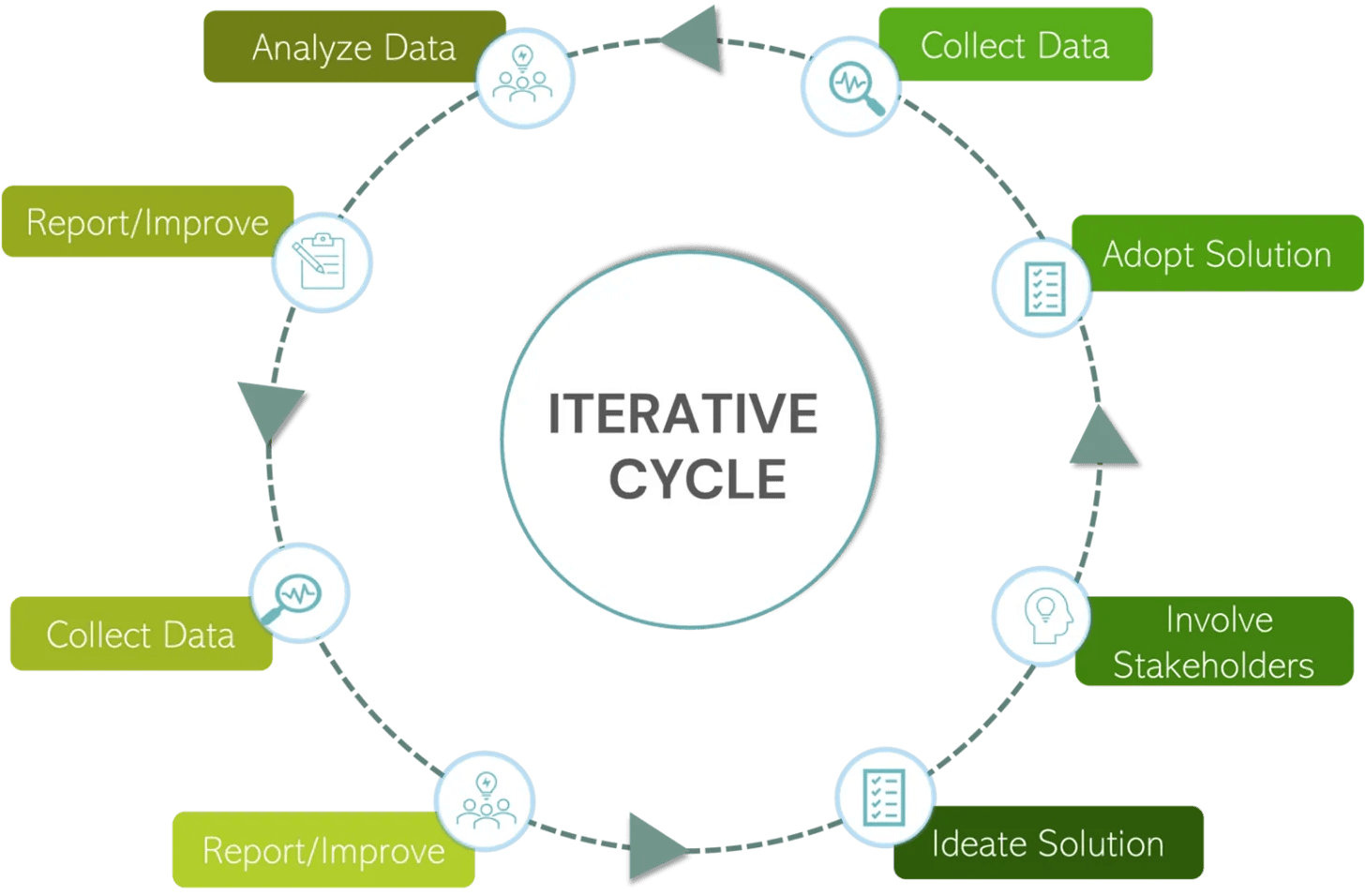
When adopting a new change (in the Adoption stage), you drive the change and collect data through routine practice. This may look like observation and documentation, interviews with stakeholders, or surveys. The key point is closely observing how the change is taking place and reporting it at different intervals.
When adopting a new change (in the Adoption stage), you drive the change and collect data through routine practice. This may look like observation and documentation, interviews with stakeholders, or surveys. The key point is closely observing how the change is taking place and reporting it at different intervals.
Content
The iterative cycle, similar to a formative evaluation, informs you whether things are working as expected and what the improvement areas and next steps are. The report needs to be discussed with all stakeholders involved for transparency. Questions that can be asked to track changes through observation, surveys, or interviews can include:
The iterative cycle, similar to a formative evaluation, informs you whether things are working as expected and what the improvement areas and next steps are. The report needs to be discussed with all stakeholders involved for transparency. Questions that can be asked to track changes through observation, surveys, or interviews can include:
Content
How much learning is being shared, gained, and applied?
How much learning is being shared, gained, and applied?
Content
How effectively are teams working together toward a common goal?
How effectively are teams working together toward a common goal?
Content
How are teams perceiving iterations to assigned tasks or processes?
How are teams perceiving iterations to assigned tasks or processes?
Content
To what extent do team members feel their individual contributions are valued within the team?
To what extent do team members feel their individual contributions are valued within the team?
Content
How well do teams work together to solve problems or overcome challenges?
How well do teams work together to solve problems or overcome challenges?
Content
Do teams feel heard and supported? How inclusive is the decision-making process in our team?
Do teams feel heard and supported? How inclusive is the decision-making process in our team?
Content
Are there enough resources to ensure everyone’s success?
Are there enough resources to ensure everyone’s success?
Content
To what extent do team members offer help to one another when facing challenges?
To what extent do team members offer help to one another when facing challenges?
Content
How comfortable are team members in asking for help or information?
How comfortable are team members in asking for help or information?
Content
How comfortable do team members feel expressing their opinions and ideas during meetings?
How comfortable do team members feel expressing their opinions and ideas during meetings?
Content
Do team members and leaders feel anxious about sharing their mistakes? To what extent do they feel it’s okay to make mistakes and learn from them?
Do team members and leaders feel anxious about sharing their mistakes? To what extent do they feel it’s okay to make mistakes and learn from them?
Content
How open are team leaders and their members to feedback on improving team dynamics or performance?
How open are team leaders and their members to feedback on improving team dynamics or performance?
Content
How transparent is communication regarding project goals, timelines, and updates?
How transparent is communication regarding project goals, timelines, and updates?
Content
Are teams stressed or burnt out? If so, why?
Are teams stressed or burnt out? If so, why?
Content
How often do team members actively seek opportunities to develop new skills or improve existing ones?
How often do team members actively seek opportunities to develop new skills or improve existing ones?
Content
How effectively do team members adapt to changes or new information?
How effectively do team members adapt to changes or new information?
Content
Lastly, in the Fidelity stage, once the change has been fully adopted, you ensure the degree to which the change or intervention takes place exactly as intended. Because change is a process, continue to collect data. You can use the questions listed above to measure the degree of change occurring.
Lastly, in the Fidelity stage, once the change has been fully adopted, you ensure the degree to which the change or intervention takes place exactly as intended. Because change is a process, continue to collect data. You can use the questions listed above to measure the degree of change occurring.
Content
This is also when you should consider factors that may affect the sustainability of the change. One of the key challenges in Adoption and Fidelity is resource management, such as time, expertise, budget, and so forth. With some careful planning at the beginning of the change effort and input from all stakeholders, TD leaders can tackle challenges head-on.
This is also when you should consider factors that may affect the sustainability of the change. One of the key challenges in Adoption and Fidelity is resource management, such as time, expertise, budget, and so forth. With some careful planning at the beginning of the change effort and input from all stakeholders, TD leaders can tackle challenges head-on.
Avoid Relationship Conflicts. Encourage Task Conflicts.
Content
Emotional clashes can affect both individual employees and the organization as a whole. Relationship conflicts can result in reduced productivity, avoiding collaboration, increased turnover, a toxic work environment, and increased stress or burnout. Rather, encourage task conflicts, which are clashes about ideas and opinions. In fact, task conflict can help teams develop more creativity and openness to new ideas. That is how you can gradually learn to develop confident humility and resilience to lose a disagreement without losing your composure. Another way of navigating this is to avoid entering a defend-attack mode to prove your ideas, but ask more questions to get them to think, for giving more reasons will most likely backfire.
Emotional clashes can affect both individual employees and the organization as a whole. Relationship conflicts can result in reduced productivity, avoiding collaboration, increased turnover, a toxic work environment, and increased stress or burnout. Rather, encourage task conflicts, which are clashes about ideas and opinions. In fact, task conflict can help teams develop more creativity and openness to new ideas. That is how you can gradually learn to develop confident humility and resilience to lose a disagreement without losing your composure. Another way of navigating this is to avoid entering a defend-attack mode to prove your ideas, but ask more questions to get them to think, for giving more reasons will most likely backfire.
Content
Further, we should demonstrate openness by acknowledging what we learn from our critics and agreeing with them on certain points so that we establish trust. Most importantly, listen rather than talk more. Seek feedback to reflect on your own approach or ideas for making the change.
Further, we should demonstrate openness by acknowledging what we learn from our critics and agreeing with them on certain points so that we establish trust. Most importantly, listen rather than talk more. Seek feedback to reflect on your own approach or ideas for making the change.
Putting It All Together
Content
Talent development leaders are not only responsible for employees’ learning and professional development. They must often provide support and expertise for organizational change efforts.
Talent development leaders are not only responsible for employees’ learning and professional development. They must often provide support and expertise for organizational change efforts.
Content
Here are some steps you should consider:
Here are some steps you should consider:
Content
Model valued traits by showing confident humility, seeking feedback, demonstrating curiosity, and a willingness to learn. In her research-backed book, Cultures of Growth , Mary Murphy writes that one of the most powerful influences on an employee’s experiences, motivation, and performance is their perception of their supervisor’s mindset which, in turn, shapes their behavior.
Model valued traits by showing confident humility, seeking feedback, demonstrating curiosity, and a willingness to learn. In her research-backed book, Cultures of Growth, Mary Murphy writes that one of the most powerful influences on an employee’s experiences, motivation, and performance is their perception of their supervisor’s mindset which, in turn, shapes their behavior.
Content
Foster flexibility and resilience when faced with challenges or failures. Make iteration, failure, and learning part of work.
Foster flexibility and resilience when faced with challenges or failures. Make iteration, failure, and learning part of work.
Content
Allow diverse perspectives as learning occurs when people become aware of opposing ideas. Brené Brown’s Dare to Lead finds cultivating a culture of belonging, inclusivity, and diverse perspectives one of the characteristics of daring leadership.
Allow diverse perspectives as learning occurs when people become aware of opposing ideas. Brené Brown’s Dare to Lead finds cultivating a culture of belonging, inclusivity, and diverse perspectives one of the characteristics of daring leadership.
Content
Cultivate commitment and shared purpose . According to Brené Brown, explaining the “why” behind strategies and how tasks link to ongoing priorities adds meaning to work and makes it a collective effort towards the organization’s goals.
Cultivate commitment and shared purpose. According to Brené Brown, explaining the “why” behind strategies and how tasks link to ongoing priorities adds meaning to work and makes it a collective effort towards the organization’s goals.
Content
Set realistic timelines to avoid burnout, which is a barrier to creativity and productivity.
Set realistic timelines to avoid burnout, which is a barrier to creativity and productivity.
Content
Practice regular retros or reflections by allowing time for a pause in action and looking back at completed projects or the organization’s process to learn what worked, what were the pains, and what needs to be improved and how. According to David Garvin — a Harvard business professor — when people are too stressed by deadlines, their ability to think analytically and creatively is compromised.
Practice regular retros or reflections by allowing time for a pause in action and looking back at completed projects or the organization’s process to learn what worked, what were the pains, and what needs to be improved and how. According to David Garvin—a Harvard business professor—when people are too stressed by deadlines, their ability to think analytically and creatively is compromised.
Content
Bottom line: Transforming your workplace is a team effort that starts with TD leaders modeling these behaviors so they can trickle down to every department, function, and team. Leaders and managers must show openness to learn, be accountable when we err, and have a willingness to develop confident humility. This sort of curiosity, collaboration, and reflection are pivotal to creating lasting change in the work environment.
Bottom line: Transforming your workplace is a team effort that starts with TD leaders modeling these behaviors so they can trickle down to every department, function, and team. Leaders and managers must show openness to learn, be accountable when we err, and have a willingness to develop confident humility. This sort of curiosity, collaboration, and reflection are pivotal to creating lasting change in the work environment.