
ATD Blog
Addressing the Skills Gap With Micro-Credentialing: Part 2
Thu Jan 09 2020

Brought to you by

Content
You were inspired by reading part one of this article , and you’ve decided to try micro-credentials at your organization. Congratulations! You understand the value in creating micro-credentials, but now you need some guidance to move forward. Part two will help you create a badge framework and promote micro-credentialing at your organization.
You were inspired by reading part one of this article, and you’ve decided to try micro-credentials at your organization. Congratulations! You understand the value in creating micro-credentials, but now you need some guidance to move forward. Part two will help you create a badge framework and promote micro-credentialing at your organization.
What Badges Should Our Organization Create?
Content
Begin by answering some fundamental questions:
Begin by answering some fundamental questions:
Content
What do we value in our employees?
What do we value in our employees?
Content
What skills do you want to recognize now and in the future?
What skills do you want to recognize now and in the future?
Content
Are these badges for fun, compliance, or to measure the development of certain skill sets? (You can have all of these.)
Are these badges for fun, compliance, or to measure the development of certain skill sets? (You can have all of these.)
Content
Will you be tying these badges to competencies? Do you have competencies mapped for each role?
Will you be tying these badges to competencies? Do you have competencies mapped for each role?
Content
Will you need to create different badges for different departments? How will you differentiate among the badges?
Will you need to create different badges for different departments? How will you differentiate among the badges?
Content
Will you share these badges across multiple courses?
Will you share these badges across multiple courses?
Content
Are you using meta-badges that consist of multiple badges (also known as stacked credentials)?
Are you using meta-badges that consist of multiple badges (also known as stacked credentials)?
7 Badging Best Practices
Content
Keeping in mind your answers to the above questions, consider these seven tips:
Keeping in mind your answers to the above questions, consider these seven tips:
Content
1. Tie the badges to the core competencies that your organization needs.
1. Tie the badges to the core competencies that your organization needs.
Content
This is where most organizations miss the mark. Instead of creating meaningful micro-credentials based upon the performance of key skills benchmarked to competency frameworks for specific roles, they create a series of fun badges that don’t get recognized because they aren’t tied to professional development.
This is where most organizations miss the mark. Instead of creating meaningful micro-credentials based upon the performance of key skills benchmarked to competency frameworks for specific roles, they create a series of fun badges that don’t get recognized because they aren’t tied to professional development.
Content
2**. Create badges based on completion, measurement, progress, and experience.**
2**. Create badges based on completion, measurement, progress, and experience.**
Content
If you only issue badges when someone answers on a discussion forum or completes a course, then you’re missing out on the never-ending nature of learning. Your badging system should recognize different levels of mastery. Add indicators like stars to demonstrate progression. Provide lower-level badges based on progress and demonstrated measurement of lower-level (Bloom’s) tasks, such as quiz completion. Graduate your employees to higher levels based on continued experience.
If you only issue badges when someone answers on a discussion forum or completes a course, then you’re missing out on the never-ending nature of learning. Your badging system should recognize different levels of mastery. Add indicators like stars to demonstrate progression. Provide lower-level badges based on progress and demonstrated measurement of lower-level (Bloom’s) tasks, such as quiz completion. Graduate your employees to higher levels based on continued experience.
Content
3. Create badges that represent organizational values as well as technical skills and durable skills like the 4 Cs (collaboration, creativity, communication, and critical thinking).
3. Create badges that represent organizational values as well as technical skills and durable skills like the 4 Cs (collaboration, creativity, communication, and critical thinking).
Content
Think about the skills gaps you’ve identified in your organization and consider ways to reward individuals who are making the effort to improve themselves in key areas. Remember that most of these badges will need to be manually issued, so you’ll want to involve leaders in their administration.
Think about the skills gaps you’ve identified in your organization and consider ways to reward individuals who are making the effort to improve themselves in key areas. Remember that most of these badges will need to be manually issued, so you’ll want to involve leaders in their administration.
Content
4. Don’t give everyone the same badges.
4. Don’t give everyone the same badges.
Content
One thing we all know from our gamification theory is that there’s power in scarcity. Make badges that are specific to departments and roles so that employees can aspire to maximize their talents. Using these credentials as currency in the workplace helps create career pathing and incentivize professional development.
One thing we all know from our gamification theory is that there’s power in scarcity. Make badges that are specific to departments and roles so that employees can aspire to maximize their talents. Using these credentials as currency in the workplace helps create career pathing and incentivize professional development.
Content
5. Create meta-badges that are challenging to earn.
5. Create meta-badges that are challenging to earn.
Content
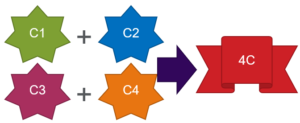
Any skill needed in the workplace is made up of multiple competencies, and your micro-credentials should reflect that. Meta-badging, or stacked credentials, is a more complex way to structure your badging that requires multiple badges to earn a meta-badge. Imagine after you’ve received badges for communication, creativity, critical thinking, and collaboration that you receive a Super 4C badge that demonstrates your interpersonal genius.
Any skill needed in the workplace is made up of multiple competencies, and your micro-credentials should reflect that. Meta-badging, or stacked credentials, is a more complex way to structure your badging that requires multiple badges to earn a meta-badge. Imagine after you’ve received badges for communication, creativity, critical thinking, and collaboration that you receive a Super 4C badge that demonstrates your interpersonal genius.
Content
6. Create a variety of badge types, not just micro-credentials.
6. Create a variety of badge types, not just micro-credentials.
Content
Badges can motivate and incentivize and they don’t all have to be based on competencies. I’m proud of the badge I earned from D2L last year for my contest-winning chili. I’m not going to share this with the world, but it incentivizes me to participate more in company functions when I know there’s a little reward and recognition at the end. If badging isn’t at least a little bit fun, it may not provide all its possible value.
Badges can motivate and incentivize and they don’t all have to be based on competencies. I’m proud of the badge I earned from D2L last year for my contest-winning chili. I’m not going to share this with the world, but it incentivizes me to participate more in company functions when I know there’s a little reward and recognition at the end. If badging isn’t at least a little bit fun, it may not provide all its possible value.
Content
7. Start small, test, and expand.
7. Start small, test, and expand.
Content
Don’t begin with a massive rollout of 100 badges. Start small. You’ll find it easy to set up (you can use a table template in a word processor to help you plan), but it’s easier to test the efficacy of the badge types that resonate with your organization if you have a smaller set and test group.
Don’t begin with a massive rollout of 100 badges. Start small. You’ll find it easy to set up (you can use a table template in a word processor to help you plan), but it’s easier to test the efficacy of the badge types that resonate with your organization if you have a smaller set and test group.
Content
Micro-credentialing has the potential to make lasting change in your organization and empower your employees to take control of their careers. For more information on micro-credentials, IMS Global is the consortium responsible for Open Badges stewardship. Their website is a great resource to help you advance your strategy for credentialing. I’ve also found openbadges.org to be a good primer for starting.
Micro-credentialing has the potential to make lasting change in your organization and empower your employees to take control of their careers. For more information on micro-credentials, IMS Global is the consortium responsible for Open Badges stewardship. Their website is a great resource to help you advance your strategy for credentialing. I’ve also found openbadges.org to be a good primer for starting.
Content
Best of luck with your credentialing strategy, and please share your success and questions.
Best of luck with your credentialing strategy, and please share your success and questions.
Content
Want to find out about badging in action? See how Kaplan Financial gamified accountancy courses with points, badges, and leaderboards, boosting engagement and performance.
Want to find out about badging in action? See how Kaplan Financial gamified accountancy courses with points, badges, and leaderboards, boosting engagement and performance.