
ATD Blog
Are You Left-Brained or Right-Brained? Does it Really Matter?
Fri Aug 23 2013
Content
True or false: Left-brain dominance is marked by a preference for logic and analysis.
True or false: Left-brain dominance is marked by a preference for logic and analysis.
Content
When I started this blog series, I suggested that you might find some of your previously held “truths” proven false by the latest research in brain science. Here is one of those “truths” that I personally thought was fully vetted and took as fact: there are specific left- and right-brain preferences in cognition styles.
When I started this blog series, I suggested that you might find some of your previously held “truths” proven false by the latest research in brain science. Here is one of those “truths” that I personally thought was fully vetted and took as fact: there are specific left- and right-brain preferences in cognition styles.
Content
The theory
The theory
Content
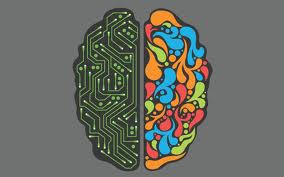
The theory goes something like this: We know that the brain is separated into two hemispheres and the brain tends to localize some activities in one hemisphere or the other. The corpus callosum is a massive, high-speed, Internet-like connection for the brain, allowing the two halves to communicate back and forth. Working with epilepsy patients for whom this connection was severed, Dr. Roger W. Sperry concluded that:
The theory goes something like this: We know that the brain is separated into two hemispheres and the brain tends to localize some activities in one hemisphere or the other. The corpus callosum is a massive, high-speed, Internet-like connection for the brain, allowing the two halves to communicate back and forth. Working with epilepsy patients for whom this connection was severed, Dr. Roger W. Sperry concluded that:
Content
different types of thinking occur in different hemispheres
different types of thinking occur in different hemispheres
Content
the left hemisphere is dedicated to logic and analysis
the left hemisphere is dedicated to logic and analysis
Content
the right hemisphere is dedicated to intuition and creativity
the right hemisphere is dedicated to intuition and creativity
Content
people are not entirely left- or right-brained, but we do have a preference for one type of thinking over another.
people are not entirely left- or right-brained, but we do have a preference for one type of thinking over another.
Content
Sperry won a Nobel Prize for his work on the “split brain” in 1981. (Ironically, Dr. Sperry was awarded a “split prize” with David H. Hubel and Torsten N. Wiesel.) His particular treatment is still used to control severe cases of epilepsy, and it is true that people who have had this surgery demonstrate significant differences in how they process information and sensory input.
Sperry won a Nobel Prize for his work on the “split brain” in 1981. (Ironically, Dr. Sperry was awarded a “split prize” with David H. Hubel and Torsten N. Wiesel.) His particular treatment is still used to control severe cases of epilepsy, and it is true that people who have had this surgery demonstrate significant differences in how they process information and sensory input.
Content
The industry
The industry
Content
As this discovery started gaining popular momentum, an entire cottage industry around left-brain/right-brain thinking emerged. Today you can take a test to discover which side is dominant for you, learn how to recognize left or right dominance in others, perform exercises to develop the other side of your brain, and so on. The only trouble is, the underlying principle behind all these products and services may be completely false.
As this discovery started gaining popular momentum, an entire cottage industry around left-brain/right-brain thinking emerged. Today you can take a test to discover which side is dominant for you, learn how to recognize left or right dominance in others, perform exercises to develop the other side of your brain, and so on. The only trouble is, the underlying principle behind all these products and services may be completely false.
Content
The truth
The truth
Content
As far back as 2004, researchers at the U.S. Army Research Institute for the Behavioral and Social Sciences discovered that mathematically “gifted” boys demonstrated a powerful collaboration between the two hemispheres when performing complex mathematical problems. They concluded that the brains of these boys must be significantly different than the average brain and suggested that perhaps these “math-genius brains” were more adept and signaling back and forth across the corpus callosum.
As far back as 2004, researchers at the U.S. Army Research Institute for the Behavioral and Social Sciences discovered that mathematically “gifted” boys demonstrated a powerful collaboration between the two hemispheres when performing complex mathematical problems. They concluded that the brains of these boys must be significantly different than the average brain and suggested that perhaps these “math-genius brains” were more adept and signaling back and forth across the corpus callosum.
Content
But a group of neuroscientists at the University of Utah have come upon a different explanation for the 2004 results. Working over a two-year period, they scanned the brains of 1,011 people between the ages of seven and 29. After looking at 7,000 regions in each individual brain, they could find absolutely no evidence that there is a preference for left or right brained activity for any individual in the study. So it isn’t just the spectacularly gifted who have this characteristic—it’s all of us.
But a group of neuroscientists at the University of Utah have come upon a different explanation for the 2004 results. Working over a two-year period, they scanned the brains of 1,011 people between the ages of seven and 29. After looking at 7,000 regions in each individual brain, they could find absolutely no evidence that there is a preference for left or right brained activity for any individual in the study. So it isn’t just the spectacularly gifted who have this characteristic—it’s all of us.
Content
Just to be clear, this research is not debunking the proven fact of lateralization of brain function. We know that some functions take place on one side of the brain, and others take place in another. What has now been disproven is the theory that we each have a tendency to prefer one side of our brain over another. You can read the full journal article here .
Just to be clear, this research is not debunking the proven fact of lateralization of brain function. We know that some functions take place on one side of the brain, and others take place in another. What has now been disproven is the theory that we each have a tendency to prefer one side of our brain over another. You can read the full journal article here.
Content
What does this mean for human capital professionals?
What does this mean for human capital professionals?
Content
If you are using tests for brain preference in your hiring or employee development process, you might want to stop—at least until more data is in. You also might need to review the language in some of your training materials to ensure that you aren’t making broad statements about left- and right-brained people.
If you are using tests for brain preference in your hiring or employee development process, you might want to stop—at least until more data is in. You also might need to review the language in some of your training materials to ensure that you aren’t making broad statements about left- and right-brained people.
Content
More importantly, we should all take some time to consider what this new discovery tells us about how we think. The two halves of our brains are in a state of constant collaboration, and they seem to be equally important to the process of thinking. How might this newly discovered preference for balance translate into practice?
More importantly, we should all take some time to consider what this new discovery tells us about how we think. The two halves of our brains are in a state of constant collaboration, and they seem to be equally important to the process of thinking. How might this newly discovered preference for balance translate into practice?
Content
Should we look at how we structure the workplace itself, and determine if the physical environment is overly preferential to one side of our brain over another?
Should we look at how we structure the workplace itself, and determine if the physical environment is overly preferential to one side of our brain over another?
Content
Should we teach people to understand how their brain talks to itself to solve complex problems?
Should we teach people to understand how their brain talks to itself to solve complex problems?
Content
Do we start training managers to look for left/right balance in their hiring efforts?
Do we start training managers to look for left/right balance in their hiring efforts?
Content
I don’t have the answers to these and other questions that this astounding study poses. But I do know one thing: Somebody needs to update Wikipedia.
I don’t have the answers to these and other questions that this astounding study poses. But I do know one thing: Somebody needs to update Wikipedia.
Content
For more on neuroscience applications for human capital, check out the full blog series here .
For more on neuroscience applications for human capital, check out the full blog series here.