
ATD Blog
Business Process Modeling for Your E-Learning Design
Thu Jun 08 2023

Content
In recent years, L&D departments have been leaning on e-learning as a strategic training solution to improve employee skills and knowledge, increase training accessibility and flexibility, reduce training costs, and enhance learning outcomes through interactive multimedia and personalized learning experiences. With this strategy comes great responsibility. L&D departments are accountable for not only delivering high-quality products but also ensuring their consistency.
In recent years, L&D departments have been leaning on e-learning as a strategic training solution to improve employee skills and knowledge, increase training accessibility and flexibility, reduce training costs, and enhance learning outcomes through interactive multimedia and personalized learning experiences. With this strategy comes great responsibility. L&D departments are accountable for not only delivering high-quality products but also ensuring their consistency.
Content
However, when individuals from different locations (including external vendors) work on designing the same module, they may each use their own approach. This might lead to successful completion of the module but can also result in inefficiencies and inconsistencies.
However, when individuals from different locations (including external vendors) work on designing the same module, they may each use their own approach. This might lead to successful completion of the module but can also result in inefficiencies and inconsistencies.
Content
For that reason, defining the essential elements to be used in the process becomes crucial. And one way to do that is by leveraging business process mapping (BPM). It can be a highly effective way to define and streamline an e-learning development approach.
For that reason, defining the essential elements to be used in the process becomes crucial. And one way to do that is by leveraging business process mapping (BPM). It can be a highly effective way to define and streamline an e-learning development approach.
Content
By using BPM, you can achieve greater adaptability, clarity, and quality—ensuring your e-learning solutions meet your organization’s needs. This is particularly true when working on simultaneous projects with multiple team members, including external vendors. When mapping out your processes, you set the game rules so everyone can win!
By using BPM, you can achieve greater adaptability, clarity, and quality—ensuring your e-learning solutions meet your organization’s needs. This is particularly true when working on simultaneous projects with multiple team members, including external vendors. When mapping out your processes, you set the game rules so everyone can win!
Content
What Is BPM?The methodology leverages visual representations to categorize your tasks based on their nature and purpose, facilitating the identification of high-level processes. It also offers a multi-level structure, beginning with a broad-level outline and then drilling down to specific tasks. This supports a more organized and logical understanding of the processes, which promotes better decision-making and more efficient functions. How It WorksOne of the benefits of BPM is that it’s a visual methodology. So, it uses symbols and diagrams to represent the elements and interactions involved in a process. There are four basic elements to consider in every process: inputs, controls, resources, and outputs. Each element responds to a basic question. Applying BPM in E-Learning Design ProcessesWhile discussing structures and processes may seem unconventional when working on creative projects, it can prove highly advantageous if implemented correctly.
What Is BPM?The methodology leverages visual representations to categorize your tasks based on their nature and purpose, facilitating the identification of high-level processes. It also offers a multi-level structure, beginning with a broad-level outline and then drilling down to specific tasks. This supports a more organized and logical understanding of the processes, which promotes better decision-making and more efficient functions. How It WorksOne of the benefits of BPM is that it’s a visual methodology. So, it uses symbols and diagrams to represent the elements and interactions involved in a process. There are four basic elements to consider in every process: inputs, controls, resources, and outputs. Each element responds to a basic question. Applying BPM in E-Learning Design ProcessesWhile discussing structures and processes may seem unconventional when working on creative projects, it can prove highly advantageous if implemented correctly.
Content
Let’s consider Sam’s experience with her team, which used BPM to enhance the efficiency and consistency of its work.
Let’s consider Sam’s experience with her team, which used BPM to enhance the efficiency and consistency of its work.
Content
Sam’s ChallengeSam was recently promoted to the position of L&D director within her organization. The company strategically decided to transition a significant portion of its in-person training workshops to digital learning. This decision increased the number of projects that the L&D department has to manage. So, Sam and her team partnered with external vendors to design and develop high-quality courses.
Sam’s ChallengeSam was recently promoted to the position of L&D director within her organization. The company strategically decided to transition a significant portion of its in-person training workshops to digital learning. This decision increased the number of projects that the L&D department has to manage. So, Sam and her team partnered with external vendors to design and develop high-quality courses.
Content
Although the team was composed of talented individuals, she noticed significant variations in the course designs. Moreover, the designers and developers were uncertain about the precise requirements to adhere to and the criteria for deliverables during the process, which resulted in multiple iterations of the products. Unfortunately, this often had an impact on the project timelines.
Although the team was composed of talented individuals, she noticed significant variations in the course designs. Moreover, the designers and developers were uncertain about the precise requirements to adhere to and the criteria for deliverables during the process, which resulted in multiple iterations of the products. Unfortunately, this often had an impact on the project timelines.
Content
It was clear that for the team and vendors to align, they needed a deeper level of support beyond the current guidelines. Faced with this challenge, Sam decided to use BPM to clarify processes and simplify communication between the team and vendors. To do so, she followed these steps:
It was clear that for the team and vendors to align, they needed a deeper level of support beyond the current guidelines. Faced with this challenge, Sam decided to use BPM to clarify processes and simplify communication between the team and vendors. To do so, she followed these steps:
Content
1. Brainstorm and analyze triggers. Sam initiated a team brainstorming exercise to analyze the triggers that started their process, such as learners’ needs, the budget, and available in-person training content.
1. Brainstorm and analyze triggers. Sam initiated a team brainstorming exercise to analyze the triggers that started their process, such as learners’ needs, the budget, and available in-person training content.
Content
2. Identify tasks. Next, the team identified all tasks required for developing the learning resources, from inception to delivery and post-delivery.
2. Identify tasks. Next, the team identified all tasks required for developing the learning resources, from inception to delivery and post-delivery.
Content
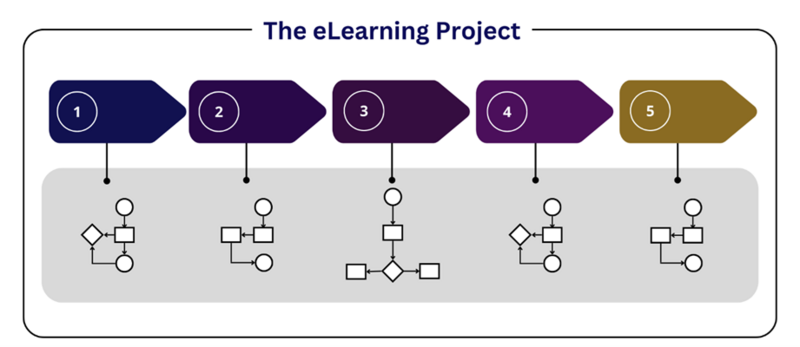
3. Organize tasks. Then, they organized the tasks into five high-level processes, which they referred to as “stages,” as shown in the following image: 4. Define objectives and determine relationships. After obtaining clarity on the processes and their sequence, the team defined the objectives of each stage, considering their importance to the organization. This exercise helped them identify the relationships between stages, realizing that the output of one step often served as the required input for the next.
3. Organize tasks. Then, they organized the tasks into five high-level processes, which they referred to as “stages,” as shown in the following image: 4. Define objectives and determine relationships. After obtaining clarity on the processes and their sequence, the team defined the objectives of each stage, considering their importance to the organization. This exercise helped them identify the relationships between stages, realizing that the output of one step often served as the required input for the next.
Content
5. Graphically represent the relationships among the four components of each process. Using this information, one of the developers guided the team to create a graphic representation of the processes, their steps, and their relationships. For each stage, they determined the necessary inputs, resources, controls, and outputs. The following image shows the components of the Analysis stage: 6. Design procedures. Having established the high-level structure of their processes, the team decided to create groups dedicated to documenting the specific tasks required for each process. Each group listed all the necessary steps and created basic diagrams to outline the structure of their procedures. At this stage, they also defined the roles that interacted within the process and assigned tasks to each role. This resulted in everyone feeling aligned with the processes as they could easily identify their role, whether it was instructional designer, developer, vendor, or project manager. The following image shows the results for the Analysis stage: 7. Create supporting guides and guidelines. The final step was to create the necessary supporting documents for each procedure. The team realized the importance of aligning their previous guides with the new processes and creating additional formats, such as storyboarding templates and accessibility checklists, to streamline their work.
5. Graphically represent the relationships among the four components of each process. Using this information, one of the developers guided the team to create a graphic representation of the processes, their steps, and their relationships. For each stage, they determined the necessary inputs, resources, controls, and outputs. The following image shows the components of the Analysis stage: 6. Design procedures. Having established the high-level structure of their processes, the team decided to create groups dedicated to documenting the specific tasks required for each process. Each group listed all the necessary steps and created basic diagrams to outline the structure of their procedures. At this stage, they also defined the roles that interacted within the process and assigned tasks to each role. This resulted in everyone feeling aligned with the processes as they could easily identify their role, whether it was instructional designer, developer, vendor, or project manager. The following image shows the results for the Analysis stage: 7. Create supporting guides and guidelines. The final step was to create the necessary supporting documents for each procedure. The team realized the importance of aligning their previous guides with the new processes and creating additional formats, such as storyboarding templates and accessibility checklists, to streamline their work.
Content
As a result of their efforts, all team members gained confidence in understanding what needed to be done and how it should be done. This led to an improvement in the quality of designs, particularly in larger projects or those requiring support from external vendors. The process structure brought transparency to the workflow—and peace of mind to Sam and the entire team!
As a result of their efforts, all team members gained confidence in understanding what needed to be done and how it should be done. This led to an improvement in the quality of designs, particularly in larger projects or those requiring support from external vendors. The process structure brought transparency to the workflow—and peace of mind to Sam and the entire team!
Content
Benefits of Applying BPMThe benefits of using business process mapping in an e-learning design process include:
Benefits of Applying BPMThe benefits of using business process mapping in an e-learning design process include:
Content
Clarity . Designing and developing e-learning solutions typically involves frequent revisions and communication among stakeholders. Process mapping improves communication among team members, clients, and experts. Sam’s team clarified the roles and functions required during ideation, design, and development, including after-delivery stages.
Clarity. Designing and developing e-learning solutions typically involves frequent revisions and communication among stakeholders. Process mapping improves communication among team members, clients, and experts. Sam’s team clarified the roles and functions required during ideation, design, and development, including after-delivery stages.
Content
Ease of training . Having a predefined sequence of tasks and the elements you will need when performing them is a great way to establish and share best practices. As Sam discovered, their BPM was an excellent tool for integrating new department members and new vendors into their projects.
Ease of training. Having a predefined sequence of tasks and the elements you will need when performing them is a great way to establish and share best practices. As Sam discovered, their BPM was an excellent tool for integrating new department members and new vendors into their projects.
Content
Scalability . BPM provides scalability to business processes, allowing for collaborative and simultaneous work on common projects. Sam can advise the team (and vendors) on what to do, how to do it, and under what criteria, better preparing them for larger projects.
Scalability. BPM provides scalability to business processes, allowing for collaborative and simultaneous work on common projects. Sam can advise the team (and vendors) on what to do, how to do it, and under what criteria, better preparing them for larger projects.
Content
Efficiency . Process mapping helps identify opportunities for improvement and remove unnecessary tasks, not to mention reducing errors and oversights. Sam’s team removed non-value-adding tasks, resulting in reduced working time.
Efficiency. Process mapping helps identify opportunities for improvement and remove unnecessary tasks, not to mention reducing errors and oversights. Sam’s team removed non-value-adding tasks, resulting in reduced working time.
Content
Customer orientation . When defining your process mapping, you can clarify the path in your general process and the connections between the stages and their tasks. Sam’s team validated other departments’ requirements during the first stage, set the criteria, shared it with their vendors, and customized the process for each project.
Customer orientation. When defining your process mapping, you can clarify the path in your general process and the connections between the stages and their tasks. Sam’s team validated other departments’ requirements during the first stage, set the criteria, shared it with their vendors, and customized the process for each project.
Content
Final Key PointsHere are some key takeaways from the example we considered:
Final Key PointsHere are some key takeaways from the example we considered:
Content
Define your own process . The process should work for and support you and your team.
Define your own process. The process should work for and support you and your team.
Content
Keep it simple . Be effective and efficient when mapping out your processes and defining your procedures and templates—sometimes less is more.
Keep it simple. Be effective and efficient when mapping out your processes and defining your procedures and templates—sometimes less is more.
Content
Add value . When defining your processes, analyze your steps and remove every task that does not add value to you and, more importantly, to your client.
Add value. When defining your processes, analyze your steps and remove every task that does not add value to you and, more importantly, to your client.
Content
Be flexible . Processes will need to be adaptative. Situations and project requirements change and evolve, and so should your processes.
Be flexible. Processes will need to be adaptative. Situations and project requirements change and evolve, and so should your processes.
Content
Do not over-templatize . Define your templates with just enough information, leaving space for creativity. Too much standardization can be overwhelming and may hinder creativity.
Do not over-templatize. Define your templates with just enough information, leaving space for creativity. Too much standardization can be overwhelming and may hinder creativity.
Content
Define your critical creative points . When mapping, determine the parts of your process in which creativity plays an essential role . Doing so will provide a framework to support creativity, rather than stifle it.
Define your critical creative points. When mapping, determine the parts of your process in which creativity plays an essential role. Doing so will provide a framework to support creativity, rather than stifle it.
Content
Mapping out your processes can be simple, but it requires ongoing work to ensure that each process remains efficient and benefits your team and other departments. And ultimately, it will clarify what needs to be done and how to do it for your team and collaborators. Are you ready to give it a try?
Mapping out your processes can be simple, but it requires ongoing work to ensure that each process remains efficient and benefits your team and other departments. And ultimately, it will clarify what needs to be done and how to do it for your team and collaborators. Are you ready to give it a try?