
ATD Blog
E-Learning Estimates Made Easy: Start With a Blueprint
Wed Feb 18 2015

Consider the following scenario: You’ve recently purchased a nice plot of land and are in the process of engaging a builder to construct your new home. During your first meeting with the builder, you let him know that you want a three-story house. He asks for additional details, of course, and learns that you would like the house to be approximately 3,500 square feet, modern design, and offer lots of light. In essence, you want “the most recent trends in modern homes, but not necessarily everything.”
Then, you ask him for an estimated cost to build the home. He asks you to make more decisions on details about the types of materials you would like in the house (tile, hardwood, custom kitchen elements, and so forth). But you insist that he just give you a “ballpark estimate” on what it costs to build a three-story house—because you have not made those decisions yet.
Sound familiar?
Alas, this scenario is reminiscent of the headache that many of us encounter when we try to estimate the expense and time commitment of an e-learning project. If you plan to work with a vendor or contractor, there is the effort of finding the right person to design and develop it. Then, how do you effectively communicate the scope of your project?
Is there something you could do to better prepare for your e-learning initiatives?
Often, organizations will base the scope of their projects on the “run time” of the deliverable. For example, some may use this chart (derived from surveys in 2003 and 2009) as a guide to determine the number of hours it should take to develop one hour of e-learning. Although this information could be used as an extremely generic resource, there are many factors that could dramatically skew even those time estimates.
Fortunately, there are some things you can do to prepare for a more accurate estimate. Let me share my “consultant’s view” to scoping a new project.
To determine the real level of effort, I request some time to conduct an in-depth analysis before quoting design and development hours. Not only does this help me provide a more accurate estimate, it also allows me to partner with the project owner to ensure that we have a “blueprint” for the right training solution. This process includes the following steps:
Interview the Project Owner
I have a form that is chock-full of questions to help draw out the project description and goal, learning objectives, technical evaluation (operating system, screen resolution restrictions, LMS requirements, delivery method), and an existing content evaluation (to identify what source content is currently available as an input or resource for the project). Most importantly, this is when we work together to determine how we will define success. To make the most of this process, include all relevant stakeholders in the meeting.
Create a Content Map
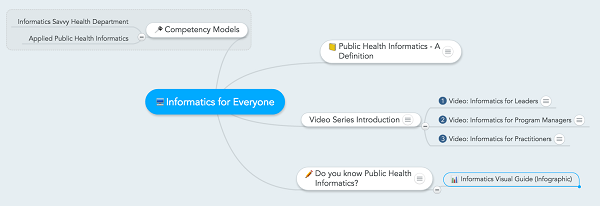
Not long before I began working in mobile learning, I started using mind maps over other visuals, such as an outline document or typical flow chart. Mapping a project helps me clearly visualize the components of the solution (as well as validate those components with the project owner). Here is an example of a content map for a recent project:
Tie-In the Source Content
Once I have mapped the project, I can connect the relevant content to each of the components of the solution by adding notes to each. This content has typically already been identified during the interview(s) with the project owner, so it only needs some paring-down at this point.
Meet with Key Stakeholders
You will want to meet with key stakeholders to validate the map, or blueprint, and present the solution(s). In this step, my goal is to ensure that we have included all relevant information and are in agreement for the type of solution that will best meet their needs.
Bottom Line
Not to go all “ADDIE” in here, but starting each project with a thorough analysis and a project “blueprint” will result in a more accurate estimate of the time necessary to move forward with design and full development of the project solution. And, much like with building a house, having a thoughtful plan helps mitigate the risk of getting deep into the project and not getting the results you had intended.
View Courses Recommended for You