
ATD Blog
Elevator Pitch 2.0: Part 1
Fri Sep 20 2013

Content
When I started my L&D consulting business (in the days before I knew what an “elevator pitch” was), I had a very simple marketing and business plan:
When I started my L&D consulting business (in the days before I knew what an “elevator pitch” was), I had a very simple marketing and business plan:
Content
Go to as many networking functions as possible
Go to as many networking functions as possible
Content
Tell as many people as possible about me, my training skills, and how I help clients. Yes, it was in that order; me, my skills, my solutions.
Tell as many people as possible about me, my training skills, and how I help clients. Yes, it was in that order; me, my skills, my solutions.
Content
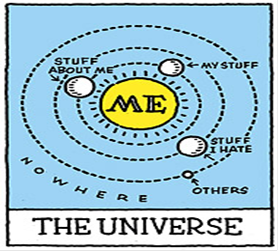
The plan looked like this:
The plan looked like this:
Content
Content
So, whenever I spoke to someone, I stuck to talking about things that excited, intrigued, and challenged ME. I hoped and expected to appeal to the people who cared about the same things. After all, I only wanted to work with people who, like me, appreciated the “right way” to do training and who admired my passion for and expertise in training.
So, whenever I spoke to someone, I stuck to talking about things that excited, intrigued, and challenged ME. I hoped and expected to appeal to the people who cared about the same things. After all, I only wanted to work with people who, like me, appreciated the “right way” to do training and who admired my passion for and expertise in training.
Content
That all sounded good in theory. But in practice, I was hardly swamped by offers of work. In fact, the common reaction I saw was a glazing over of their eyes followed by a “that’s nice” before they excused themselves to talk to someone else.
That all sounded good in theory. But in practice, I was hardly swamped by offers of work. In fact, the common reaction I saw was a glazing over of their eyes followed by a “that’s nice” before they excused themselves to talk to someone else.
Content
I rationalized that their response with the thought that, “They are probably not my customers anyway.” And I persisted.
I rationalized that their response with the thought that, “They are probably not my customers anyway.” And I persisted.
Content
The conversation that saved my business
The conversation that saved my business
Content
I was feeling great as I walked into a high powered networking lunch in a big hotel in the middle of the city. As luck would have it, I sat next to a delightful woman and we had a fantastic conversation that lasted some two hours. I was on top of the world and feeling great.
I was feeling great as I walked into a high powered networking lunch in a big hotel in the middle of the city. As luck would have it, I sat next to a delightful woman and we had a fantastic conversation that lasted some two hours. I was on top of the world and feeling great.
Content
Then, as she stood to leave she said, “I really enjoyed chatting with you today. But before I go I have to say one thing. I still have no idea what you do!”
Then, as she stood to leave she said, “I really enjoyed chatting with you today. But before I go I have to say one thing. I still have no idea what you do!”
Content
Can you believe that? I had spoken with another business person in a business networking lunch for two hours and she had no idea what I did? The irony was that I thought, for a large chunk of that conversation, we were actually talking about what I did!
Can you believe that? I had spoken with another business person in a business networking lunch for two hours and she had no idea what I did? The irony was that I thought, for a large chunk of that conversation, we were actually talking about what I did!
Content
Later that week a fellow networker, after hearing me tell that story, said, “Ah. What you need is an elevator pitch.”
Later that week a fellow networker, after hearing me tell that story, said, “Ah. What you need is an elevator pitch.”
Content
So, I Googled the term elevator pitch. Sadly, all that material didn’t help with any appreciable breakthrough because, quite simply, it was designed for selling and doing business in the 20th century. Even worse, I still see that material and those concepts still being peddled today.
So, I Googled the term elevator pitch. Sadly, all that material didn’t help with any appreciable breakthrough because, quite simply, it was designed for selling and doing business in the 20th century. Even worse, I still see that material and those concepts still being peddled today.
Content
A new plan, a new pitch
A new plan, a new pitch
Content
It’s time to move into the 21st century with the “Elevator Pitch 2.0.” Here’s what I’ve learned from thought leaders skilled in 21st century business.
It’s time to move into the 21st century with the “Elevator Pitch 2.0.” Here’s what I’ve learned from thought leaders skilled in 21st century business.
Content
First, and fundamentally, the most difficult aspect of having a successful elevator pitch that would do my business justice is not that I didn’t know enough about how to be a successful business person; it was that I knew too much about how to be a successful trainer.
First, and fundamentally, the most difficult aspect of having a successful elevator pitch that would do my business justice is not that I didn’t know enough about how to be a successful business person; it was that I knew too much about how to be a successful trainer.
Content
In other words, my training perspective and 25 years of experience got in the way. It led me into the wrong introduction and conversation because the potential customer was not really looking for training answers. I needed to get myself out of the way of connecting with potential clients.
In other words, my training perspective and 25 years of experience got in the way. It led me into the wrong introduction and conversation because the potential customer was not really looking for training answers. I needed to get myself out of the way of connecting with potential clients.
Content
The next thing I needed to do was understand just what I was trying to achieve with my pitch. The best explanation I’ve found for this is from Seth Godin:
The next thing I needed to do was understand just what I was trying to achieve with my pitch. The best explanation I’ve found for this is from Seth Godin:
Content
“No one ever bought anything in an elevator. The purpose of an elevator pitch isn't to close the sale. The goal isn't even to give a short, accurate, Wikipedia-standard description of you or your project. And the idea of using vacuous, vague words to craft a bland mission statement is dumb. No, the purpose of an elevator pitch is to describe a situation or solution so compelling that the person you're with wants to hear more even after the elevator ride is over.”
“No one ever bought anything in an elevator. The purpose of an elevator pitch isn't to close the sale. The goal isn't even to give a short, accurate, Wikipedia-standard description of you or your project. And the idea of using vacuous, vague words to craft a bland mission statement is dumb. No, the purpose of an elevator pitch is to describe a situation or solution so compelling that the person you're with wants to hear more even after the elevator ride is over.”
Content
So my elevator pitch objective is simply “to get their attention” by saying something that is compelling. And it needs to be so compelling that I don’t see glazed-over eyes.
So my elevator pitch objective is simply “to get their attention” by saying something that is compelling. And it needs to be so compelling that I don’t see glazed-over eyes.
Content
The start to being compelling is to convey “ what I can do for you ” rather than “ what I do .” There’s a subtle difference. It’s just those two words, “for you” that make all the difference. And “for you” is from their perspective, not mine.
The start to being compelling is to convey “what I can do for you” rather than “what I do.” There’s a subtle difference. It’s just those two words, “for you” that make all the difference. And “for you” is from their perspective, not mine.
Content
Also, keep in mind that the standard elevator pitch should only refer to issues and challenges that are known and often discussed. Issues like how to earn more money, achieve more sales, or improve teamwork. This adds power to your pitch because it taps into issues and challenges having an impact on the prospect. And it’s an attempt to create real empathy—you get a sense that someone feels the same way you feel about something.
Also, keep in mind that the standard elevator pitch should only refer to issues and challenges that are known and often discussed. Issues like how to earn more money, achieve more sales, or improve teamwork. This adds power to your pitch because it taps into issues and challenges having an impact on the prospect. And it’s an attempt to create real empathy—you get a sense that someone feels the same way you feel about something.
Content
Bottom line: You want your elevator pitch to get a prospect’s attention (in a non-creepy way) that leads to more conversation. You want to respectfully provoke them to nod, smile, or say something that is akin to them thinking-out-loud or maybe even simply asking, “I’m interested to know how do you do that?”
Bottom line: You want your elevator pitch to get a prospect’s attention (in a non-creepy way) that leads to more conversation. You want to respectfully provoke them to nod, smile, or say something that is akin to them thinking-out-loud or maybe even simply asking, “I’m interested to know how do you do that?”
Content
Identify with the needs of the prospect
Identify with the needs of the prospect
Content
My consultancy focuses on “enhancing sales performance.” I do that by helping sales managers (and trainers) master sales coaching. I do that “one bite at a time” with comprehensive reinforcement and sustainment of the sales and the coaching process. That’s what I do, but what I rarely talk about. In this example, the customers are sales managers. I would adjust the pitch if I was speaking with a training manager.
My consultancy focuses on “enhancing sales performance.” I do that by helping sales managers (and trainers) master sales coaching. I do that “one bite at a time” with comprehensive reinforcement and sustainment of the sales and the coaching process. That’s what I do, but what I rarely talk about. In this example, the customers are sales managers. I would adjust the pitch if I was speaking with a training manager.
Content
So when a sales manager asks what I do, I reply with, “Have you ever spent a day coaching a sales representative and feared that, when they are back at work the next day, calling on your customers, nothing changes?”
So when a sales manager asks what I do, I reply with, “Have you ever spent a day coaching a sales representative and feared that, when they are back at work the next day, calling on your customers, nothing changes?”
Content
Typically, their response is a nod, a wry smile (often with an embarrassed look), or a straight-out “Yes.” More importantly, there is never a glazed over look in their eyes.
Typically, their response is a nod, a wry smile (often with an embarrassed look), or a straight-out “Yes.” More importantly, there is never a glazed over look in their eyes.
Content
You can see that the opening to my Elevator Pitch 2.0 is never about being cute or clever about the words I use; it is always about saying something that the prospective client identifies with. They have needs, challenges, insecurities, and fears boiling away just below the surface, and I need to empathetically connect with those.
You can see that the opening to my Elevator Pitch 2.0 is never about being cute or clever about the words I use; it is always about saying something that the prospective client identifies with. They have needs, challenges, insecurities, and fears boiling away just below the surface, and I need to empathetically connect with those.
Content
I’ve discovered that, if they really are a prospective client, that they are looking for support and confidence in doing something that, right then and there, was somehow fearful and/or risky.
I’ve discovered that, if they really are a prospective client, that they are looking for support and confidence in doing something that, right then and there, was somehow fearful and/or risky.
Content
What’s next?
What’s next?
Content
In my next blog post, “Elevator Pitch Part 2,” I’ll describe what to do next—now that you have the attention of your prospective client. I’ll also detail how the Elevator Pitch 2.0 actually helps you to communicate to a range of people from those you meet at a BBQ to a powerful CEO.
In my next blog post, “Elevator Pitch Part 2,” I’ll describe what to do next—now that you have the attention of your prospective client. I’ll also detail how the Elevator Pitch 2.0 actually helps you to communicate to a range of people from those you meet at a BBQ to a powerful CEO.