
ATD Blog
Employee Engagement Low, Especially in Government
Thu Oct 19 2017

Content
Government organizations across the country are under extreme pressure—expected to maintain and improve performance and service delivery, while also doing more with less. One proven response to this challenge is to improve the level of employee engagement. If the people who work in government are engaged and perform well, the government institutions where they work will also perform well.
Government organizations across the country are under extreme pressure—expected to maintain and improve performance and service delivery, while also doing more with less. One proven response to this challenge is to improve the level of employee engagement. If the people who work in government are engaged and perform well, the government institutions where they work will also perform well.
Content
But what is employee engagement? Engaged employees have a heightened connection to their work, their organization, its mission, and their co-workers. Engaged employees find personal meaning—and pride—in what they do. They believe their organizations value them and, in return, they go above the minimum and deliver discretionary effort to deliver performance.
But what is employee engagement? Engaged employees have a heightened connection to their work, their organization, its mission, and their co-workers. Engaged employees find personal meaning—and pride—in what they do. They believe their organizations value them and, in return, they go above the minimum and deliver discretionary effort to deliver performance.
Content
When I speak about employee engagement, I go to great lengths to emphasize that focusing on engagement is not just another touchy-feely HR scheme. Instead, decades of research have revealed a strong link between engagement and organizational performance. In the private sector, engagement drives financial success—measured by results such as revenue, profit, growth, earnings per share, and stock price.
When I speak about employee engagement, I go to great lengths to emphasize that focusing on engagement is not just another touchy-feely HR scheme. Instead, decades of research have revealed a strong link between engagement and organizational performance. In the private sector, engagement drives financial success—measured by results such as revenue, profit, growth, earnings per share, and stock price.
Content
However, as I detail in my book Engaging Government Employees , research on engagement in government shows that engagement drives outcomes that matter to the public sector too—strategic goal achievement, customer service, innovation, employee retention, employee attendance, and workplace safety.
However, as I detail in my book Engaging Government Employees, research on engagement in government shows that engagement drives outcomes that matter to the public sector too—strategic goal achievement, customer service, innovation, employee retention, employee attendance, and workplace safety.
Content
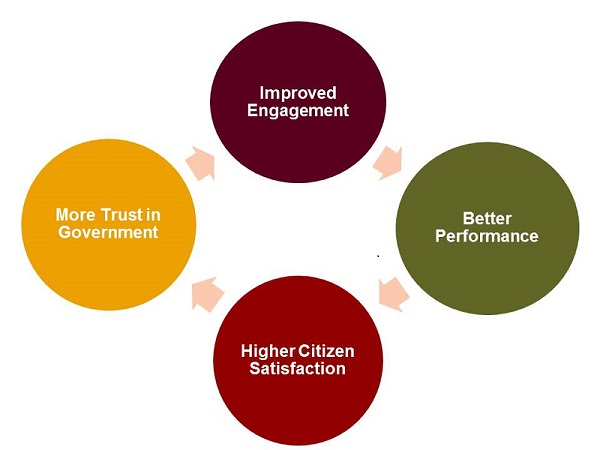
The engagement value chain illustrates why engagement matters in government. Not only does engagement drive performance, but it can also help move the needle of public opinion about government.
The engagement value chain illustrates why engagement matters in government. Not only does engagement drive performance, but it can also help move the needle of public opinion about government.
Engagement Levels Are Low
Content
Engagement is low across both the public and private sectors, and especially in government.
Engagement is low across both the public and private sectors, and especially in government.
Content
A national poll conducted by my organization, the CPS HR Institute for Public Sector Employee Engagement , revealed that 44 percent of private-sector employees are fully engaged compared with 38 percent of public-sector employees. This gap is statistically significant.
A national poll conducted by my organization, the CPS HR Institute for Public Sector Employee Engagement, revealed that 44 percent of private-sector employees are fully engaged compared with 38 percent of public-sector employees. This gap is statistically significant.
Content
By level of government, 44 percent of local government employees are fully engaged, followed by federal (34 percent) and state (29 percent) government employees.
By level of government, 44 percent of local government employees are fully engaged, followed by federal (34 percent) and state (29 percent) government employees.
But What Drives Engagement?
Content
We also designed our research to explore the workplace and cultural factors that have the biggest impact on employee engagement—the key drivers of engagement. We included potential drivers such as leadership, supervision, training and development, the work itself, appreciation, inclusion, and organizational culture.
We also designed our research to explore the workplace and cultural factors that have the biggest impact on employee engagement—the key drivers of engagement. We included potential drivers such as leadership, supervision, training and development, the work itself, appreciation, inclusion, and organizational culture.
Content
We found that the top drivers are the same in both the public and private sectors. They are, in order:
We found that the top drivers are the same in both the public and private sectors. They are, in order:
Content
leadership and managing change
leadership and managing change
Content
training and development
training and development
Content
the work itself
the work itself
Content
employee recognition and value.
employee recognition and value.
Content
Across levels of government, leadership and managing change was the top driver in federal, state, and local government, but an employee’s direct supervisor was the second-highest driver in local government. This factor was not among the top three drivers in federal and state government.
Across levels of government, leadership and managing change was the top driver in federal, state, and local government, but an employee’s direct supervisor was the second-highest driver in local government. This factor was not among the top three drivers in federal and state government.
Lower Scores in Government
Content
Digging deeper, we need to look at the employee scores for these engagement drivers. Specifically, government scored significantly lower than the private sector in the top driver, leadership and managing change. In business, 65 percent of employees were positive about leadership and change management, compared with only 55 percent in government.
Digging deeper, we need to look at the employee scores for these engagement drivers. Specifically, government scored significantly lower than the private sector in the top driver, leadership and managing change. In business, 65 percent of employees were positive about leadership and change management, compared with only 55 percent in government.
Content
For training and development, the private sector was also higher (65 percent to 62 percent positive). The same for “I feel valued” (72 percent in the private sector versus 67 percent in government).
For training and development, the private sector was also higher (65 percent to 62 percent positive). The same for “I feel valued” (72 percent in the private sector versus 67 percent in government).
Content
Only for “my work” are the government scores higher than the private sector scores (an 80 to 78 percent advantage for government).
Only for “my work” are the government scores higher than the private sector scores (an 80 to 78 percent advantage for government).
What Does It All Mean?
Content
From our national poll, we learned that:
From our national poll, we learned that:
Content
Engagement in the public sector is lower than in the private sector.
Engagement in the public sector is lower than in the private sector.
Content
Local government employees are more engaged than their colleagues in federal and state government.
Local government employees are more engaged than their colleagues in federal and state government.
Content
Key drivers of engagement in government are:
Key drivers of engagement in government are:
Content
leadership and managing change
leadership and managing change
Content
the work itself
the work itself
Content
training and development
training and development
Content
employee recognition
employee recognition
Content
supervision (in local government).
supervision (in local government).
Content
These results are important because they extend our knowledge of employee engagement and can help organizations understand the landscape of employee engagement.
These results are important because they extend our knowledge of employee engagement and can help organizations understand the landscape of employee engagement.
Content
However, when I speak about employee engagement, I always emphasize that there isn’t a one-size-fits-all solution to improving employee engagement. There are many ways for a government agency or jurisdiction to improve engagement, but what will work in a specific organization depends on what the employee survey results show.
However, when I speak about employee engagement, I always emphasize that there isn’t a one-size-fits-all solution to improving employee engagement. There are many ways for a government agency or jurisdiction to improve engagement, but what will work in a specific organization depends on what the employee survey results show.
Content
In other words, don’t prescribe a cure unless you know what the condition is.
In other words, don’t prescribe a cure unless you know what the condition is.
Content
We can’t manage what we can’t measure. This applies to employee engagement as well as it applies to other aspects of managing in government.
We can’t manage what we can’t measure. This applies to employee engagement as well as it applies to other aspects of managing in government.
Content
Our detailed poll results, and their implications, are described in our report Driving Employee Engagement: Results from a National Survey , just released by the HR Institute.
Our detailed poll results, and their implications, are described in our report Driving Employee Engagement: Results from a National Survey, just released by the HR Institute.
View Courses Recommended for You