
ATD Blog
Enhancing Sale Enablement with Tools and Data for Greater Results
Thu Feb 19 2015

Content
The economy has changed, and it’s fundamentally transforming the buyer/seller dynamic. According to a new survey conducted by SDL, channels have become transparent to both businesses and consumers. Some 60 percent of Millennials surveyed expect a consistent experience from brands whether online, in store, or over the phone.
The economy has changed, and it’s fundamentally transforming the buyer/seller dynamic. According to a new survey conducted by SDL, channels have become transparent to both businesses and consumers. Some 60 percent of Millennials surveyed expect a consistent experience from brands whether online, in store, or over the phone.
Content
Businesses are also following this trend. Stats reveal that 60 percent to 90 percent of the B2B buying process is complete before a buyer even contacts a vendor. This means that the prospect has already conducted significant research online prior to having an engaged discussion with a vendor.
Businesses are also following this trend. Stats reveal that 60 percent to 90 percent of the B2B buying process is complete before a buyer even contacts a vendor. This means that the prospect has already conducted significant research online prior to having an engaged discussion with a vendor.
Content
Bottom line: Both businesses and consumers expect to transact business from anywhere at any time in any way they choose. Omni-channel is now the new normal.
Bottom line: Both businesses and consumers expect to transact business from anywhere at any time in any way they choose. Omni-channel is now the new normal.
Content
This shift has opened up a huge gap between sales strategy and sales execution. The changing business environment and growing execution gap is creating a new level of complexity never seen before. To close this gap, businesses need management tools that provide visibility into the revenue generated, profitability, and the potential profitability of each channel.
This shift has opened up a huge gap between sales strategy and sales execution. The changing business environment and growing execution gap is creating a new level of complexity never seen before. To close this gap, businesses need management tools that provide visibility into the revenue generated, profitability, and the potential profitability of each channel.
Content
Revenue and profitability are metrics that are readily available; however, potential profitability is a key metric that is not well understood. Potential profitability identifies what could have been sold rather what was sold. If organizations were able to identify what could have been sold at the point of sale versus what was sold, they would be able to take steps such as individual coaching to maximize profitability.
Revenue and profitability are metrics that are readily available; however, potential profitability is a key metric that is not well understood. Potential profitability identifies what could have been sold rather what was sold. If organizations were able to identify what could have been sold at the point of sale versus what was sold, they would be able to take steps such as individual coaching to maximize profitability.
Content
The only way to determine what could have been sold is to automate the needs assessment and resulting product recommendation process across all channels. This would provide a consistent sales process across all channels and eliminate the human factor when making product recommendations based on the customer needs.
The only way to determine what could have been sold is to automate the needs assessment and resulting product recommendation process across all channels. This would provide a consistent sales process across all channels and eliminate the human factor when making product recommendations based on the customer needs.
Content
This does not mean replacing a human with a machine—nothing can replace the human experience. It does mean, however, giving customer-facing employees the tools they need to help create a productive, high-touch experience. This is the first step in developing a loyal and long-term relationship experience.
This does not mean replacing a human with a machine—nothing can replace the human experience. It does mean, however, giving customer-facing employees the tools they need to help create a productive, high-touch experience. This is the first step in developing a loyal and long-term relationship experience.
Content
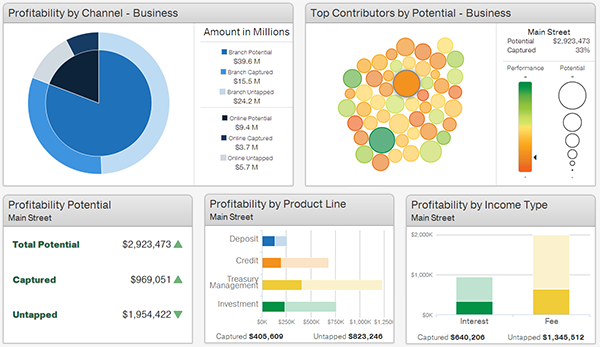
For the first time, companies would have the insights and tools they need to manage channel sales effectiveness, close the gap on untapped profitability, and improve efficiency ratios. Figure 1 offers an example of a dashboard developed for banking.
For the first time, companies would have the insights and tools they need to manage channel sales effectiveness, close the gap on untapped profitability, and improve efficiency ratios. Figure 1 offers an example of a dashboard developed for banking.
Content
Dashboards reveal what was previously unknown. For example, they show lost opportunities, sales process gaps, and marketing opportunities (all by geography, customer segment, and campaign). From a financial standpoint, dashboards break down analyses in various ways, including potential and actual profits in terms of interest versus fee income per channel.
Dashboards reveal what was previously unknown. For example, they show lost opportunities, sales process gaps, and marketing opportunities (all by geography, customer segment, and campaign). From a financial standpoint, dashboards break down analyses in various ways, including potential and actual profits in terms of interest versus fee income per channel.
Content
In the past, bank executives, including the CFO, have had no way of knowing what products were recommended to customers and prospects at the point-of-sale in terms of potential profitability (broken down by fee income compared with interest income), or how much income is available per channel.
In the past, bank executives, including the CFO, have had no way of knowing what products were recommended to customers and prospects at the point-of-sale in terms of potential profitability (broken down by fee income compared with interest income), or how much income is available per channel.
Figure 1. Banking Dashboard
Content
Content
Dashboards provide the capability to measure ROI almost immediately. The above example shows an increase in business account openings of 50 percent within 90 days of implementing the guides and dashboards. The statistical evidence that they were able to prove from the dashboards enabled this business to implement immediate channel adjustments with high confidence.
Dashboards provide the capability to measure ROI almost immediately. The above example shows an increase in business account openings of 50 percent within 90 days of implementing the guides and dashboards. The statistical evidence that they were able to prove from the dashboards enabled this business to implement immediate channel adjustments with high confidence.
Content
Improving and measuring omni-channel profitability is one of the most pressing issues in business today. Automating needs assessment and resulting product recommendations can answer the following questions:
Improving and measuring omni-channel profitability is one of the most pressing issues in business today. Automating needs assessment and resulting product recommendations can answer the following questions:
Content
Where are our customers and prospects?
Where are our customers and prospects?
Content
What do they look like? How big is their business? What is there revenue? Where are they located geographically?
What do they look like? How big is their business? What is there revenue? Where are they located geographically?
Content
What is the potential opportunity for business with these customers?
What is the potential opportunity for business with these customers?
Content
Where are the biggest opportunities we are missing?
Where are the biggest opportunities we are missing?
Content
Where should we focus our efforts? Where can we realize the best marketing ROI? Sales ROI? What enhancements to products would provide the best ROI?
Where should we focus our efforts? Where can we realize the best marketing ROI? Sales ROI? What enhancements to products would provide the best ROI?
Content
Where are our sales gaps? How should we best prioritize reducing these gaps?
Where are our sales gaps? How should we best prioritize reducing these gaps?
Content
What are we not doing today what we should be doing? As far as product offerings? Marketing? Channel initiatives?
What are we not doing today what we should be doing? As far as product offerings? Marketing? Channel initiatives?
Content
With this information, organizations are now armed with the data to optimize their business in today’s omni-channel world.
With this information, organizations are now armed with the data to optimize their business in today’s omni-channel world.