
ATD Blog
Extended Adolescence—and What it Means
Tue Jan 13 2015
Content
Lately I’ve been catching myself saying things that make me sound like an old woman: “She looks way too young to be tending bar.” “He’s so immature. Were we like that at his age?” “When are these kids going to grow up and leave the house?”
Content
I recently was heartened to learn that I’m not just growing older (although that’s true). I’m also noticing a trend in human development that can be at least partially understood by neuroscience. It seems that adolescence—that period before we become adults—is growing longer.
Content
In The Age of Opportunity , Laurence Steinberg makes the case that human beings are entering and staying in adolescence longer than ever before. This special phase in human development is starting earlier and lasting longer. If you think that you have only adult education to consider in your work; think again.
In The Age of Opportunity, Laurence Steinberg makes the case that human beings are entering and staying in adolescence longer than ever before. This special phase in human development is starting earlier and lasting longer. If you think that you have only adult education to consider in your work; think again.
Content
Many of the young people in the workplace and the vast majority of those in college are still in the adolescent phase of their development. Understanding how their brains work will give you a fighting chance to design meaningful learning experiences for this audience.
Content
What Is Adolescence?
Content
Steinberg defines adolescence as “the stage of development that begins with puberty and ends with economic and social independence.” Based on his research, it is beginning as early as 10 and continues well into a person’s 20s, which goes a long way to explain why your new recruits are working at the office and going home to their parents’ house at the end of the day.
Content
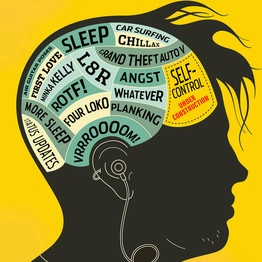
While the lengthening of adolescence has its roots in a combination of social-economic changes, it is much more than a societal trend. The brains of adolescents are significantly different than the brains of children or adults and must be understood and managed accordingly.
Content
Characteristics of the Adolescent Brain
Content
The most astonishing and powerful development of the human brain is its cerebral cortex . This outer shell of brain tissue is present in all primate and mammals, but the human brain has a much more developed cortex, giving us higher abilities to think, solve problems, learn, remember, and be self-aware.
The most astonishing and powerful development of the human brain is its cerebral cortex. This outer shell of brain tissue is present in all primate and mammals, but the human brain has a much more developed cortex, giving us higher abilities to think, solve problems, learn, remember, and be self-aware.
Content
In human evolution, we developed a way of folding this brain tissue over itself, giving us a lot more real estate—and a lot more neural networks to use to become human. In adolescents, this part of the brain is still developing, resulting in all kinds of behavioral issues, including:
Content
difficulty concentrating and remembering even routine tasks
Content
amped-up sexual drive
Content
willingness to take risks
Content
poor impulse control
Content
susceptibility to peer pressure
Content
heightened emotional responses and mood swings
Content
difficulty sleeping, which interferes with brain development.
Content
On the plus side, the brain at this stage in its development is exceptionally plastic . It is changing at a breathtakingly rapid rate compared to the adult brain, which continues to change, but at a slower pace. The brain is doing exactly what it should do for people between the ages of 10 and 25: it is preparing to be the brain of a successful adult , but it isn’t there yet.
On the plus side, the brain at this stage in its development is exceptionally plastic. It is changing at a breathtakingly rapid rate compared to the adult brain, which continues to change, but at a slower pace. The brain is doing exactly what it should do for people between the ages of 10 and 25: it is preparing to be the brain of a successful adult , but it isn’t there yet.
Content
What Can You Do?
What Can You Do?
Content
As educators and leaders of people in the later stages of adolescence, we have an opportunity and a responsibility to help our young people make the most of this critical developmental stage. You will not be successful treating these people as fully formed adults. Rather, you must meet them where they are in the developmental continuum in order to be effective. Here are a few ideas suggested by recent findings:
Content
Encourage physical activity, especially organized sports. These activities teach the brain to make quick decisions and create neural pathways related to team work, collaboration, motivation, and other critical life and workplace skills.
Content
Channel risk-taking bias into exploration and experimentation. One of the last parts of the brain to fully develop is the part that helps us evaluate and mitigate risk. Research indicates that adolescents are more comfortable with risks presented by new situations. So why not make use of this brain characteristic for think tanks, product development, and brain storming?
Content
Teach emotional control. Adolescents tend to process most experiences through the amygdala , a structure in the brain that is related to strong emotions and the triggering of the “flight or fight” response. This is why a traumatic event during this stage in life has a more lasting effect than if it were to occur later in life. You can help the young people in your organization develop a greater understanding and control of their own emotions, reducing conflict and drama in the workplace.
Teach emotional control. Adolescents tend to process most experiences through the amygdala, a structure in the brain that is related to strong emotions and the triggering of the “flight or fight” response. This is why a traumatic event during this stage in life has a more lasting effect than if it were to occur later in life. You can help the young people in your organization develop a greater understanding and control of their own emotions, reducing conflict and drama in the workplace.
Content
Encourage socializing with peers. The adolescent brain responds very positively to interactions with people of similar age and even tends to seek out social experiences . This is a valuable trait when one is at the age where finding a mate is a critical step to the survival of the species. It can also be a critical step towards building a network of future leaders in your organization. Make it easier for your young people to form connections with each other by creating reasons for them to socialize during and outside of work.
Encourage socializing with peers. The adolescent brain responds very positively to interactions with people of similar age and even tends to seek out social experiences. This is a valuable trait when one is at the age where finding a mate is a critical step to the survival of the species. It can also be a critical step towards building a network of future leaders in your organization. Make it easier for your young people to form connections with each other by creating reasons for them to socialize during and outside of work.
Content
Limit exposure to alcohol. When compared to adult subjects, the adolescent brain reacts differently to alcohol , as a result of having a different chemistry than that of an adult. This adolescent brain chemistry results in higher tolerance for the sedative effect of alcohol, making it possible for the younger person to drink more before becoming sleepy or passing out. Alcohol also seems to have a greater adverse effect on several key brain functions in adolescents, including forming new memories and spatial awareness. These effects continue over the life of the subject, so that damage incurred at a young age continues into adulthood.
Limit exposure to alcohol. When compared to adult subjects, the adolescent brain reacts differently to alcohol, as a result of having a different chemistry than that of an adult. This adolescent brain chemistry results in higher tolerance for the sedative effect of alcohol, making it possible for the younger person to drink more before becoming sleepy or passing out. Alcohol also seems to have a greater adverse effect on several key brain functions in adolescents, including forming new memories and spatial awareness. These effects continue over the life of the subject, so that damage incurred at a young age continues into adulthood.
Content
Provide plenty of just-in-time performance support. Because the adolescent brain is still learning how to learn, people in this stage of development often have trouble remembering routine tasks. Job aids such as checklists, process guides and graphic organizers are even more critical to support performance within this group.
Content
Moving Forward
Moving Forward
Content
Child labor may be a thing of the past in most advanced societies, but adolescents are certainly in the workplace—and they are likely to continue to come to us in greater and greater numbers. We must be ready to apply the appropriate learning interactions to help these members of our team succeed.
Content
And what about the other side of the spectrum: aging workers? What can our organizations do for the growing number of aging workers (like me) who are staying at work longer? Do their brains need targeted strategies as well? The answer is “yes,” but we’ll have to wait for another time to tackle that question.