
ATD Blog
Find Small Moments to Make Big Impact
Raindrops make oceans, stressed Will Guidara during his keynote address.
Tue May 19 2026

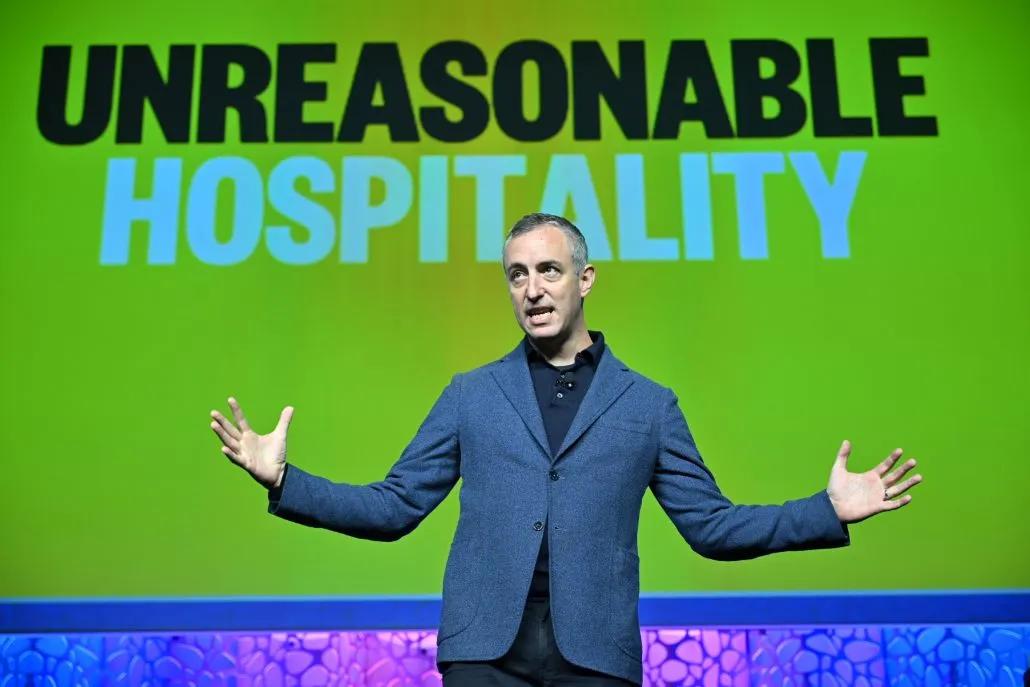
During Tuesday morning’s keynote on the ATD26 Mainstage, Will Guidara—bestselling author and former owner of the number 1 restaurant in the world, Eleven Madison Park—shared how he and his team attained that goal through unreasonable hospitality, title of his bestseller.
How did he do so, and what can talent development practitioners learn from his story?
Create a Goal
When Guidara’s restaurant made the Top 50 Restaurants list, debuting at number 50, he wrote on a paper napkin his goal of making it to number 1. He noted a paperweight his father had given him with the words, “What would you attempt to do if you knew you couldn’t fail?” Too many people don’t strive for something big out of fear, Guidara told the audience.
He decided that his restaurant would not seek to offer unreasonable product or service; rather, it would offer “unreasonable hospitality.” He had no idea how that was going to happen, but sometimes you need to start doing and “trust in the fact that it’ll reveal itself along the way,” Guidara explained.
Connect Daily
In the restaurant business, the meeting that staff have before unlocking the doors is called the premeal. Guidara noticed that the team spent much of the meeting on operational concerns when he should be spending those 30 minutes with his team leading, going beyond the what to the why and the how.
He invited his team to, together, figure out what unreasonable hospitality meant and how to get there.
Determine Touchpoints
How can we make every interaction we have with our customer “a little more awesome?,” posed Guidara. In a restaurant, that may be how staff greet people at the door, plate the food, or bring out the check.
Guidara and his team learned from this “interrogation of the customer journey” that the belief that transactional points can’t matter and be connective is false. How could the restaurant staff make those details a little bit better? As they learned, the little details—"profound gestures of generosity”—matter.
It’s not that different for TD professionals. How might you make your touchpoints a little more awesome for employees and learners?
Move From Intention to Intuition
Athletes and other professionals review videos of their performance or other interactions when things don’t go right. But rarely do people watch videos of things going right. We should, urged Guidara, so that we “put intention to intuition” and keep on doing things that are going well.
How can we get there?
Be present. So often people are moving too fast, trying to focus on too many things and generally not paying attention to the person with whom they’re interacting. We have a “flawed relationship with efficiency,” noted Guidara. “That works until it doesn’t. Sometimes we need to slow down in order to speed up.”
Take what you do seriously, but don’t take yourself seriously. When we take ourselves seriously and rush, we often give ourselves self-imposed standards and don’t see the opportunity to bring others joy.
One size fits one. “Don’t treat people like a commodity,” advised Guidara. Hospitality is about making “people feel seen,” and you don’t get there by treating everyone the same.
Provide the Resources
Guidara noted that some of the initiatives to make people feel seen cost a little; some cost more. But whether a small or a large monetary expense, those small details of unreasonable hospitality are a gift. And they’re not just gifts for the recipients—for the customer; but for the provider of the gift—in his story, Guidara’s restaurant staff.
“Hospitality is the most selfish pleasure,” furthered Guidara. “It feels unbelievably good to make other people feel good.”
Read more about ATD26 at conferencedaily.td.org.
View Courses Recommended for You