
ATD Blog
From Specialist to Strategic Architect of Talent
Content
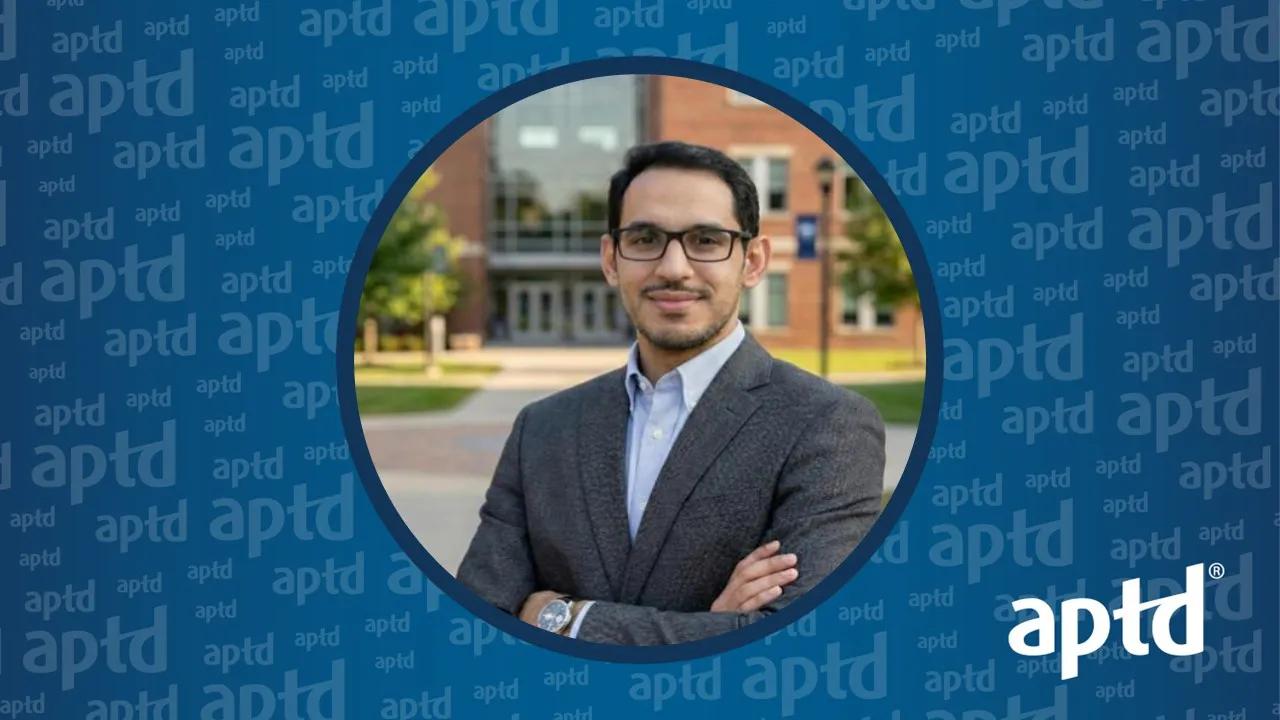
Meet Kadhem Aljabr , a learning and development expert who earned the Associate Professional in Talent Development (APTD®) credential in 2020.
Meet Kadhem Aljabr, a learning and development expert who earned the Associate Professional in Talent Development (APTD®) credential in 2020.
Published Mon Apr 20 2026
Content
Who are the more than 5,000 talent development professionals who have earned the APTD or CPTD credential? Get to know the talented and diverse community: Kadhem Aljabr is a Learning and Development Expert. He earned the Associate Professional in Talent Development (APTD®) credential in 2020.
Who are the more than 5,000 talent development professionals who have earned the APTD or CPTD credential? Get to know the talented and diverse community:
Kadhem Aljabr is a Learning and Development Expert. He earned the Associate Professional in Talent Development (APTD®) credential in 2020.
Content
Why did you pursue the APTD/CPTD®? In 2019, as the Institute of Public Administration (IPA) launched a historic initiative to modernize government practices under Saudi Vision 2030, I was selected to spearhead a critical mission: training high-potential government employees for the Associate Professional in Talent Development (APTD) credential. I realized that to lead this national transformation effectively, I needed to master the global gold standard myself. I chose the ATD credential to bridge the gap between our local institutional goals and international evidence-based practices, ensuring that the human capital development we were building for the Kingdom was anchored in a world-class framework. How have you benefited from the credential—professionally and/or personally? Professionally, the APTD transformed me from a specialist into a strategic architect of human capital. While my early career focused on training delivery, the credential equipped me with the multidimensional toolkit required for high-level organizational influence. It gave me the theoretical depth to master complex tasks such as large-scale training needs assessments, instructional design, and performance management at a national level. Personally, the certification process instilled a “High-Achievement” mindset. What advice would you share with others considering certification? Do not view certification as a destination, but as a strategic “Operating System” for your career. For L&D professionals in rapidly evolving economies, an ATD credential is your passport to global relevance. My advice is to seek “Immediate Application”—take a concept you learn in the morning and apply it to a meeting in the afternoon. Whether you are managing a small team or a national budget, the APTD provides the clarity needed to lead with authority. Finally, remember that you are joining a global community; use this process to connect with other “up-and-coming” leaders who are as committed to excellence as you are. How do you think certification helps the talent development field? Certification professionalizes the field by replacing intuition with evidence. In an evolving economy like Saudi Arabia, the talent development field must move beyond “training delivery” to become a driver of organizational strategy. Certification creates a universal language and quality benchmarks that allow L&D leaders to speak the same language as CEOs and government ministers. It ensures that when we talk about “impact,” we are measuring it against a globally recognized standard, elevating the credibility of our entire profession. How did your employer support your pursuit of the credential? The Institute of Public Administration (IPA) was instrumental. They did not just support my pursuit; they recognized me as a leader capable of scaling this knowledge. They selected and nominated me to earn the credential so that I could, in turn, train high-potential government employees for it. By giving me the platform to facilitate three cohorts and impact nearly 90 trainees, the IPA allowed me to turn my individual certification into a “multiplier effect” for the entire Saudi public sector. What does having your credential mean to you? To me, the APTD is not a destination, but a vital “License to Lead” that represents the beginning of a lifelong commitment to excellence. While my immediate focus is on the rigors of my PhD program and the upcoming milestone of my qualifying exams, this credential serves as the practical anchor for my academic research. It represents the bridge between my professional past at the IPA and my future aspirations, such as earning the CPTD and eventually enrolling in the Talent Development Executive program at Penn GSE. Having this credential means I am a steward of human potential, dedicated to proving that evidence-based talent development is the most sustainable way to transform a nation. How did you get into the talent development field? My entry into the field was driven by a deep-seated passion for teaching and the belief that people are a nation’s most sustainable asset. I began my career as a faculty member at the IPA, teaching high school graduates and delivering training for senior government HR leaders. I quickly realized that the “magic” of an organization happens when you align a person’s skills with the organization’s mission. That realization turned a job into a lifelong calling to shape the future of my country’s workforce. What is the best advice you’ve ever received? The best advice I received was to “lead yourself before you lead others.” This resonated with me deeply when I first moved away from home for college in 2007. I learned that discipline and self-mastery are the foundations of any leadership role What is a great book you’ve read recently? Drive by Daniel H. Pink What is your favorite hobby or pastime? Listening to educational leadership podcasts
Why did you pursue the APTD/CPTD®?
In 2019, as the Institute of Public Administration (IPA) launched a historic initiative to modernize government practices under Saudi Vision 2030, I was selected to spearhead a critical mission: training high-potential government employees for the Associate Professional in Talent Development (APTD) credential. I realized that to lead this national transformation effectively, I needed to master the global gold standard myself. I chose the ATD credential to bridge the gap between our local institutional goals and international evidence-based practices, ensuring that the human capital development we were building for the Kingdom was anchored in a world-class framework.
How have you benefited from the credential—professionally and/or personally?
Professionally, the APTD transformed me from a specialist into a strategic architect of human capital. While my early career focused on training delivery, the credential equipped me with the multidimensional toolkit required for high-level organizational influence. It gave me the theoretical depth to master complex tasks such as large-scale training needs assessments, instructional design, and performance management at a national level. Personally, the certification process instilled a “High-Achievement” mindset.
What advice would you share with others considering certification?
Do not view certification as a destination, but as a strategic “Operating System” for your career. For L&D professionals in rapidly evolving economies, an ATD credential is your passport to global relevance. My advice is to seek “Immediate Application”—take a concept you learn in the morning and apply it to a meeting in the afternoon. Whether you are managing a small team or a national budget, the APTD provides the clarity needed to lead with authority. Finally, remember that you are joining a global community; use this process to connect with other “up-and-coming” leaders who are as committed to excellence as you are.
How do you think certification helps the talent development field?
Certification professionalizes the field by replacing intuition with evidence. In an evolving economy like Saudi Arabia, the talent development field must move beyond “training delivery” to become a driver of organizational strategy. Certification creates a universal language and quality benchmarks that allow L&D leaders to speak the same language as CEOs and government ministers. It ensures that when we talk about “impact,” we are measuring it against a globally recognized standard, elevating the credibility of our entire profession.
How did your employer support your pursuit of the credential?
The Institute of Public Administration (IPA) was instrumental. They did not just support my pursuit; they recognized me as a leader capable of scaling this knowledge. They selected and nominated me to earn the credential so that I could, in turn, train high-potential government employees for it. By giving me the platform to facilitate three cohorts and impact nearly 90 trainees, the IPA allowed me to turn my individual certification into a “multiplier effect” for the entire Saudi public sector.
What does having your credential mean to you?
To me, the APTD is not a destination, but a vital “License to Lead” that represents the beginning of a lifelong commitment to excellence. While my immediate focus is on the rigors of my PhD program and the upcoming milestone of my qualifying exams, this credential serves as the practical anchor for my academic research. It represents the bridge between my professional past at the IPA and my future aspirations, such as earning the CPTD and eventually enrolling in the Talent Development Executive program at Penn GSE. Having this credential means I am a steward of human potential, dedicated to proving that evidence-based talent development is the most sustainable way to transform a nation.
How did you get into the talent development field?
My entry into the field was driven by a deep-seated passion for teaching and the belief that people are a nation’s most sustainable asset. I began my career as a faculty member at the IPA, teaching high school graduates and delivering training for senior government HR leaders. I quickly realized that the “magic” of an organization happens when you align a person’s skills with the organization’s mission. That realization turned a job into a lifelong calling to shape the future of my country’s workforce.
What is the best advice you’ve ever received?
The best advice I received was to “lead yourself before you lead others.” This resonated with me deeply when I first moved away from home for college in 2007. I learned that discipline and self-mastery are the foundations of any leadership role
What is a great book you’ve read recently?
Drive by Daniel H. Pink
What is your favorite hobby or pastime?
Listening to educational leadership podcasts
Content
Have you earned the APTD or CPTD? Share your story with the community.
Have you earned the APTD or CPTD? Share your story with the community.