
ATD Blog
How TD Pros Can Spot Trends
Wed Jul 29 2020

Content
One of the challenges of being a talent development professional is keeping up with various trends that affect our profession. The ATD Talent Development Capability Model mentions this as a skill statement in the future readiness capability. This skill statement says employees should have, “Skill in conducting environmental scanning to identify current and emerging trends in the economy, legislation, competition, and technology.”
One of the challenges of being a talent development professional is keeping up with various trends that affect our profession. The ATD Talent Development Capability Model mentions this as a skill statement in the future readiness capability. This skill statement says employees should have, “Skill in conducting environmental scanning to identify current and emerging trends in the economy, legislation, competition, and technology.”
Content
What does this mean and how can you battle the shiny syndrome of chasing the next big thing in technology? You owe it to your organization to be intentional in your strategy when exploring learning technologies. Here are some ways to identify current and emerging trends in talent development and decide if they are appropriate for your organization.
What does this mean and how can you battle the shiny syndrome of chasing the next big thing in technology? You owe it to your organization to be intentional in your strategy when exploring learning technologies. Here are some ways to identify current and emerging trends in talent development and decide if they are appropriate for your organization.
Reflect on Your Organizational Talent Development Goals
Content
It is common to get excited when you see a new technology or trend hit the talent development market, but everything isn’t worth pursuing for your business. Instead of trying to figure out how to fit it into your talent development strategy, ask yourself questions in relation to your organization’s talent development goals:
It is common to get excited when you see a new technology or trend hit the talent development market, but everything isn’t worth pursuing for your business. Instead of trying to figure out how to fit it into your talent development strategy, ask yourself questions in relation to your organization’s talent development goals:
Content
What problem does this solve in my talent development strategy?
What problem does this solve in my talent development strategy?
Content
Is this technology sustainable and something we can use long-term with our organization?
Is this technology sustainable and something we can use long-term with our organization?
Content
What are our organization’s one-, three-, and five-year talent development strategies?
What are our organization’s one-, three-, and five-year talent development strategies?
Content
Disposal trends and technologies can cost an organization time, money, and resources. If you are unsure about answering these questions, reach out to the vendor to see if you can access a trial and build a pilot case to test it out before purchasing.
Disposal trends and technologies can cost an organization time, money, and resources. If you are unsure about answering these questions, reach out to the vendor to see if you can access a trial and build a pilot case to test it out before purchasing.
Plan for Experimentation in Your Talent Development Strategy
Content
Empower and encourage experimentation within your talent development team and its strategy. Doing so can be an effective way to vet learning technologies and trends beyond just accessing a product trial. Specifically, consider empowering your team to evaluate various tools and strategies. Unsure of where to start? Consider using the CPR method (context, pilot, report).
Empower and encourage experimentation within your talent development team and its strategy. Doing so can be an effective way to vet learning technologies and trends beyond just accessing a product trial. Specifically, consider empowering your team to evaluate various tools and strategies. Unsure of where to start? Consider using the CPR method (context, pilot, report).
Content
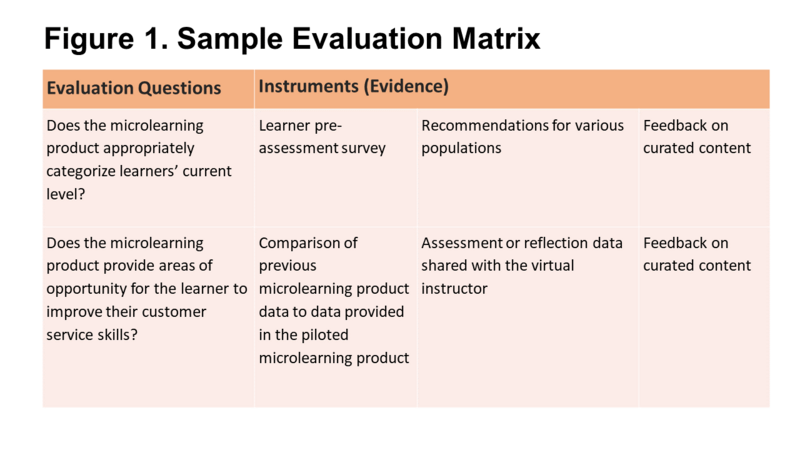
Context: When considering adopting a new learning technology or strategy, it’s important to evaluate your product knowledge and audience and create an evaluation matrix. Product knowledge is information provided about the product, including the insight supplied by the vendor, and access to additional resources. Knowing if you have additional support is a question you should consider asking when assessing the product knowledge. Next, who will use this technology or strategy? Do you have a representative cross-sample of folks who will be affected, including stakeholders and users? Finally, consider creating an evaluation matrix. This matrix can provide the foundation for data collection during the pilot phase and help you collect qualitative and quantitative data so you can make the best decision about adoption for your organization. Figure 1 shows an example of an evaluation matrix.
Context: When considering adopting a new learning technology or strategy, it’s important to evaluate your product knowledge and audience and create an evaluation matrix. Product knowledge is information provided about the product, including the insight supplied by the vendor, and access to additional resources. Knowing if you have additional support is a question you should consider asking when assessing the product knowledge. Next, who will use this technology or strategy? Do you have a representative cross-sample of folks who will be affected, including stakeholders and users? Finally, consider creating an evaluation matrix. This matrix can provide the foundation for data collection during the pilot phase and help you collect qualitative and quantitative data so you can make the best decision about adoption for your organization. Figure 1 shows an example of an evaluation matrix.
Content
Pilot: Often when organizations say they are piloting a strategy or technology, they just informally adopt a new product or process. Avoid doing this because a sales pitch or a rival using a product isn’t evidence that the strategy or technology is the best solution for your organization. Once you have created your sample evaluation matrix, it’s critical to set up a pilot. Remember that the purpose of this pilot is to evaluate the feasibility of implementing the learning technology or trend in your organization. To help boost the success of your pilot study, consider enhancing the strategy with a communications plan to let people know what to expect and share the rest of the findings with your organization. Use your evaluation questions and instruments to guide you.
Pilot: Often when organizations say they are piloting a strategy or technology, they just informally adopt a new product or process. Avoid doing this because a sales pitch or a rival using a product isn’t evidence that the strategy or technology is the best solution for your organization. Once you have created your sample evaluation matrix, it’s critical to set up a pilot. Remember that the purpose of this pilot is to evaluate the feasibility of implementing the learning technology or trend in your organization. To help boost the success of your pilot study, consider enhancing the strategy with a communications plan to let people know what to expect and share the rest of the findings with your organization. Use your evaluation questions and instruments to guide you.
Content
Results: Use the instruments as evidence to answer your evaluation questions. It’s not uncommon for pilots to need a few iterations to yield more evidence to which a learning technology or trend can be adopted or rejected. By going through this process, it’s moving beyond trusting your gut reaction to owning your role as a talent development professional who makes responsible decisions for your organization.
Results: Use the instruments as evidence to answer your evaluation questions. It’s not uncommon for pilots to need a few iterations to yield more evidence to which a learning technology or trend can be adopted or rejected. By going through this process, it’s moving beyond trusting your gut reaction to owning your role as a talent development professional who makes responsible decisions for your organization.
Want to Learn More?
Content
Join me during ATD Virtual Conference: Unleash Potential (October 26–30, 2020) for the session Content Knowledge or Deduction Skills? Creating Measurable Assessments.
Join me during ATD Virtual Conference: Unleash Potential (October 26–30, 2020) for the session Content Knowledge or Deduction Skills? Creating Measurable Assessments.