ATD, association for talent development

ATD Blog

If Content Is King, It’s Time to Overthrow the Monarchy!

By

Fri Apr 17 2015

Loading...
If Content Is King, It’s Time to Overthrow the Monarchy!-30cd74630e02175b517d8a3df5ef78aec5564bdb231adba88874b0e80053755d

Content

In this blog post, I’m going to try and convince you that you’re teaching too much information. You’re cramming too much content into your courses. You’re letting your subject matter experts cram in too much content. If you’re guilty, you’re not alone. I’m guilty, too. Almost everyone in the workplace learning field does it. It’s endemic. It’s an epidemic. And to be polemic, it must be stopped!

In this blog post, I’m going to try and convince you that you’re teaching too much information. You’re cramming too much content into your courses. You’re letting your subject matter experts cram in too much content. If you’re guilty, you’re not alone. I’m guilty, too. Almost everyone in the workplace learning field does it. It’s endemic. It’s an epidemic. And to be polemic, it must be stopped!

Content

Indeed, I’ve been telling my clients that content cramming is the number one problem in the field of workplace learning and performance. It’s not that it’s any more harmful than other maladaptive learning designs, but content cramming is akin to a gateway drug— to the simultaneous use of more dangerous design deficiencies.
Indeed, I’ve been telling my clients that content cramming is the number one problem in the field of workplace learning and performance. It’s not that it’s any more harmful than other maladaptive learning designs, but content cramming is akin to a gateway drug— to the simultaneous use of more dangerous design deficiencies.

If Content Is King, It’s Time to Overthrow the Monarchy!-56c729e5702b9e26bc7defaeea045be83fa388a5eef4d666a4be96fcabe5620a

Content

When we choose to teach too many concepts—or when we agree to teach too many concepts (admit it, you do this)—we hurt the learning experience! More importantly, we demonstrate that we just don’t understand human learning. Worse, we cripple our learners!

When we choose to teach too many concepts—or when we agree to teach too many concepts (admit it, you do this)—we hurt the learning experience! More importantly, we demonstrate that we just don’t understand human learning. Worse, we cripple our learners!

Content

There are several fundamental concepts in human learning that illuminate the reasons why content cramming is harmful. The first concept involves remembering and forgetting.

There are several fundamental concepts in human learning that illuminate the reasons why content cramming is harmful. The first concept involves remembering and forgetting.

Content

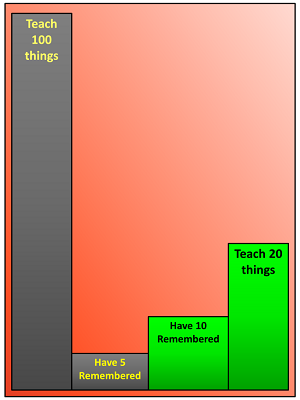
What do you think works better: Teaching 100 things and having 5 remembered, or teaching 20 things and having 10 remembered? The answer is obvious. But what does teaching fewer things do for learning? For one thing, it enables the kinds of critical learning factors that support remembering and minimize forgetting.

What do you think works better: Teaching 100 things and having 5 remembered, or teaching 20 things and having 10 remembered? The answer is obvious. But what does teaching fewer things do for learning? For one thing, it enables the kinds of critical learning factors that support remembering and minimize forgetting.

Content

In the figure below, you can see the learning and forgetting curves . Together, they tell us that that it’s not good enough to help learners learn, we must also help them remember. Indeed, if you imagine your learners going up the learning curve and then down the forgetting curve, you’ll notice that they end up where they started—that the learning has largely failed in producing benefits.
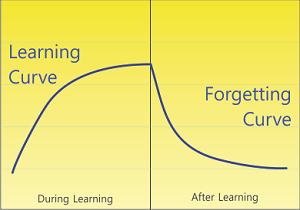
In the figure below, you can see the learning and forgetting curves. Together, they tell us that that it’s not good enough to help learners learn, we must also help them remember. Indeed, if you imagine your learners going up the learning curve and then down the forgetting curve, you’ll notice that they end up where they started—that the learning has largely failed in producing benefits.

If Content Is King, It’s Time to Overthrow the Monarchy!-447fbdfd759e53b01b8363ce7e3fb10400b39df3745dd33be3a3c02d48ad75bb

Content

For some, it might be okay to waste one’s life this way—producing no long-term gains. But I believe learning professionals can do better. By using scientifically derived learning methods, we can support our learners in remembering. We can minimize the ravages of the forgetting curve.

For some, it might be okay to waste one’s life this way—producing no long-term gains. But I believe learning professionals can do better. By using scientifically derived learning methods, we can support our learners in remembering. We can minimize the ravages of the forgetting curve.

Content

In my research translation efforts, I’ve pinpointed three of the most potent learning factors that support remembering (see the Decisive Dozen ): 1) context alignment, 2) retrieval practice, and 3) spacing.

In my research translation efforts, I’ve pinpointed three of the most potent learning factors that support remembering (see the Decisive Dozen): 1) context alignment, 2) retrieval practice, and 3) spacing.

Content

#1: Context Alignment

#1: Context Alignment

Content

Context alignment can be non-intuitive. It is based on the notion that human beings react to environmental stimuli. In other words, we’re less proactive than we’d like to believe. This “reactivity” gives learners the capability to use contextual cues to trigger specific thoughts and actions during work. Indeed, if learning is well-designed, when our learners encounter certain work situations, the contextual cues will trigger “spontaneous remembering” of what they learned.

Context alignment can be non-intuitive. It is based on the notion that human beings react to environmental stimuli. In other words, we’re less proactive than we’d like to believe. This “reactivity” gives learners the capability to use contextual cues to trigger specific thoughts and actions during work. Indeed, if learning is well-designed, when our learners encounter certain work situations, the contextual cues will trigger “spontaneous remembering” of what they learned.

Content

Imagine a new supervisor who was trained that the best way to deal with a direct report who makes a mistake is to find a private place to give feedback. The CONTEXT is “direct report who makes a mistake.” The ACTION is “give them feedback in a private place.” If learning is well designed, the supervisor will easily make a connection between the context and the action.

Imagine a new supervisor who was trained that the best way to deal with a direct report who makes a mistake is to find a private place to give feedback. The CONTEXT is “direct report who makes a mistake.” The ACTION is “give them feedback in a private place.” If learning is well designed, the supervisor will easily make a connection between the context and the action.

Content

How can we design learning to give contextual cues? The easiest way is to simulate real-world situations, as is giving learners practice making scenario-based decisions.

How can we design learning to give contextual cues? The easiest way is to simulate real-world situations, as is giving learners practice making scenario-based decisions.

Content

#2: Retrieval Practice

#2: Retrieval Practice

Content

Retrieval practice gives learners opportunities to use—and remember—what they’ve learned. Essentially, practice allows leaners to traverse the same retrieval routes in long-term memory that they’ll have to use when they are on the job.

Retrieval practice gives learners opportunities to use—and remember—what they’ve learned. Essentially, practice allows leaners to traverse the same retrieval routes in long-term memory that they’ll have to use when they are on the job.

Content

Just as practice throwing a baseball to home plate makes a person better at throwing a baseball to home plate, practice at retrieving certain concepts makes a person better at retrieving those concepts at a later time.

Just as practice throwing a baseball to home plate makes a person better at throwing a baseball to home plate, practice at retrieving certain concepts makes a person better at retrieving those concepts at a later time.

Content

By combining the first two factors—context alignment and retrieval practice—we create learning that delivers realistic practice of situations people will likely encounter during work. In my experience, training programs should allocate at least 35 percent of time to providing learners with realistic practice.

By combining the first two factors—context alignment and retrieval practice—we create learning that delivers realistic practice of situations people will likely encounter during work. In my experience, training programs should allocate at least 35 percent of time to providing learners with realistic practice.

Content

#3: Spacing

#3: Spacing

Content

Spacing the repetition of learning experiences over time is currently one of the most highly studied phenomena in the psychology of learning. The research shows that spaced repetitions are much better in supporting long-term memory than repetitions that are not widely spaced over time.

Spacing the repetition of learning experiences over time is currently one of the most highly studied phenomena in the psychology of learning. The research shows that spaced repetitions are much better in supporting long-term memory than repetitions that are not widely spaced over time.

Content

Repetitions, as long as they’re not boring, can be a powerful learning tool. They help people absorb information they missed earlier, remember what they’d forgotten, and strengthen and enrich what they already know. By spacing these powerful learning events over time, learners remember things longer.

Repetitions, as long as they’re not boring, can be a powerful learning tool. They help people absorb information they missed earlier, remember what they’d forgotten, and strengthen and enrich what they already know. By spacing these powerful learning events over time, learners remember things longer.

Content

What Other Learning Supports Must We Provide?
What Other Learning Supports Must We Provide?

If Content Is King, It’s Time to Overthrow the Monarchy!-d97d402cf2867cfe585e36411c6b73d3bdeeb92baba6aa8beb2840863c2201ab

Content

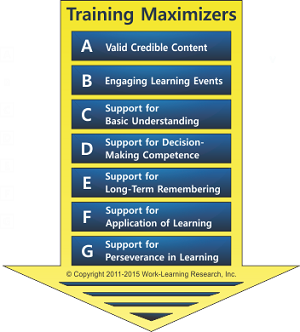
While I’ve gone into some depth about the need to support remembering, our responsibilities don’t end there. As the Training Maximizers Model shows, we also need to support our learners in basic understanding, making decisions, and applying skills and knowledge, as well as perseverance.

While I’ve gone into some depth about the need to support remembering, our responsibilities don’t end there. As the Training Maximizers Model shows, we also need to support our learners in basic understanding, making decisions, and applying skills and knowledge, as well as perseverance.

Content

By focusing only on what topics we need to cover, we’re missing the major and moral requirements of our jobs as learning professionals. In short, we simply aren’t getting the job done!

By focusing only on what topics we need to cover, we’re missing the major and moral requirements of our jobs as learning professionals. In short, we simply aren’t getting the job done!

Content

Final Thought

Final Thought

Content

Trying to teach too much content is a gateway drug to poor training design because it pushes out essential learning supports. It doesn’t allow us to ensure understanding. It doesn’t allow us to support decision-making, remembering, application, and perseverance—the very factors that enable learning to transfer to the workplace.

Trying to teach too much content is a gateway drug to poor training design because it pushes out essential learning supports. It doesn’t allow us to ensure understanding. It doesn’t allow us to support decision-making, remembering, application, and perseverance—the very factors that enable learning to transfer to the workplace.

Content

If you continue to act as if content is king, you’re subjecting your learners to brutally ineffective learning. It’s time to storm the palace and replace the king! Add your thoughts in the Comments below.

If you continue to act as if content is king, you’re subjecting your learners to brutally ineffective learning. It’s time to storm the palace and replace the king! Add your thoughts in the Comments below.

You've Reached ATD Member-only Content

Become an ATD member to continue

Already a member?Sign In


Copyright © 2026 ATD

ASTD changed its name to ATD to meet the growing needs of a dynamic, global profession.

Terms of UsePrivacy NoticeCookie Policy