
ATD Blog
Is Knowledge Enough?
Mon Dec 21 2020

Content
I stared at my screen in disbelief as I processed some unexpected news during a Skype call, my brows furrowed in confusion. “What do you mean performance is tanking?” The certification program that had come to be somewhat of a trophy for me was quickly turning into a nightmare.
I stared at my screen in disbelief as I processed some unexpected news during a Skype call, my brows furrowed in confusion. “What do you mean performance is tanking?” The certification program that had come to be somewhat of a trophy for me was quickly turning into a nightmare.
Content
“I mean that almost everyone coming out of class can’t seem to do even simple stuff,” my colleague replied.
“I mean that almost everyone coming out of class can’t seem to do even simple stuff,” my colleague replied.
Content
The wheels in my brain turned rapidly. How could that be? We partnered closely with the L&D team, working with trainers and content developers alike, to make sure this wouldn’t happen. We developed cutting edge e-learning courses and a strategic hybrid framework. Our instructors had interactive activities to keep learners engaged throughout class. Where had we gone wrong?
The wheels in my brain turned rapidly. How could that be? We partnered closely with the L&D team, working with trainers and content developers alike, to make sure this wouldn’t happen. We developed cutting edge e-learning courses and a strategic hybrid framework. Our instructors had interactive activities to keep learners engaged throughout class. Where had we gone wrong?
Content
Desperate to defend myself from the criticism, I plunged into researching the performance issues. I quickly realized that my assumptions had been way off. We had built a robust training program that was most concerned with disseminating and assessing knowledge . We had built pretty e-learning courses that walked through policy after policy but didn’t engage with learners on how to interpret or what to do with the policies.
Desperate to defend myself from the criticism, I plunged into researching the performance issues. I quickly realized that my assumptions had been way off. We had built a robust training program that was most concerned with disseminating and assessing knowledge. We had built pretty e-learning courses that walked through policy after policy but didn’t engage with learners on how to interpret or what to do with the policies.
Content
Now, I’m sure the course wasn’t all hogwash, but it wasn’t working. It was, however, the reckoning I needed to fail forward and realize that knowledge was not enough.
Now, I’m sure the course wasn’t all hogwash, but it wasn’t working. It was, however, the reckoning I needed to fail forward and realize that knowledge was not enough.
Content
We’ve all been there—that moment when, after carefully listening to and absorbing information, we want to go do something with it. You took the quiz, you participated in class, and you know everything you’re supposed to know. It should be easy to apply that knowledge. But then, when the moment happens, you find the knowledge hasn’t quite made you able to execute.
We’ve all been there—that moment when, after carefully listening to and absorbing information, we want to go do something with it. You took the quiz, you participated in class, and you know everything you’re supposed to know. It should be easy to apply that knowledge. But then, when the moment happens, you find the knowledge hasn’t quite made you able to execute.
Content
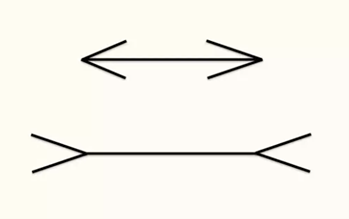
In her course The Science of Well-Being, Professor Laurie Santos of Yale University asserts a similar message: Merely knowing something is not enough to put into practice or change your behavior. She provides the example of the Muller-Lyer illusion. You look at two lines—one looks longer than the other to your eye, and even after measuring them both and discovering they are the same exact length—your eye still sees one as longer. Knowledge alone does not change your perception nor does it change your behavior.
In her course The Science of Well-Being, Professor Laurie Santos of Yale University asserts a similar message: Merely knowing something is not enough to put into practice or change your behavior. She provides the example of the Muller-Lyer illusion. You look at two lines—one looks longer than the other to your eye, and even after measuring them both and discovering they are the same exact length—your eye still sees one as longer. Knowledge alone does not change your perception nor does it change your behavior.
Content
It wasn’t an easy concession to make, but I had to admit my own errors. I had to go back to the drawing board to see what would be impactful. How could I design a program that developed strong, capable people equipped to complete the tasks at hand? By using performance-focused and situated learning techniques, I was able to deliver a new and improved program that was truly deserving of all the praise it. In fact, one could argue that my knowledge of my errors was not enough; it was my knowledge in addition to my behavior that changed the trajectory of this program and the success of the learners within.
It wasn’t an easy concession to make, but I had to admit my own errors. I had to go back to the drawing board to see what would be impactful. How could I design a program that developed strong, capable people equipped to complete the tasks at hand? By using performance-focused and situated learning techniques, I was able to deliver a new and improved program that was truly deserving of all the praise it. In fact, one could argue that my knowledge of my errors was not enough; it was my knowledge in addition to my behavior that changed the trajectory of this program and the success of the learners within.
Content
In our byte-size learning session at ATD TechKnowledge 2021 , Learning for Performance: Why Knowledge Isn’t an Adequate Training Result, we’ll be providing best practices (and lessons learned) for developing learning experiences that teach the skill acquisition necessary for job performance. Following a series of interactive demos and simple-to-apply activities, you will leave with the tools to analyze your current programs and begin the process of finding efficiencies that will benefit your learners and stakeholders.
In our byte-size learning session at ATD TechKnowledge 2021, Learning for Performance: Why Knowledge Isn’t an Adequate Training Result, we’ll be providing best practices (and lessons learned) for developing learning experiences that teach the skill acquisition necessary for job performance. Following a series of interactive demos and simple-to-apply activities, you will leave with the tools to analyze your current programs and begin the process of finding efficiencies that will benefit your learners and stakeholders.