
ATD Blog
Leading for Exceptional Results
Wed Nov 06 2013

Content
“If you pit a good person against a bad system, the system wins every time.” —Gary Rummler
“If you pit a good person against a bad system, the system wins every time.” —Gary Rummler
Content
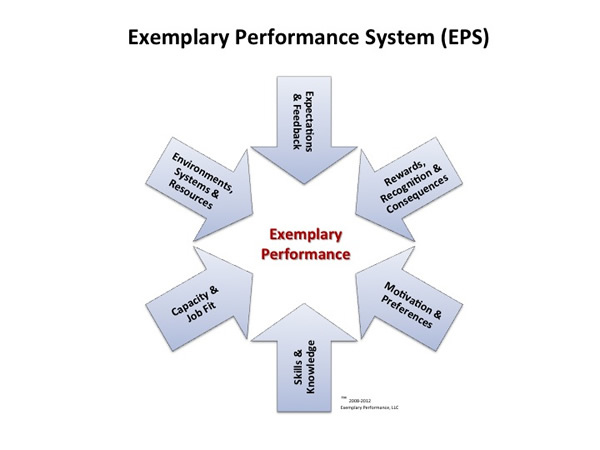
With that in mind, let’s start with a good system—one designed for producing exemplary performance. Our research and experience tells us that exemplary managers create work systems that enable their organizations to perform at exceptionally high levels. To do this, you must align six distinct sub-systems (see Figure 1).
With that in mind, let’s start with a good system—one designed for producing exemplary performance. Our research and experience tells us that exemplary managers create work systems that enable their organizations to perform at exceptionally high levels. To do this, you must align six distinct sub-systems (see Figure 1).
Content
Figure 1: The Exemplary Performance System Model
Figure 1: The Exemplary Performance System Model
Content
Execution is the weak link between organizational strategy and results. Managers are chided that they need to think strategically. However, establishing a strategy does not equate to improved results. Often those who recognize the powerful and important impact of sound strategy lack either the focus or commitment to bring that strategy to fruition.
Execution is the weak link between organizational strategy and results. Managers are chided that they need to think strategically. However, establishing a strategy does not equate to improved results. Often those who recognize the powerful and important impact of sound strategy lack either the focus or commitment to bring that strategy to fruition.
Content
We have examined star performers from the vantage of how they become stars. Now we want to consider how stars look at things once they have “arrived.” Star performers either view their work environment as a system, or they create that system to produce the results that bring value to the organization.
We have examined star performers from the vantage of how they become stars. Now we want to consider how stars look at things once they have “arrived.” Star performers either view their work environment as a system, or they create that system to produce the results that bring value to the organization.
Content
These sub-systems are:
These sub-systems are:
Content
Expectations & Feedback
Expectations & Feedback
Content
Rewards, Recognition & Consequences
Rewards, Recognition & Consequences
Content
Motivation & Preferences
Motivation & Preferences
Content
Skills & Knowledge
Skills & Knowledge
Content
Capacity & Job Fit
Capacity & Job Fit
Content
Environments, Systems & Resources
Environments, Systems & Resources
Content
Once managers are exposed to the EPS model, they agree it makes sense and has “face validity.” In other words, it is very clear that insights from star performers are required to truly optimize each component of the system. Could you ignore the role profile you created when you hired a new person? Could you attend to just a few arrows in the EPS model and still end up with a high performing organization? Yes, but it would be sub-optimized. And sub-optimal doesn’t drive your organization to exemplary success.
Once managers are exposed to the EPS model, they agree it makes sense and has “face validity.” In other words, it is very clear that insights from star performers are required to truly optimize each component of the system. Could you ignore the role profile you created when you hired a new person? Could you attend to just a few arrows in the EPS model and still end up with a high performing organization? Yes, but it would be sub-optimized. And sub-optimal doesn’t drive your organization to exemplary success.
Content
The key to optimizing both individual and organizational success is to manage the top three arrows of the model (which belong to the organization) before hiring, and then attend to the bottom three arrows of the model (which belong to the individual performer) during and after hiring (or assignment).
The key to optimizing both individual and organizational success is to manage the top three arrows of the model (which belong to the organization) before hiring, and then attend to the bottom three arrows of the model (which belong to the individual performer) during and after hiring (or assignment).
Content
Clearly, the path to increasing the number of people who drive results (like the stars in your organization) is by leveraging the insights and mental models that have been developed and proven successful by the existing exemplary performers—and doing so in a systematic way.
Clearly, the path to increasing the number of people who drive results (like the stars in your organization) is by leveraging the insights and mental models that have been developed and proven successful by the existing exemplary performers—and doing so in a systematic way.
Content
For more on how to shift the performance curve, check out Al’s previous blog article or browse the full series .
For more on how to shift the performance curve, check out Al’s previous blog article or browse the full series.