
ATD Blog
Left or Right: Which Part of the Brain Do You Side With?
Thu Feb 07 2013
Content
Understanding how human brains process information is a valuable skill for any L&D professional who designs learning. And while performance improvement solutions ought to be aligned to organizational goals, they should first and foremost align to the ways in which an individual brain chooses to assimilate and retain learning. Therefore, understanding whether your target audience is analytically or intuitively inclined for example will dictate the direction of your learning strategy.
Understanding how human brains process information is a valuable skill for any L&D professional who designs learning. And while performance improvement solutions ought to be aligned to organizational goals, they should first and foremost align to the ways in which an individual brain chooses to assimilate and retain learning. Therefore, understanding whether your target audience is analytically or intuitively inclined for example will dictate the direction of your learning strategy.
Content
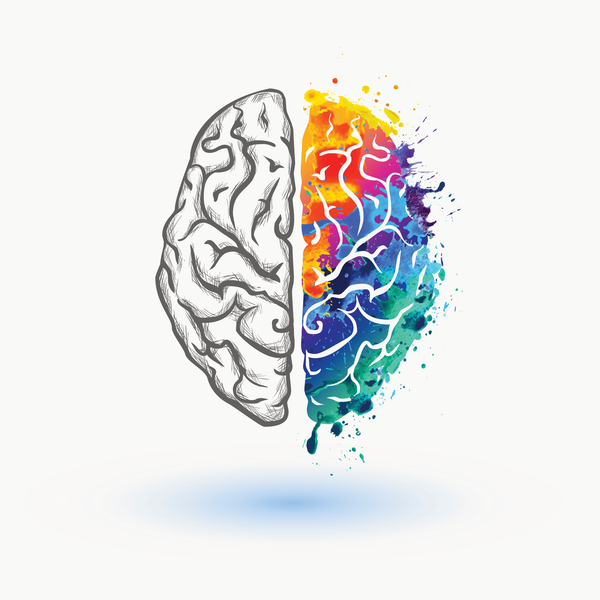
Nobel Prize recipient Roger Sperry developed the study of the relationship between the human brain’s right and left sides. He found that the left half of the brain tends to function by processing information in an analytical, rational, logical, sequential way. The right half of the brain tends to function by recognizing relationships, integrating and synthesizing information, and arriving at intuitive insights.
Nobel Prize recipient Roger Sperry developed the study of the relationship between the human brain’s right and left sides. He found that the left half of the brain tends to function by processing information in an analytical, rational, logical, sequential way. The right half of the brain tends to function by recognizing relationships, integrating and synthesizing information, and arriving at intuitive insights.
Content
So the left brain tends to break information apart for analysis, while the right brain tends to put information together to synthesize a whole picture.
So the left brain tends to break information apart for analysis, while the right brain tends to put information together to synthesize a whole picture.
Content
How to decide what direction to take?
How to decide what direction to take?
Content
The first step L&D professionals needs to take is to identify audience behavioral style. For example, According to Tappen, Weiss, and Whitehead, nurses “demonstrate certain behavioral traits which allow them to excel at their profession.” These behaviors include the ability to think critically, problem solve, show respect for people, communicate skillfully, and set goals—exhibiting traits of the left side of the brain functions. In my own work in the healthcare industry, many times I have included activities that would stimulate the left side of the brain as a part of nurses’ professional development curriculum.
The first step L&D professionals needs to take is to identify audience behavioral style. For example, According to Tappen, Weiss, and Whitehead, nurses “demonstrate certain behavioral traits which allow them to excel at their profession.” These behaviors include the ability to think critically, problem solve, show respect for people, communicate skillfully, and set goals—exhibiting traits of the left side of the brain functions. In my own work in the healthcare industry, many times I have included activities that would stimulate the left side of the brain as a part of nurses’ professional development curriculum.
Content
Another example is the behavioral style of the sales force. Studies suggest that sales people prefer to be around others and tend to be very enthusiastic and entertaining. They enjoy contacting people, making a favorable impression, speaking articulately, creating a motivational environment, and participating in groups—traits of the right hemisphere of the brain functions.
Another example is the behavioral style of the sales force. Studies suggest that sales people prefer to be around others and tend to be very enthusiastic and entertaining. They enjoy contacting people, making a favorable impression, speaking articulately, creating a motivational environment, and participating in groups—traits of the right hemisphere of the brain functions.
Content
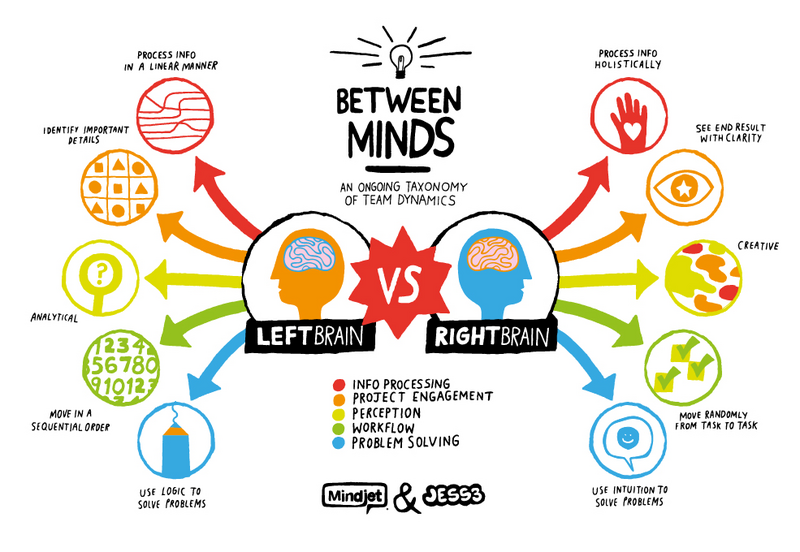
You will be able to identify those behavioral traits by examining your audience through focus groups, interviews, or behavioral assessments such as DiSC. Once you identify the way your audience will mostly accept the information share during your learning solution, it is time to decide how to create your learning strategy and design the learning. As you can see in the graphic bellow (available here ), you can adjust the content of your learning solution to the way your audience’s brains prefer to be stimulated. Note that we normally prefer one style of thinking, which is called the dominant preference . In addition, more than one style may be dominant at a time.
You will be able to identify those behavioral traits by examining your audience through focus groups, interviews, or behavioral assessments such as DiSC. Once you identify the way your audience will mostly accept the information share during your learning solution, it is time to decide how to create your learning strategy and design the learning. As you can see in the graphic bellow (available here), you can adjust the content of your learning solution to the way your audience’s brains prefer to be stimulated. Note that we normally prefer one style of thinking, which is called the dominant preference. In addition, more than one style may be dominant at a time.
Content
Infographic from Mindjet
Infographic from Mindjet
Content
Activities and delivery options designated to each side of the brain.
Activities and delivery options designated to each side of the brain.
Content
The Right Brain
The Right Brain
Content
The right side of the brain is best at expressive and creative tasks. Some of the activities that can be associated with the right side of the brain include:
The right side of the brain is best at expressive and creative tasks. Some of the activities that can be associated with the right side of the brain include:
Content
Skill practice (role playing)
Skill practice (role playing)
Content
Creating and writing your own stories
Creating and writing your own stories
Content
Map reading games
Map reading games
Content
Social games (Jeopardy, Deal or No Deal, etc…)
Social games (Jeopardy, Deal or No Deal, etc…)
Content
Theater games and/or activities
Theater games and/or activities
Content
The Left Brain
The Left Brain
Content
The left-side of the brain is considered to be adept at tasks that involve logic, language, and analytical thinking. Some of the activities that can be associated with the left side of the brain include:
The left-side of the brain is considered to be adept at tasks that involve logic, language, and analytical thinking. Some of the activities that can be associated with the left side of the brain include:
Content
Problem-based learning (PBL) activities
Problem-based learning (PBL) activities
Content
Puzzles
Puzzles
Content
Strategy games
Strategy games
Content
Working through a problem in a sequential order
Working through a problem in a sequential order
Content
Mathematic problems
Mathematic problems
Content
Take-aways
Take-aways
Content
Perhaps the most important take-away is that when we create learning materials, reports, presentations, etc., we should design them to work for both sides of the brain. For example, presentations built solely with bullet points are only aimed at the left side of the brain. Thus we need to create charts, relevant pictures, etc. so that it is aimed at both sides.
Perhaps the most important take-away is that when we create learning materials, reports, presentations, etc., we should design them to work for both sides of the brain. For example, presentations built solely with bullet points are only aimed at the left side of the brain. Thus we need to create charts, relevant pictures, etc. so that it is aimed at both sides.
Content
While often overgeneralized and overstated by popular psychology and self-help texts, understanding your strengths and weaknesses in certain areas can help you develop better ways to learn and study. For example, learners who have a difficult time following verbal instructions (often cited as a right-brain characteristic) can benefit from writing down directions and developing better organizational skills.
While often overgeneralized and overstated by popular psychology and self-help texts, understanding your strengths and weaknesses in certain areas can help you develop better ways to learn and study. For example, learners who have a difficult time following verbal instructions (often cited as a right-brain characteristic) can benefit from writing down directions and developing better organizational skills.
Content
And most importantly, remember that the brain, like a muscle, works on the “use it or lose it” principle. The more inactive we let certain parts of our brains become, the harder it is for us to perform.
And most importantly, remember that the brain, like a muscle, works on the “use it or lose it” principle. The more inactive we let certain parts of our brains become, the harder it is for us to perform.
Content
References
References
Content
Clark, R. C., Mayer, R. E. (2007). e-Learning and the Science of Instruction. 2nd edition. San Francisco: Pfeiffer.
Clark, R. C., Mayer, R. E. (2007). e-Learning and the Science of Instruction. 2nd edition. San Francisco: Pfeiffer.
Content
Clark, R. C., Lyons, C. (2004). Graphics for Learning. San Francisco: Pfeiffer.
Clark, R. C., Lyons, C. (2004). Graphics for Learning. San Francisco: Pfeiffer.
Content
Corbalis, M., Beale, I. (1976). The Psychology of Left and Right. Hillside, NJ: Lawrence Erlbaum Associates.
Corbalis, M., Beale, I. (1976). The Psychology of Left and Right. Hillside, NJ: Lawrence Erlbaum Associates.
Content
Hellige, J. (2001). Hemispheric Asymmetry: What's Right and What's Left (Perspectives in Cognitive Neuroscience). Cambridge, MA: Harvard University Press.
Hellige, J. (2001). Hemispheric Asymmetry: What's Right and What's Left (Perspectives in Cognitive Neuroscience). Cambridge, MA: Harvard University Press.
Content
Herrmann, N. (1996). The Whole Brain Business Book, McGraw-Hill: New York.
Herrmann, N. (1996). The Whole Brain Business Book, McGraw-Hill: New York.
Content
Herrmann, N. (1999). The Theory Behind the HBDI and Whole Brain Technology.
Herrmann, N. (1999). The Theory Behind the HBDI and Whole Brain Technology.