
ATD Blog
Performance Improvement: It Takes Three to Tango
Content
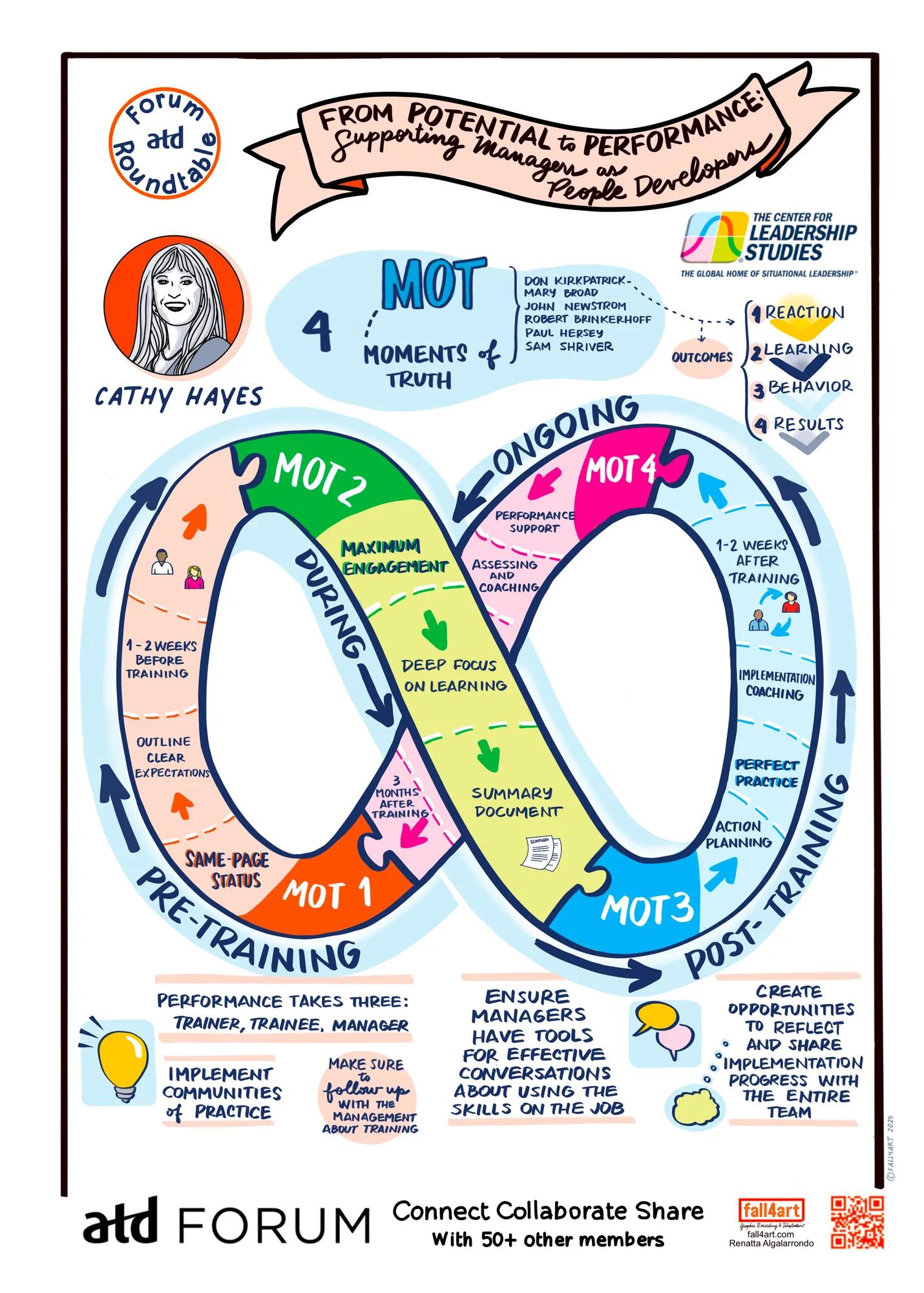
Cathy Hayes shared ideas with ATD Forum members on how the Four Moments of Truth can support managers as people developers.
Cathy Hayes shared ideas with ATD Forum members on how the Four Moments of Truth can support managers as people developers.
Tue Aug 26 2025
Content
As the talent development field seeks innovative ways to enhance performance results, it is also beneficial to revisit the fundamentals. To assist TD professionals in fostering sustained performance improvement, Sam Shriver , executive vice president of research and development at The Center for Leadership Studies, has condensed extensive research into a concise blueprint, spanning fewer than 100 pages, for the main stakeholders in his book, The Four Moments of Truth TM (4MOT).
As the talent development field seeks innovative ways to enhance performance results, it is also beneficial to revisit the fundamentals. To assist TD professionals in fostering sustained performance improvement, Sam Shriver, executive vice president of research and development at The Center for Leadership Studies, has condensed extensive research into a concise blueprint, spanning fewer than 100 pages, for the main stakeholders in his book, The Four Moments of TruthTM (4MOT).
Content
According to this framework, the three major stakeholders include:
According to this framework, the three major stakeholders include:
Content
The trainer – which includes all individuals involved in designing, developing, and delivering the training experience.
The trainer – which includes all individuals involved in designing, developing, and delivering the training experience.
Content
The trainee – the employee who actively participates in the training and then attempts to apply what was learned in real-world situations to achieve specific, targeted results.
The trainee – the employee who actively participates in the training and then attempts to apply what was learned in real-world situations to achieve specific, targeted results.
Content
The manager and specifically the next-level manager – the immediate supervisor of the Trainee and the most critical driver of training transfer
The manager and specifically the next-level manager – the immediate supervisor of the Trainee and the most critical driver of training transfer
Content
All three play a role in creating opportunities for employees to develop and utilize their skills to enhance their performance. However, there is some differentiation for the roles with the different “moments.”
All three play a role in creating opportunities for employees to develop and utilize their skills to enhance their performance. However, there is some differentiation for the roles with the different “moments.”
Content
Shriver states, “As learning professionals, our stage is a classroom, be it physical or virtual, and the value we have the potential to provide rests within each learner we encounter. Can we, through the content we deliver, ignite a spark that turns into a flame and burns brightly long after the event has concluded? We play a role in helping others build transferable skills that will make a discernible difference in the worlds from which they came.” So, while the TD professional can ensure that the learning solution is designed using principles of durable learning, and that the learning environment is supportive of all trainees, the skills covered in training will not lead to behavior change and performance results without the heavy involvement of the manager.
Shriver states, “As learning professionals, our stage is a classroom, be it physical or virtual, and the value we have the potential to provide rests within each learner we encounter. Can we, through the content we deliver, ignite a spark that turns into a flame and burns brightly long after the event has concluded? We play a role in helping others build transferable skills that will make a discernible difference in the worlds from which they came.” So, while the TD professional can ensure that the learning solution is designed using principles of durable learning, and that the learning environment is supportive of all trainees, the skills covered in training will not lead to behavior change and performance results without the heavy involvement of the manager.
Content
The goal of 4MOT is to ensure that the manager supports the trainee during critical moments in the learning cycle, emphasizing the importance of the training event itself and reinforcing the skills taught by coaching the trainee’s on-the-job experiences.
The goal of 4MOT is to ensure that the manager supports the trainee during critical moments in the learning cycle, emphasizing the importance of the training event itself and reinforcing the skills taught by coaching the trainee’s on-the-job experiences.
Content
The 4MOT framework draws from the research of three thought leaders: Dr. Donald K. Kirkpatrick, creator of the four levels of outcomes; Mary Broad and John Newstrom, who emphasized learning transfer; and Dr. Robert Brinkerhoff, who researched how managers influence the on-the-job application of skills. Studies by Broad, Newstrom, and Brinkerhoff confirm the vital role of the manager as the key driver in determining whether a trainee transforms skills gained in training into behaviors and actions on the job and thus performance results.
The 4MOT framework draws from the research of three thought leaders: Dr. Donald K. Kirkpatrick, creator of the four levels of outcomes; Mary Broad and John Newstrom, who emphasized learning transfer; and Dr. Robert Brinkerhoff, who researched how managers influence the on-the-job application of skills. Studies by Broad, Newstrom, and Brinkerhoff confirm the vital role of the manager as the key driver in determining whether a trainee transforms skills gained in training into behaviors and actions on the job and thus performance results.
Content
Given this, TD must broaden its perspective to include supporting the manager as the transfer catalyst. The 4MOT framework achieves this by providing a set of questions and worksheets for managers to use at each of the four moments.
Given this, TD must broaden its perspective to include supporting the manager as the transfer catalyst. The 4MOT framework achieves this by providing a set of questions and worksheets for managers to use at each of the four moments.
Art by Renatta Algalarrondo
Content
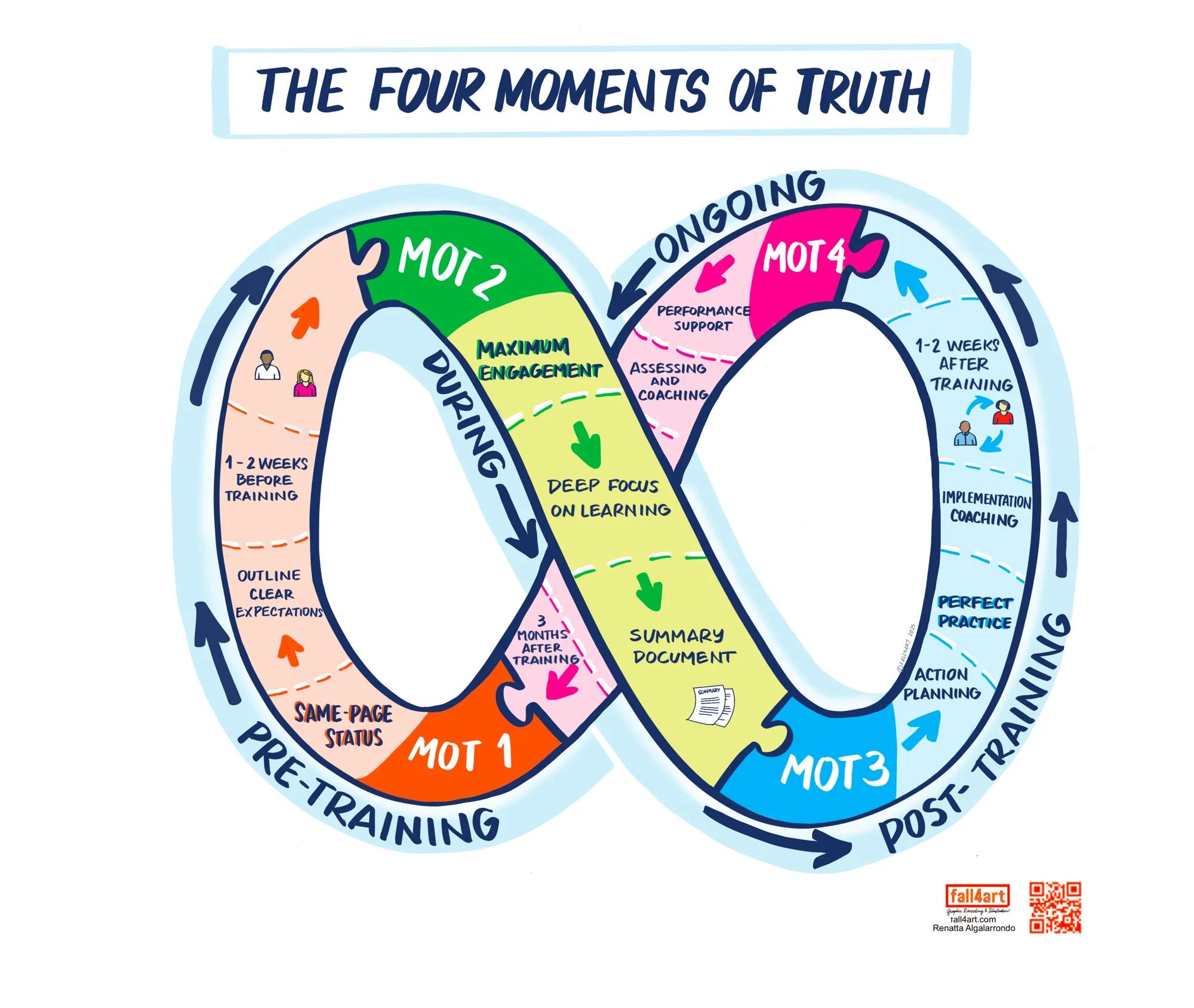
MOT1 = Same-Page Status
Content
This occurs one or two weeks before the training, during which the trainee and manager align their expectations about what will happen, how the trainee should focus on the training, and how applying the skills on the job will benefit the business unit. The role of the trainee is to review the learning objectives for the training and capture some ideas for getting started. What do they already know about the topic? What do they want to learn? How do they plan to use the skills they have gained? How will they disengage from their phones and other personal distractions?
This occurs one or two weeks before the training, during which the trainee and manager align their expectations about what will happen, how the trainee should focus on the training, and how applying the skills on the job will benefit the business unit. The role of the trainee is to review the learning objectives for the training and capture some ideas for getting started. What do they already know about the topic? What do they want to learn? How do they plan to use the skills they have gained? How will they disengage from their phones and other personal distractions?
Content
The manager discussion includes agreeing with the trainee on the desired learning objectives and boosting motivation. It includes discussing the summary document and action steps the trainee will develop at the end of the training. It also includes asking questions such as:
The manager discussion includes agreeing with the trainee on the desired learning objectives and boosting motivation. It includes discussing the summary document and action steps the trainee will develop at the end of the training. It also includes asking questions such as:
Content
What appealed to you as you reviewed the program?
What appealed to you as you reviewed the program?
Content
How do you think attending this course could positively affect the productivity of our team?
How do you think attending this course could positively affect the productivity of our team?
MOT2 = Maximum Engagement
Content
During this time, while the primary player is the trainee and their role is to engage actively in the experience, the manager takes the initiative to ensure the trainee is not interrupted or pulled away during the training.
During this time, while the primary player is the trainee and their role is to engage actively in the experience, the manager takes the initiative to ensure the trainee is not interrupted or pulled away during the training.
Content
The trainee leaves the training with a summary of their learning and a proposal for how they might implement actions to use the new skills.
The trainee leaves the training with a summary of their learning and a proposal for how they might implement actions to use the new skills.
MOT3 = Perfect Practice
Content
This is when the moment of truth arrives, and the trainee uses the skills in a real-world situation. However, this is not just practice; it is the trainee and the manager working together to achieve perfect practice, which includes specific goals with accurate measurement, focused attention, and ongoing feedback.
This is when the moment of truth arrives, and the trainee uses the skills in a real-world situation. However, this is not just practice; it is the trainee and the manager working together to achieve perfect practice, which includes specific goals with accurate measurement, focused attention, and ongoing feedback.
Content
Some questions the manager might use during these moments include:
Some questions the manager might use during these moments include:
Content
What were the three most important things you learned?
What were the three most important things you learned?
Content
Specifically, how do you plan to apply what you’ve learned to benefit the team?
Specifically, how do you plan to apply what you’ve learned to benefit the team?
Content
How will you measure the impact of that implementation?
How will you measure the impact of that implementation?
Content
Tell me how I can help; (for example, provide support, guidance, or give autonomy)
Tell me how I can help; (for example, provide support, guidance, or give autonomy)
MOT4 = Performance Support
Content
As Shriver states, this is the intersection of learning support and performance support in the form of ongoing coaching. This can include regular check-ins, celebrations for successes, and uncovering new needs.
As Shriver states, this is the intersection of learning support and performance support in the form of ongoing coaching. This can include regular check-ins, celebrations for successes, and uncovering new needs.
Content
Some questions the manager might use during these moments include:
Some questions the manager might use during these moments include:
Content
What has been working?
What has been working?
Content
What specific progress have you made against your goals?
What specific progress have you made against your goals?
Content
What is in your way?
What is in your way?
Content
How, if at all, should we adjust our plan moving forward?
How, if at all, should we adjust our plan moving forward?
Content
How might we apply this learning in new areas?
How might we apply this learning in new areas?
Content
Recently, Cathy Hayes shared ideas with ATD Forum members on how the 4MOT can support managers as people developers, helping employees move from potential to high performance. She also provided this downloadable toolkit for managers. Managers play a crucial role in all four moments of truth. They set the tone before learning begins, ensure the trainee has enough time for training, guide them through the application process, and foster ongoing growth. Their involvement heavily influences whether the training is a one-time event that is forgotten or a lasting improvement in performance.
Recently, Cathy Hayes shared ideas with ATD Forum members on how the 4MOT can support managers as people developers, helping employees move from potential to high performance. She also provided this downloadable toolkit for managers. Managers play a crucial role in all four moments of truth. They set the tone before learning begins, ensure the trainee has enough time for training, guide them through the application process, and foster ongoing growth. Their involvement heavily influences whether the training is a one-time event that is forgotten or a lasting improvement in performance.
Content
Download the toolkit to learn more about how you can support managers in your organization in becoming learning champions enabling performance. And if you have direct reports of your own, schedule your first MOT1 conversation this week and experience the impact of hands-on manager involvement firsthand. By championing every “moment of truth,” you, and those managers you support, will not only boost your organizations’ performance but also demonstrate your own leadership as a true people developer. Start today—your employees’ growth and your business results depend on it.
Download the toolkit to learn more about how you can support managers in your organization in becoming learning champions enabling performance. And if you have direct reports of your own, schedule your first MOT1 conversation this week and experience the impact of hands-on manager involvement firsthand. By championing every “moment of truth,” you, and those managers you support, will not only boost your organizations’ performance but also demonstrate your own leadership as a true people developer. Start today—your employees’ growth and your business results depend on it.