
ATD Blog
Practicing Learning With Intention and Responsibility
Content
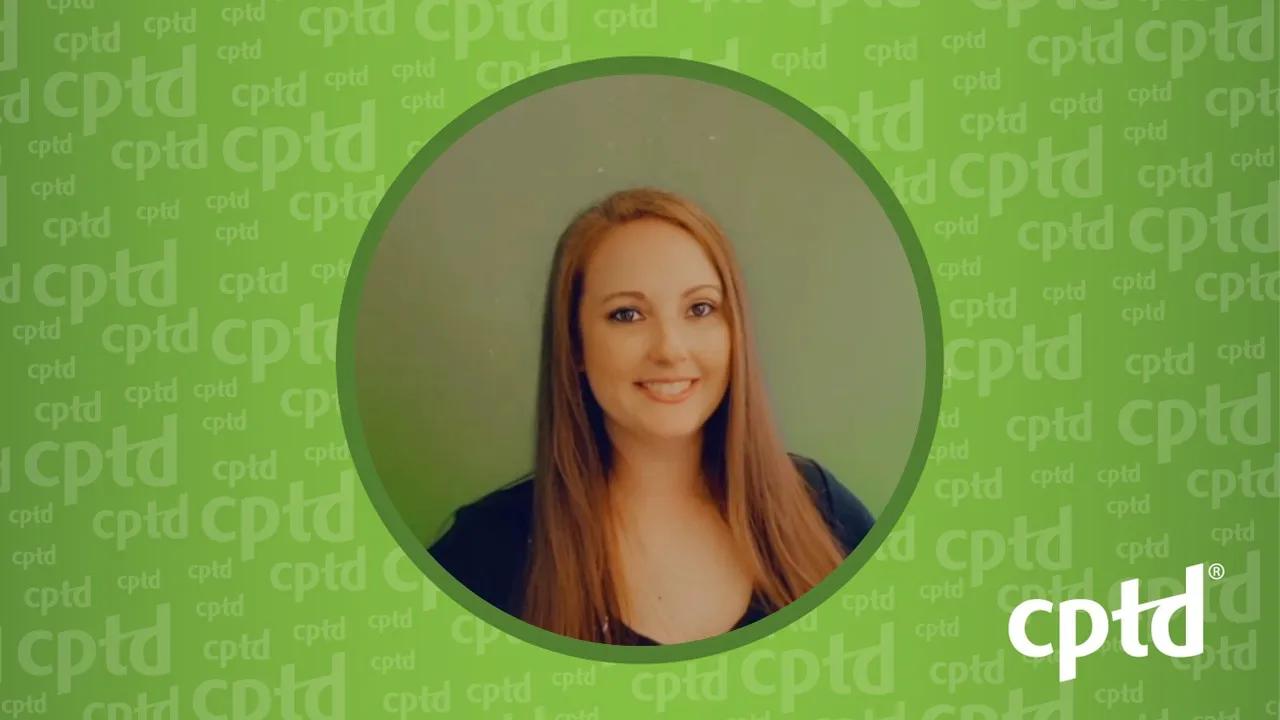
Meet Jenn Moore, a Senior Manager in Learning and Development who earned the Certified Professional in Talent Development (CPTD®) credential in 2020.
Meet Jenn Moore, a Senior Manager in Learning and Development who earned the Certified Professional in Talent Development (CPTD®) credential in 2020.
Published Mon Feb 09 2026
Content
Who are the more than 5,000 talent development professionals who have earned the APTD or CPTD credential? Get to know the talented and diverse community: Jenn Moore is a Senior Manager in Learning and Development. She earned the Certified Professional in Talent Development (CPTD®) credential in 2020.
Who are the more than 5,000 talent development professionals who have earned the APTD or CPTD credential? Get to know the talented and diverse community:
Jenn Moore is a Senior Manager in Learning and Development. She earned the Certified Professional in Talent Development (CPTD®) credential in 2020.
Content
Why did you pursue the CPTD? I pursued the CPTD to deepen and validate the work I had already been doing for years in talent development. As my career evolved from delivering training to designing systems, strategies, and enterprise-wide learning experiences, I wanted a credential that reflected both the breadth and rigor of the profession. The CPTD aligned with how I think about learning, not as isolated events, but as a driver of performance, culture, and business impact. How have you benefited from the credential—professionally and/or personally? Professionally, the CPTD strengthened my credibility as a strategic partner to leaders and stakeholders. It sharpened how I connect learning design to business outcomes, and it gave me a shared language to engage executives, managers, and project leaders alike. Personally, it reinforced my confidence in the value I bring to organizations and affirmed that my instincts and experience were grounded in best practices and evidence-based approaches. What advice would you share with others considering certification? Don’t wait until you feel “ready.” The process itself is what makes you ready. Approach the CPTD not as a test to pass, but as a way to reflect on your experience, challenge your assumptions, and elevate how you practice. It’s demanding, but it’s also clarifying and incredibly rewarding. How do you think certification helps the talent development field? The CPTD helps the talent development field by connecting learning theory, business strategy, and human-centered practice, ensuring that development efforts create meaningful and measurable impact. How did your employer support your pursuit of the credential? My employer supported my pursuit of the CPTD by providing flexibility and encouragement, and by recognizing the credential as an investment in both individual and organizational capability. What does having your credential mean to you? My CPTD credential represents more than a certification; it reflects how I approach my work: with intention, curiosity, and a responsibility to create learning that truly serves people and organizations. How did you get into the talent development field? I came into talent development through a blend of marketing, communications, and training work. Early on, I realized I was most energized when helping people understand complex information and apply it in meaningful ways. That curiosity grew into a career focused on onboarding, leadership development, sales enablement, and learning strategy, always with an eye toward making learning practical, human, and impactful. What is the best advice you’ve ever received? “Design for how people actually work, not how you wish they would.” That advice has shaped everything from how I build learning programs to how I partner with leaders and teams. What is a great book you’ve read recently? The Midnight Library by Matt Haig. It explores the idea that our lives are shaped less by the paths we didn’t take and more by how we show up to the one we’re living. It was both comforting and thought-provoking. What is your favorite hobby or pastime? I love cooking (not baking 😊) and exploring new recipes, using them as a guide to understand flavor combinations and techniques before adapting them to my own style. What is the most unusual job you've had? I once worked as the scorekeeper and DJ at a hockey rink—an unexpected role that required multitasking and quick decision making, when I initially thought it would just be fun.
Why did you pursue the CPTD?
I pursued the CPTD to deepen and validate the work I had already been doing for years in talent development. As my career evolved from delivering training to designing systems, strategies, and enterprise-wide learning experiences, I wanted a credential that reflected both the breadth and rigor of the profession. The CPTD aligned with how I think about learning, not as isolated events, but as a driver of performance, culture, and business impact.
How have you benefited from the credential—professionally and/or personally?
Professionally, the CPTD strengthened my credibility as a strategic partner to leaders and stakeholders. It sharpened how I connect learning design to business outcomes, and it gave me a shared language to engage executives, managers, and project leaders alike. Personally, it reinforced my confidence in the value I bring to organizations and affirmed that my instincts and experience were grounded in best practices and evidence-based approaches.
What advice would you share with others considering certification?
Don’t wait until you feel “ready.” The process itself is what makes you ready. Approach the CPTD not as a test to pass, but as a way to reflect on your experience, challenge your assumptions, and elevate how you practice. It’s demanding, but it’s also clarifying and incredibly rewarding.
How do you think certification helps the talent development field?
The CPTD helps the talent development field by connecting learning theory, business strategy, and human-centered practice, ensuring that development efforts create meaningful and measurable impact.
How did your employer support your pursuit of the credential?
My employer supported my pursuit of the CPTD by providing flexibility and encouragement, and by recognizing the credential as an investment in both individual and organizational capability.
What does having your credential mean to you?
My CPTD credential represents more than a certification; it reflects how I approach my work: with intention, curiosity, and a responsibility to create learning that truly serves people and organizations.
How did you get into the talent development field?
I came into talent development through a blend of marketing, communications, and training work. Early on, I realized I was most energized when helping people understand complex information and apply it in meaningful ways. That curiosity grew into a career focused on onboarding, leadership development, sales enablement, and learning strategy, always with an eye toward making learning practical, human, and impactful.
What is the best advice you’ve ever received?
“Design for how people actually work, not how you wish they would.”
That advice has shaped everything from how I build learning programs to how I partner with leaders and teams.
What is a great book you’ve read recently?
The Midnight Library by Matt Haig. It explores the idea that our lives are shaped less by the paths we didn’t take and more by how we show up to the one we’re living. It was both comforting and thought-provoking.
What is your favorite hobby or pastime?
I love cooking (not baking 😊) and exploring new recipes, using them as a guide to understand flavor combinations and techniques before adapting them to my own style.
What is the most unusual job you've had?
I once worked as the scorekeeper and DJ at a hockey rink—an unexpected role that required multitasking and quick decision making, when I initially thought it would just be fun.
Content
Have you earned the APTD or CPTD? Share your story with the community.
Have you earned the APTD or CPTD? Share your story with the community.