
ATD Blog
Science of Learning 101: The Latest Research on Needs Analysis and Learning Climate
Wed Jul 22 2015

Content
In the blog post I wrote last month, I discussed how knowledge is changing so fast in most fields that it’s impossible for most people to train for a job and then do that same job for any length of time. Jobs change as knowledge changes. The implications for the learning and development (L&D) function are overwhelming.
Content
Unfortunately, L&D isn’t helping the situation. Many L&D teams are simply throwing more information at people in their organizations—more PowerPoints, more e-learning. But by doing this, they become part of the problem. Senior leaders don’t understand how learning works; L&D must.
Content
The best way to solve this problem is to use the science of learning to deliver training programs that help the situation, not hurt it. Luckily, we have a great deal of guidance.
Content
What Works?
What Works?
Content
In “ The Science of Training and Development in Organizations: What Matters in Practice ,” Eduardo Salas and his fellow authors assert that “decisions about what to train, how to train, and how to implement and evaluate training should be informed by the best information science has to offer.” How could we disagree, especially under the current circumstances? And yet they found that too many training departments have relied on fads, not science.
In “The Science of Training and Development in Organizations: What Matters in Practice,” Eduardo Salas and his fellow authors assert that “decisions about what to train, how to train, and how to implement and evaluate training should be informed by the best information science has to offer.” How could we disagree, especially under the current circumstances? And yet they found that too many training departments have relied on fads, not science.
Content
The authors used meta-analyses (statistical methods for contrasting and combining results from multiple research studies) to determine how to best design, deliver, and implement training as effectively as possible.
Content
I thought I’d create a guide to this jam-packed research document and reveal some of the gold nuggets within. I’ll start with some of the definitions used. Then I’ll discuss the initial part of the article, in which they discuss what is needed prior to training in order to have effective training. That’s as far as I’ll get in this month’s post. (Did I mention that the research is jam-packed?)
Content
Definitions
Definitions
Content
Here are the primary definitions, quoted directly from the paper. Anything within square brackets are my own comments.
Content
Training: planned and systematic activities designed to promote the acquisition of knowledge (i.e., need to know), skills (i.e., need to do), and attitudes (i.e., need to feel). \[I’m not sure how much we can, or even should, try to make people feel, but some learning researchers and theorists think we ought to work on changing attitudes.\]
Content
Learning: a process of acquiring new knowledge and behaviors as a result of practice, study, or experience.
Content
Effective training: when trainees are intentionally provided with pedagogically sound opportunities to learn targeted knowledge, skills, and attitudes...through instruction, demonstration, practice, and timely diagnostic feedback about their performance.
Content
The goal of training : to create sustainable changes in behavior and cognition so that individuals possess the competencies they need to perform a job.
The goal of training: to create sustainable changes in behavior and cognition so that individuals possess the competencies they need to perform a job.
Content
Before Training Occurs
Content
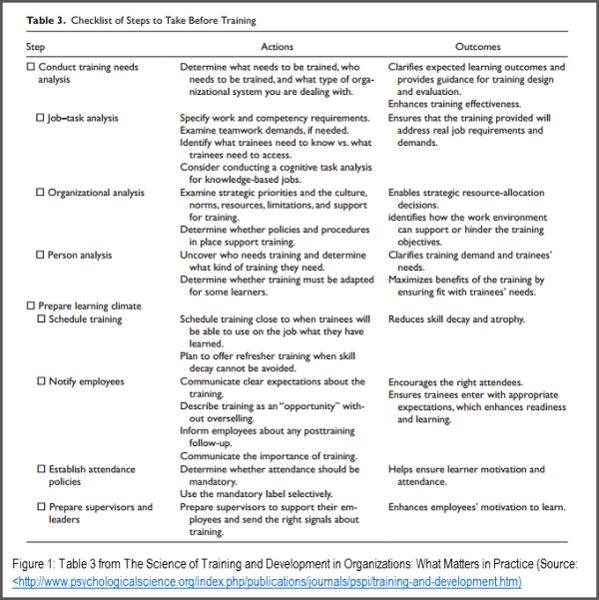
Figure 1 is Table 3 from the paper, showing pretraining actions that are most critical to improving training effectiveness. I’ll concentrate on a few of these actions for the rest of this article.

Content
Needs Analysis: What’s Needed and Why
Content
The authors found two steps to be especially critical for pretraining effectiveness: needs analysis and preparation of the learning climate. From my own knowledge of the field, many L&D teams don’t do either of these steps very often or with much precision. Could this be one reason for lack of success? Probably yes—ever heard of the phrase, “Measure twice; cut once?” Analysis helps you avoid mistakes before taking action. I know teams are working under deadlines, but they can conduct an analysis of learner needs and the learning climate fairly quickly.
Content
First, the authors clearly explain that it’s important to realize when training is not the right solution. A needs analysis will determine whether a nontraining solution is a better alternative.
Content
Second, they explain, we often ask too few or the wrong questions. Stakeholders (such as jobholders, their supervisors, or a subject matter expert) often don’t know what they need. Likewise, they often don’t know the difference between must-know content and content that a jobholder can simply retrieve as needed. The authors remind us that this distinction is of the utmost importance, because people can only process a certain amount of information at a time. If we ask people to memorize or process more information than necessary, it interferes with learning.
Content
You and I know that this situation (too much irrelevant content) is common with learning. It needs to stop. Who will stop it if not us?
Content
Learning Climate: What’s Needed and Why
Content
On the topic of learning climate, the authors found that expectations about training can and do affect learning. They found that trainees need realistic expectations about the training and must see how training will enhance their work.
Content
How supervisors handle training also matters a great deal. If training is to work, supervisors must be involved in a positive way, including preparing people and reinforcing learning objectives. They must support training in a variety of ways, or the training is much less likely to be useful.
Content
Maintenance of knowledge and skills (what the authors call skill decay) is a serious problem, so training should be scheduled near use. When skill decay is unavoidable—as is the case for infrequently used skills—proficiency practice is needed. However, the authors remind us that most organizations don’t do this unless it is mandated.
Content
Once again, we know that L&D understands the criticality of this situation, but management doesn’t. Therefore, it is our problem to fix.
Content
Next Steps
Next Steps
Content
Next month, I’ll continue with what the authors found in their meta-analyses of what works before, during, and after training. Please let me know in the comments what you will do with this material, because I very much want to provide you with actionable information.
Content
Further Reading
Further Reading
Content
Salas, E., Tannenbaum, S.I., Kraiger, K and Smith-Jentsch, K.A. (2012). “ The Science of Training and Development in Organizations: What Matters in Practice ,” Psychological Science in the Public Interest, 13 (2), pp. 74-101. 42.
Salas, E., Tannenbaum, S.I., Kraiger, K and Smith-Jentsch, K.A. (2012). “The Science of Training and Development in Organizations: What Matters in Practice,” Psychological Science in the Public Interest, 13 (2), pp. 74-101. 42.
Content
Salas, E., & Cannon-Bowers, J. A. (2001). “ The Science of Training: A Decade of Progress .” Annual Review of Psychology, 52, 471–499.
Salas, E., & Cannon-Bowers, J. A. (2001). “The Science of Training: A Decade of Progress.” Annual Review of Psychology, 52, 471–499.
Content
Tannenbaum, S. I. (2002). “A strategic view of organizational training and learning.” In K. Kraiger (Ed.), Creating, Implementing, and Maintaining Effective Training and Development: State-of-the-Art Lessons for Practice (pp. 10–52). San Francisco, CA: Jossey-Bass.