
ATD Blog
Transform Any Team of Experts Into an Expert Team: Part 2
Thu Feb 01 2018

Content
The previous blog in this series discussed existing research on how to help a team of individual experts become an expert team. In Part 1, we concluded that learning and performance interventions increase team performance, but that it wasn’t particularly clear what these interventions should look like. Further examination is required.
The previous blog in this series discussed existing research on how to help a team of individual experts become an expert team. In Part 1, we concluded that learning and performance interventions increase team performance, but that it wasn’t particularly clear what these interventions should look like. Further examination is required.
Content
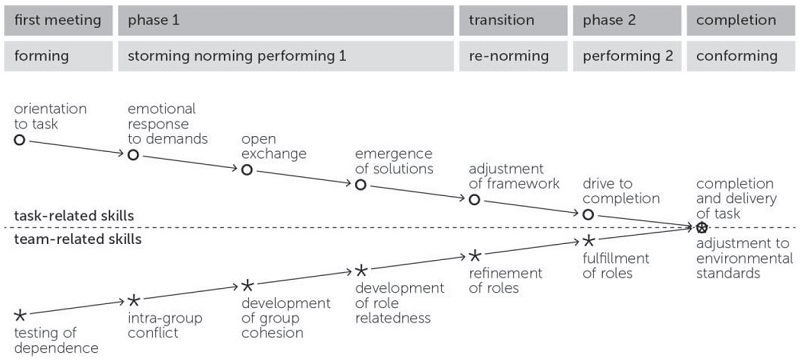
First, in order to identify where a team “is” (in other words, its current level of performance), you need to start with analyzing the team’s expected performance outcome(s), as well as the competencies needed to achieve that performance outcome. You also need to be aware of the phase that the team is in (based on the TEAM model in Figure 1).
First, in order to identify where a team “is” (in other words, its current level of performance), you need to start with analyzing the team’s expected performance outcome(s), as well as the competencies needed to achieve that performance outcome. You also need to be aware of the phase that the team is in (based on the TEAM model in Figure 1).
Content
Figure I. Essentials of the TEAM Model
Figure I. Essentials of the TEAM Model
Content
Source: Team Effectiveness and Team Development in CSCL, Fransen et. al
Source: Team Effectiveness and Team Development in CSCL, Fransen et. al
Content
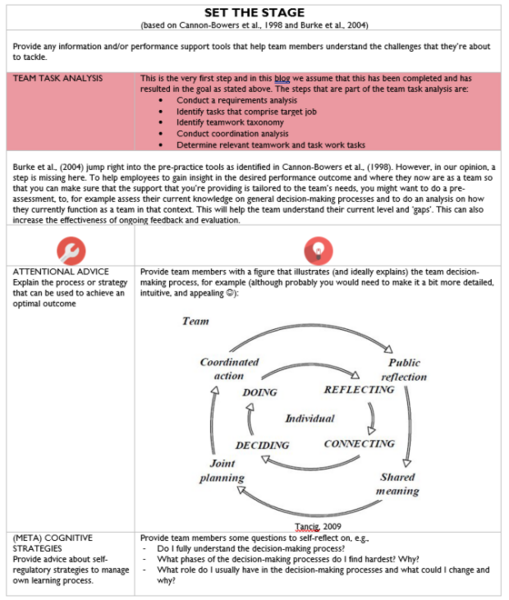
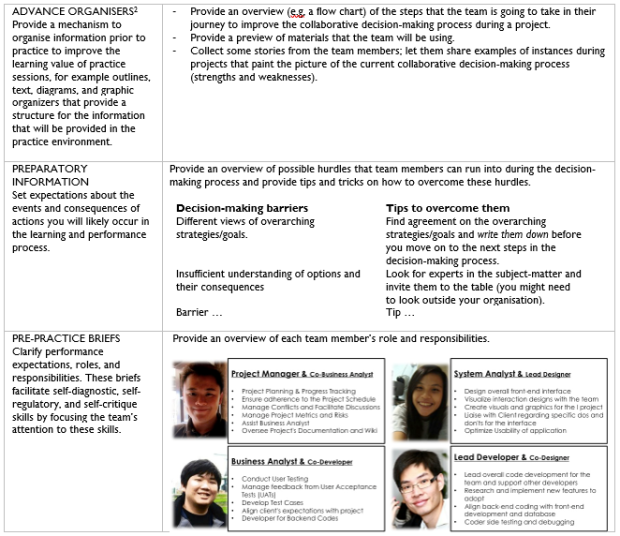
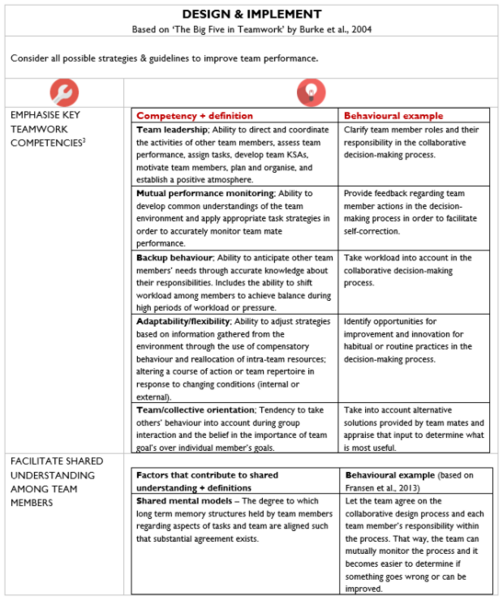
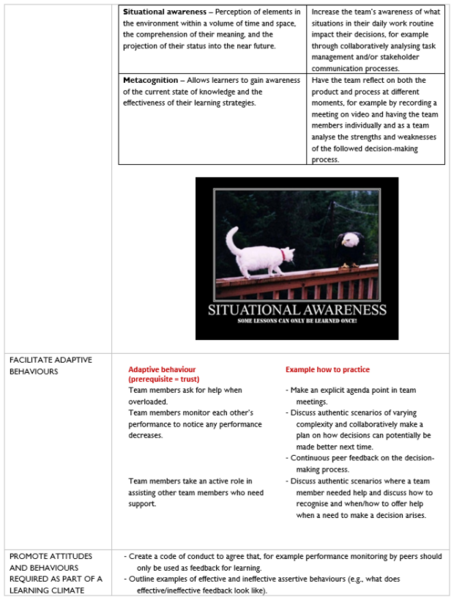
Now, let’s assume the analysis is done and you’ve explicated the task or teamwork gaps that the team needs to strengthen. To make the tools and examples more concrete, we’ll use the following goal: Improve the collaborative decision-making process during a project.
Now, let’s assume the analysis is done and you’ve explicated the task or teamwork gaps that the team needs to strengthen. To make the tools and examples more concrete, we’ll use the following goal: Improve the collaborative decision-making process during a project.
Content
Let’s take a look at how this would play out:
Let’s take a look at how this would play out:
Content
Last but not least, you need to regularly and systematically evaluate the team’s journey towards becoming an expert team. This evaluation needs to be multi-dimensional. It’s impossible to spell out a concrete example without a real-world context, however, you can – for example – use Will Thalheimer’s book Performance-Focused Smilesheets to create valuable questions for all team members to (repeatedly?) answer. In addition to this subjective way of evaluating, you also need to find a way to measure team outcomes more objectively, such as through structurally monitoring decision-making outcomes.
Last but not least, you need to regularly and systematically evaluate the team’s journey towards becoming an expert team. This evaluation needs to be multi-dimensional. It’s impossible to spell out a concrete example without a real-world context, however, you can – for example – use Will Thalheimer’s book Performance-Focused Smilesheets to create valuable questions for all team members to (repeatedly?) answer. In addition to this subjective way of evaluating, you also need to find a way to measure team outcomes more objectively, such as through structurally monitoring decision-making outcomes.
Content
We need those expert teams badly and you can help them to get where they need to be.
We need those expert teams badly and you can help them to get where they need to be.
Further Reading
Content
Ausubel, D.P., (1968). Educational Psychology: A Cognitive View. New York, NY: Holt, Rinehart and Winston.
Ausubel, D.P., (1968). Educational Psychology: A Cognitive View. New York, NY: Holt, Rinehart and Winston.
Content
Burke, C.S., Salas, E., Wilson-Donnelly, K., & Priest, H., (2004). How to turn a team of experts into an expert medical team: guidance from the aviation and military communities . Quality & Safety Health Care, 13 , i96-i104.
Burke, C.S., Salas, E., Wilson-Donnelly, K., & Priest, H., (2004). How to turn a team of experts into an expert medical team: guidance from the aviation and military communities. Quality & Safety Health Care, 13, i96-i104.
Content
Fransen, J., Weinberger, A., & Kirschner, P.A., (2013). Team effectiveness and team development in CSCL . Educational Psychologist, 48 , 9-24.
Fransen, J., Weinberger, A., & Kirschner, P.A., (2013). Team effectiveness and team development in CSCL. Educational Psychologist, 48, 9-24.
Content
Salas, E., DiazGranados, D., Klein, C., Shawn Burke, C., Stagle, K. C., Goodwin, F., & Halpin, S. M., (2008). Does team training improve team performance? A meta-analysis. Human Factors: The Journal of the Human Factors and Ergonomics Society, 50 , 903-933.
Salas, E., DiazGranados, D., Klein, C., Shawn Burke, C., Stagle, K. C., Goodwin, F., & Halpin, S. M., (2008). Does team training improve team performance? A meta-analysis. Human Factors: The Journal of the Human Factors and Ergonomics Society, 50, 903-933.
Content
Thalheimer, W., (2016). Performance-Focused Smile Sheets: A Radical Rethinking of a Dangerous Art Form . Work-Learning Press.
Thalheimer, W., (2016). Performance-Focused Smile Sheets: A Radical Rethinking of a Dangerous Art Form. Work-Learning Press.