
ATD Blog
Trust in the Balance: How Senior Leaders Build Confidence One Action at a Time
Content
Trust is reciprocal and shapes the relationship between leaders and their teams.
Trust is reciprocal and shapes the relationship between leaders and their teams.
Thu Mar 26 2026
Brought to you by
Content
Recently, in our work with clients, a consistent theme has surfaced: When engagement declines, trust in leadership is often at the center. This doesn’t mean leaders are less trustworthy, but expectations are higher, and leadership behaviors are under greater scrutiny. Leaders are called not only to build trust, but to extend it, because trust is reciprocal and shapes the relationship between leaders and their teams.
Recently, in our work with clients, a consistent theme has surfaced: When engagement declines, trust in leadership is often at the center. This doesn’t mean leaders are less trustworthy, but expectations are higher, and leadership behaviors are under greater scrutiny. Leaders are called not only to build trust, but to extend it, because trust is reciprocal and shapes the relationship between leaders and their teams.
What do we need to do differently to raise the bar on trust?
Content
First, understand which of our behaviors build trust and which erode trust. If 100 small things contribute to building trust, awareness of those “small things” is critical before we can make any adjustments. Trust is not intangible. It directly shapes engagement, decision speed, collaboration, and an organization’s ability to execute strategy. When leaders build trust intentionally, they protect both culture and results.
First, understand which of our behaviors build trust and which erode trust. If 100 small things contribute to building trust, awareness of those “small things” is critical before we can make any adjustments. Trust is not intangible. It directly shapes engagement, decision speed, collaboration, and an organization’s ability to execute strategy. When leaders build trust intentionally, they protect both culture and results.
Content
In a recent Signature Premier program with VP+-level executives, the group was asked to define trust. Those definitions varied, and the group found this task more difficult than anticipated. But when asking the group to define mistrust? It was easy to find examples, and each description brought physical and emotional reactions to the forefront.
In a recent Signature Premier program with VP+-level executives, the group was asked to define trust. Those definitions varied, and the group found this task more difficult than anticipated. But when asking the group to define mistrust? It was easy to find examples, and each description brought physical and emotional reactions to the forefront.
Content
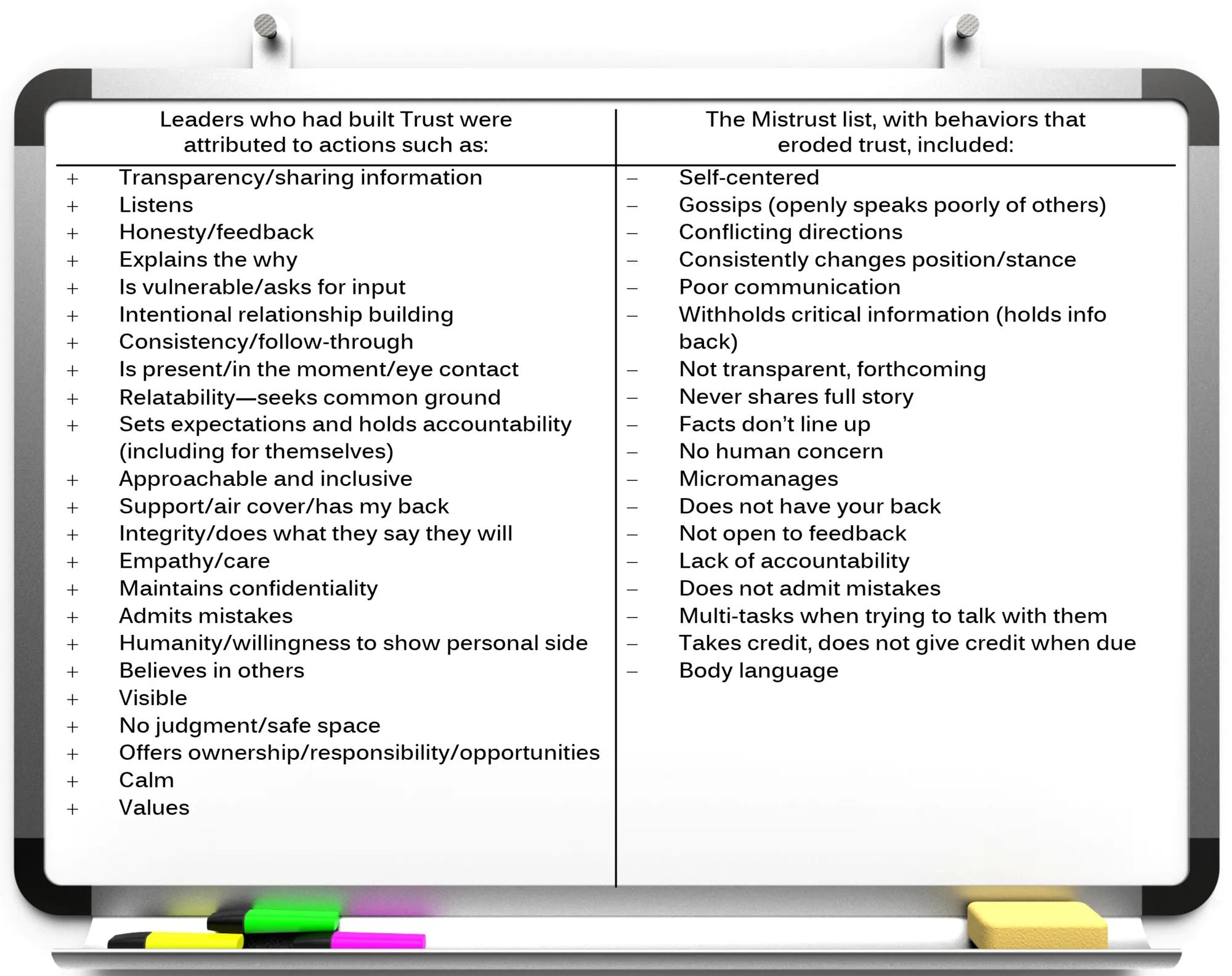
Our next step was to identify a leader we trusted, and one who gave a feeling of mistrust. The group then began listing behaviors and actions that showed up when trust was felt and behaviors that caused mistrust:
Our next step was to identify a leader we trusted, and one who gave a feeling of mistrust. The group then began listing behaviors and actions that showed up when trust was felt and behaviors that caused mistrust:
Content
When looking at both lists, the leaders in the room realized they had actions on the mistrust list that they owned, even if unintentional! Self-awareness is the first step in understanding how trust is created, but it also opens our eyes to how actions, even small ones, can make someone look untrustworthy.
When looking at both lists, the leaders in the room realized they had actions on the mistrust list that they owned, even if unintentional! Self-awareness is the first step in understanding how trust is created, but it also opens our eyes to how actions, even small ones, can make someone look untrustworthy.
Content
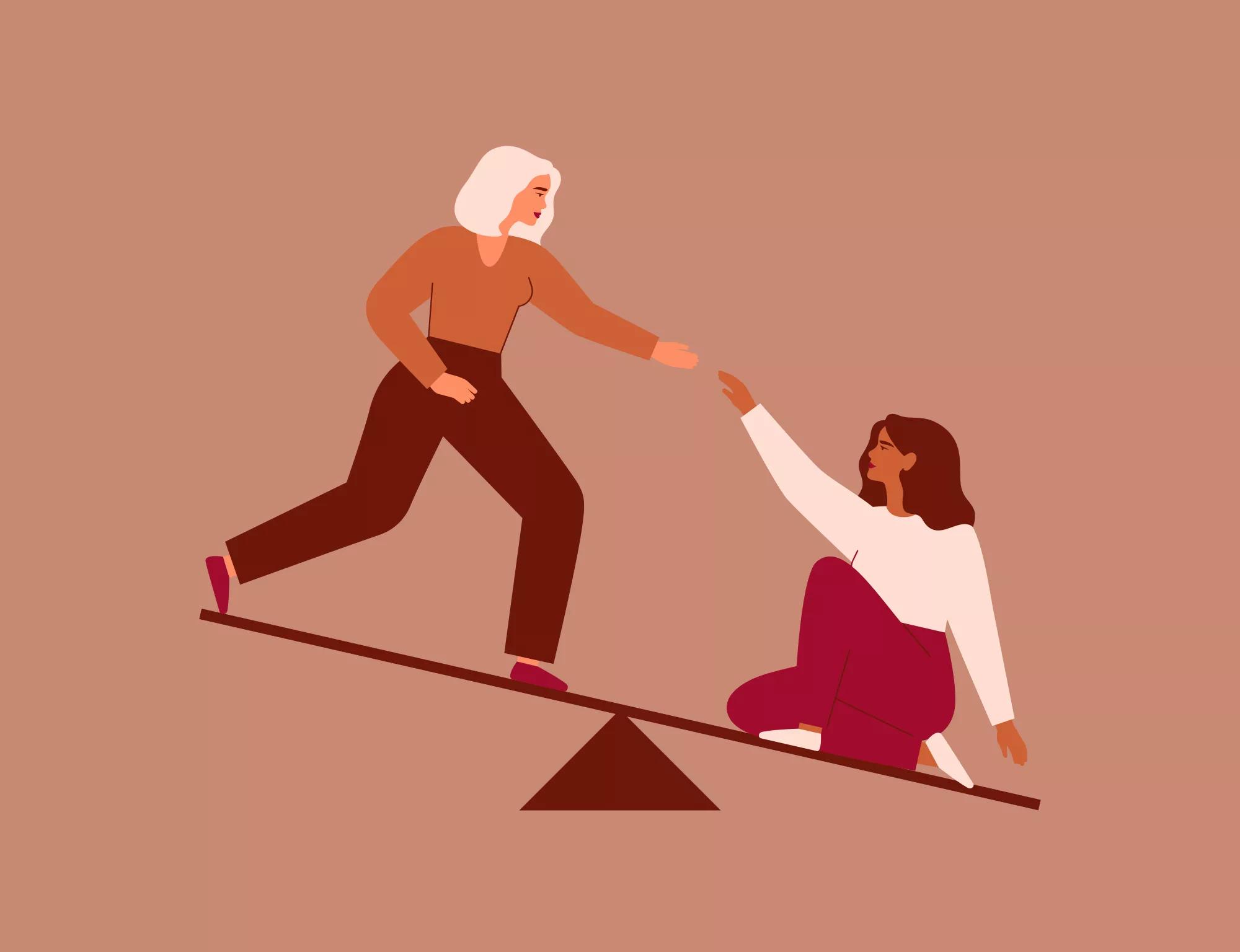
Here’s the challenge―it takes many small actions to build trust over time, but it doesn’t take much to upset that equation and tilt toward mistrust.
Here’s the challenge―it takes many small actions to build trust over time, but it doesn’t take much to upset that equation and tilt toward mistrust.
Content
Using the words of Kevin Plank, founder and CEO of Under Armour, this can be said another way: Trust is built in drops and lost in buckets.
Using the words of Kevin Plank, founder and CEO of Under Armour, this can be said another way: Trust is built in drops and lost in buckets.
Content
If more trust is needed, how do we, as leaders, increase it? We do it one drop at a time. (And we avoid falling into the list of actions driving mistrust!)
If more trust is needed, how do we, as leaders, increase it? We do it one drop at a time. (And we avoid falling into the list of actions driving mistrust!)
Content
As I look at the Trust list, I will highlight a few behaviors that don’t require new skill building. They are done with real interest and time, which is all it takes to build your trust.
As I look at the Trust list, I will highlight a few behaviors that don’t require new skill building. They are done with real interest and time, which is all it takes to build your trust.
Content
Be visible : Visibility matters most during crises, transformation, or simply when work feels nonstop. The instinct is to keep your head down and focus, but this is when leaders need to be seen. Engage with people. Ask questions. Show care for how others are feeling. You do not need to have all the answers, but staying hidden can create the perception that you are withholding information.
Be visible: Visibility matters most during crises, transformation, or simply when work feels nonstop. The instinct is to keep your head down and focus, but this is when leaders need to be seen. Engage with people. Ask questions. Show care for how others are feeling. You do not need to have all the answers, but staying hidden can create the perception that you are withholding information.
Content
Active listening : This includes body language, eye contact, leaning in, and not interrupting when someone is describing something, sharing their thoughts, or expressing their angst. Jumping in with commentary too soon comes across as self-interest or as putting your agenda over theirs.
Active listening: This includes body language, eye contact, leaning in, and not interrupting when someone is describing something, sharing their thoughts, or expressing their angst. Jumping in with commentary too soon comes across as self-interest or as putting your agenda over theirs.
Content
Show your personal side : You can begin building trust within the first 60 seconds of meeting someone if you find something in common. It may be as small as discovering you both have cats. Relatability and shared ground matter, but they require a willingness to share a bit of yourself. Vulnerability does not mean revealing deeply personal details. Admitting you do not have the answer, owning a mistake, or expressing a concern can go a long way in building a connection.
Show your personal side: You can begin building trust within the first 60 seconds of meeting someone if you find something in common. It may be as small as discovering you both have cats. Relatability and shared ground matter, but they require a willingness to share a bit of yourself. Vulnerability does not mean revealing deeply personal details. Admitting you do not have the answer, owning a mistake, or expressing a concern can go a long way in building a connection.
Focus on building trust.
Content
While the lists of actions under Trust and Mistrust are long, you can choose a few to increase trust. The three I mentioned have an immediate impact. On the mistrust side, check your behaviors. How many are driven by being rushed? Which may be unintentional? Removing them will help tip the scale back toward trust.
While the lists of actions under Trust and Mistrust are long, you can choose a few to increase trust. The three I mentioned have an immediate impact. On the mistrust side, check your behaviors. How many are driven by being rushed? Which may be unintentional? Removing them will help tip the scale back toward trust.
Content
Focus on building trust, and everything else you need to tackle as a leader will become easier.
Focus on building trust, and everything else you need to tackle as a leader will become easier.
Content
Trust me.
Trust me.