
ATD Blog
Turning Learning into Outcomes: The Power of Certification
Content
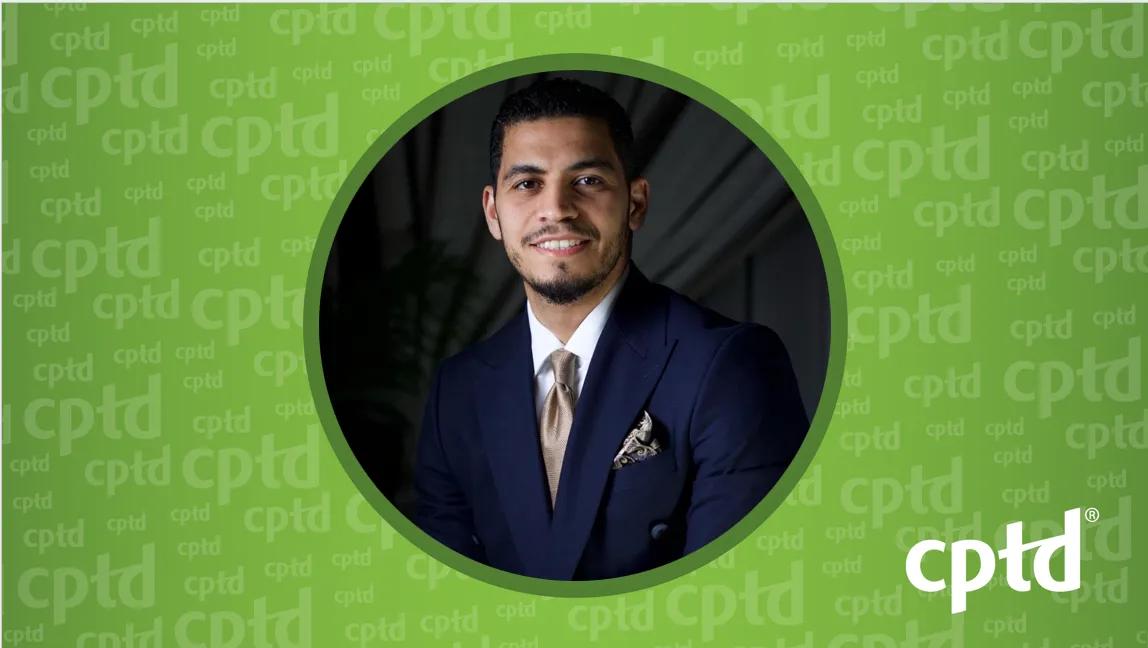
Meet Ahmed Hegazy who earned the Certified Professional in Talent Development (CPTD®) credential in 2020.
Meet Ahmed Hegazy who earned the Certified Professional in Talent Development (CPTD®) credential in 2020.
Published Mon Aug 25 2025
Content
Who are the more than 5,000 talent development professionals who have earned the APTD or CPTD credential? Get to know the talented and diverse community:
Who are the more than 5,000 talent development professionals who have earned the APTD or CPTD credential? Get to know the talented and diverse community:
Content
Ahmed Hegazy is a L&D Manager. He earned the Certified Professional in Talent Development (CPTD®) credential in 2020.
Ahmed Hegazy is a L&D Manager. He earned the Certified Professional in Talent Development (CPTD®) credential in 2020.
Content
Why did you pursue the APTD ® /CPTD? I pursued the CPTD to benchmark my practice against a global standard and hard-wire business impact into everything L&D does. The CPTD’s breadth across consulting, instructional design, data and analytics, and change leadership matched the reality of my role: move beyond courses, fix performance, and prove value.
Why did you pursue the APTD®/CPTD?
I pursued the CPTD to benchmark my practice against a global standard and hard-wire business impact into everything L&D does. The CPTD’s breadth across consulting, instructional design, data and analytics, and change leadership matched the reality of my role: move beyond courses, fix performance, and prove value.
Content
How have you benefited from the credential—professionally and/or personally? Professionally, the credential gave me immediate credibility with senior leaders and a common language to negotiate priorities. It shaped our organization’s TNA, sharpened solution design, and strengthened measurement. Personally, it reignited my craft: I’m more disciplined about analysis, braver about saying “training won’t fix this,” and faster at converting insights into job aids, coaching, or workflow tweaks.
How have you benefited from the credential—professionally and/or personally?
Professionally, the credential gave me immediate credibility with senior leaders and a common language to negotiate priorities. It shaped our organization’s TNA, sharpened solution design, and strengthened measurement. Personally, it reignited my craft: I’m more disciplined about analysis, braver about saying “training won’t fix this,” and faster at converting insights into job aids, coaching, or workflow tweaks.
Content
What advice would you share with others considering certification? Start with the ATD [Talent Development] Capability Model® self-assessment and turn gaps into a study plan tied to a real project (your “capstone in disguise”). Build a small study circle, schedule weekly sprints, and practice retrieval (flashcards, teach-backs). Most importantly, apply what you study immediately—ship a needs analysis, build a measurement plan, or redesign a program—so the exam prep pays off in business results, not just a badge.
What advice would you share with others considering certification?
Start with the ATD [Talent Development] Capability Model® self-assessment and turn gaps into a study plan tied to a real project (your “capstone in disguise”). Build a small study circle, schedule weekly sprints, and practice retrieval (flashcards, teach-backs). Most importantly, apply what you study immediately—ship a needs analysis, build a measurement plan, or redesign a program—so the exam prep pays off in business results, not just a badge.
Content
How do you think certification helps the talent development field? Certification raises the floor and the ceiling. It standardizes ethical, evidence-based practice while pushing our field beyond “learning hours” to performance and outcomes. For employers, it de-risks hiring; for practitioners, it creates a shared toolkit and vocabulary; for the business, it accelerates capability building tied to strategy.
How do you think certification helps the talent development field?
Certification raises the floor and the ceiling. It standardizes ethical, evidence-based practice while pushing our field beyond “learning hours” to performance and outcomes. For employers, it de-risks hiring; for practitioners, it creates a shared toolkit and vocabulary; for the business, it accelerates capability building tied to strategy.
Content
How did your employer support your pursuit of the credential? My leadership backed me with protected study time, access to data (LMS, KPIs, audit insights), and a real change project to apply new methods. Colleagues formed a peer-study group, and our executive sponsor green-lit quick experiments so I could practice measurement and iteration in the flow of work.
How did your employer support your pursuit of the credential?
My leadership backed me with protected study time, access to data (LMS, KPIs, audit insights), and a real change project to apply new methods. Colleagues formed a peer-study group, and our executive sponsor green-lit quick experiments so I could practice measurement and iteration in the flow of work.
Content
What does having your credential mean to you? It’s a commitment—to outcomes over activities, to ethics over shortcuts, and to treating learning as a strategic lever. The CPTD is a reminder to show my work with data and to design for performance, not just participation.
What does having your credential mean to you?
It’s a commitment—to outcomes over activities, to ethics over shortcuts, and to treating learning as a strategic lever. The CPTD is a reminder to show my work with data and to design for performance, not just participation.
Content
How did you get into the talent development field? I started as a facilitator, then led a cross-functional improvement project where a simple job aid and brief coaching cut errors dramatically. Seeing performance change without a “course” hooked me on L&D as a business discipline.
How did you get into the talent development field?
I started as a facilitator, then led a cross-functional improvement project where a simple job aid and brief coaching cut errors dramatically. Seeing performance change without a “course” hooked me on L&D as a business discipline.
Content
What is the best advice you’ve ever received? “Start with the problem, not the program.”
What is the best advice you’ve ever received?
“Start with the problem, not the program.”
Content
What is a great book you’ve read recently? Cathy Moore’s Map It —practical, outcome-obsessed, and instantly usable.
What is a great book you’ve read recently?
Cathy Moore’s Map It—practical, outcome-obsessed, and instantly usable.
Content
What is your favorite hobby or pastime? Padel—and lately, prototyping simple learning simulations for tougher soft-skills topics.
What is your favorite hobby or pastime?
Padel—and lately, prototyping simple learning simulations for tougher soft-skills topics.
Content
Content
Have you earned the APTD or CPTD? Share your story with the community.
Have you earned the APTD or CPTD? Share your story with the community.