
ATD Blog
What 1,000 Days of Duolingo Taught Me About Microlearning and Gamification
Content
What worked—and what didn’t—in one of the most popular examples of microlearning paired with gamification.
What worked—and what didn’t—in one of the most popular examples of microlearning paired with gamification.
Wed Jul 16 2025
Content
When I started my first Japanese lesson in Duolingo, my main goal was simple. I had a year until my first trip to Japan, and the vocabulary I’d picked up from years of watching anime just wasn’t going to cut it. But the instructional design nerd in me had a secondary plan: studying what worked—and what didn’t—in one of the most popular examples of microlearning paired with gamification.
When I started my first Japanese lesson in Duolingo, my main goal was simple. I had a year until my first trip to Japan, and the vocabulary I’d picked up from years of watching anime just wasn’t going to cut it. But the instructional design nerd in me had a secondary plan: studying what worked—and what didn’t—in one of the most popular examples of microlearning paired with gamification.
Content
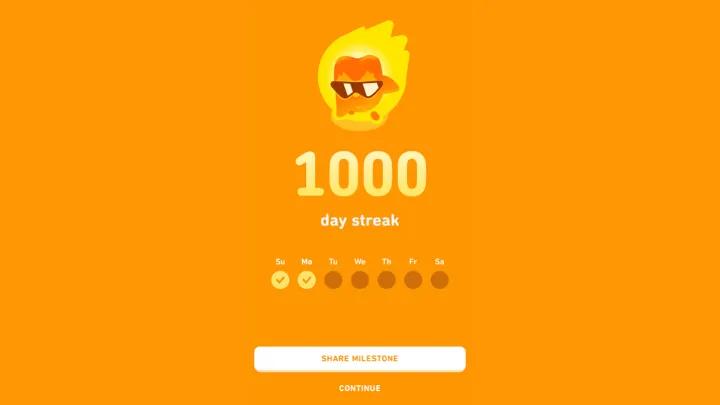
Committing to more than 365 days of regular practice felt like a lofty goal at the time. But little did I know I’d end up blowing past it, eventually hitting more than 1,000 days of practice. It’s in the long-haul part of this experiment where I uncovered some of the biggest lessons in how Duolingo tries to motivate learning.
Committing to more than 365 days of regular practice felt like a lofty goal at the time. But little did I know I’d end up blowing past it, eventually hitting more than 1,000 days of practice. It’s in the long-haul part of this experiment where I uncovered some of the biggest lessons in how Duolingo tries to motivate learning.
Small Amounts of Okay Practice Is Better Than No Practice at All
Content
Most language learning experts agree that Duolingo isn’t the most efficient way to become fluent. But more effective forms of training like formal classes, one-on-one coaching, and immersion just weren’t feasible given my packed schedule. And the Japanese workbooks collecting dust on my bookshelf made it clear that wasn’t a good path for me either.
Most language learning experts agree that Duolingo isn’t the most efficient way to become fluent. But more effective forms of training like formal classes, one-on-one coaching, and immersion just weren’t feasible given my packed schedule. And the Japanese workbooks collecting dust on my bookshelf made it clear that wasn’t a good path for me either.
Content
While I’ll admit the learning experience in Duolingo is just okay, having short bursts of training I could easily access on my phone made it a lot easier for me to carve out the time to regularly practice. And getting guilt trips from Duolingo’s owl mascot on my watch nagged me into compliance more than a few times. As a result, my ability to understand Japanese noticeably improved.
While I’ll admit the learning experience in Duolingo is just okay, having short bursts of training I could easily access on my phone made it a lot easier for me to carve out the time to regularly practice. And getting guilt trips from Duolingo’s owl mascot on my watch nagged me into compliance more than a few times. As a result, my ability to understand Japanese noticeably improved.
Content
So, it’s good to be pragmatic. Are you in a situation where people earnestly can’t commit to the ideal version of a learning experience? Then consider if a merely decent version they’re able to do regularly is better than nothing at all.
So, it’s good to be pragmatic. Are you in a situation where people earnestly can’t commit to the ideal version of a learning experience? Then consider if a merely decent version they’re able to do regularly is better than nothing at all.
It’s Hard to Become an Expert With Only Small Amounts of Okay Practice
Content
That said, have I managed to get anywhere close to fluent? Not remotely. To be sure, 1,000 days of practice sounds like a lot. But since many of those sessions were just a two-minute lesson squeezed between other tasks, it’s no surprise that I haven’t made a ton of progress.
That said, have I managed to get anywhere close to fluent? Not remotely. To be sure, 1,000 days of practice sounds like a lot. But since many of those sessions were just a two-minute lesson squeezed between other tasks, it’s no surprise that I haven’t made a ton of progress.
Content
The spaced learning and motivational tricks in Duolingo make it easier to practice regularly. But when each instance of practice is short and the learning design has notable gaps, you end up taking the very slow but steady approach to building a new skill.
The spaced learning and motivational tricks in Duolingo make it easier to practice regularly. But when each instance of practice is short and the learning design has notable gaps, you end up taking the very slow but steady approach to building a new skill.
Content
That’s not necessarily bad. But it’s worth considering as you think about the pacing and progress expectations you have for this kind of learning experience.
That’s not necessarily bad. But it’s worth considering as you think about the pacing and progress expectations you have for this kind of learning experience.
Gamification Features Work Better When Paired With Additional Motivation
Content
I actually tried using Duolingo years before this experiment. But the first time around I never managed to get in more than a few days of regular practice before life got in the way. As a result, I didn’t build a daily habit of using the app and eventually forgot to interact with it entirely.
I actually tried using Duolingo years before this experiment. But the first time around I never managed to get in more than a few days of regular practice before life got in the way. As a result, I didn’t build a daily habit of using the app and eventually forgot to interact with it entirely.
Content
Why did one attempt go so well when the previous one was a massive failure? I think a big factor was my motivation outside the app . My first try started with the vague idea that it would be cool to learn another language. Duolingo’s game-based external motivations would keep me going for a bit. But when other priorities got in the way, those features weren’t enough to keep me engaged.
Why did one attempt go so well when the previous one was a massive failure? I think a big factor was my motivation outside the app. My first try started with the vague idea that it would be cool to learn another language. Duolingo’s game-based external motivations would keep me going for a bit. But when other priorities got in the way, those features weren’t enough to keep me engaged.
Content
During my second try, though, I had a more pressing internal goal: knowing enough Japanese that I could confidently get around during my trip. So, when I got busy and Duolingo’s amusing tricks stopped working on me, that intrinsic motivation kept me going instead.
During my second try, though, I had a more pressing internal goal: knowing enough Japanese that I could confidently get around during my trip. So, when I got busy and Duolingo’s amusing tricks stopped working on me, that intrinsic motivation kept me going instead.
Content
If you want to try gamification in your projects, consider if your audience has personal motivations you can tap into as well.
If you want to try gamification in your projects, consider if your audience has personal motivations you can tap into as well.
Know the Levers That Motivate Your Audience
Content
Just like every game isn’t a fit for every person, every gamification technique doesn’t work equally well for every audience. For instance, some users get fired up about climbing the leagues in Duolingo while others couldn’t care less about how they’re doing compared to a bunch of strangers. (Can you guess what camp I’m in?)
Just like every game isn’t a fit for every person, every gamification technique doesn’t work equally well for every audience. For instance, some users get fired up about climbing the leagues in Duolingo while others couldn’t care less about how they’re doing compared to a bunch of strangers. (Can you guess what camp I’m in?)
Content
That means when you borrow motivational techniques from games, you have two good options for using them efficiently:
That means when you borrow motivational techniques from games, you have two good options for using them efficiently:
Content
Have limited resources and can only implement a few approaches? Your best bet is doing deep audience research so you can select the ones that matter most to them.
Have limited resources and can only implement a few approaches? Your best bet is doing deep audience research so you can select the ones that matter most to them.
Content
Have more resources and are aiming for a wide audience (much like Duolingo)? Consider using a broad range of gamification techniques, so there’s something for everyone when it comes to motivation.
Have more resources and are aiming for a wide audience (much like Duolingo)? Consider using a broad range of gamification techniques, so there’s something for everyone when it comes to motivation.
Don’t Make Your Rules Too Rigid
Content
One of Duolingo’s most famous gamification techniques is the streak: a celebration of multiple consecutive days of lessons. Fear of losing your streak intensifies as that number gets higher, which can motivate people to prioritize the app. But it also means that the demotivational risks of a lost streak intensify as well. Picking yourself up after breaking a 5-day streak is typically no big deal. But the gut punch from losing a 500-day streak might be enough to make someone quit entirely.
One of Duolingo’s most famous gamification techniques is the streak: a celebration of multiple consecutive days of lessons. Fear of losing your streak intensifies as that number gets higher, which can motivate people to prioritize the app. But it also means that the demotivational risks of a lost streak intensify as well. Picking yourself up after breaking a 5-day streak is typically no big deal. But the gut punch from losing a 500-day streak might be enough to make someone quit entirely.
Content
Thankfully, Duolingo has a safety net called the streak freeze. If you have a day where you’re too preoccupied to get your daily practice in, you can spend one of your limited streak freezes to keep from losing your progress. You can still lose your streak if you run out of freezes. But this mechanic lowers the risk of that happening by a fair bit.
Thankfully, Duolingo has a safety net called the streak freeze. If you have a day where you’re too preoccupied to get your daily practice in, you can spend one of your limited streak freezes to keep from losing your progress. You can still lose your streak if you run out of freezes. But this mechanic lowers the risk of that happening by a fair bit.
Content
Rules are important for gamified systems. But be sure to build in thoughtful flexibility to keep your gamification techniques from backfiring.
Rules are important for gamified systems. But be sure to build in thoughtful flexibility to keep your gamification techniques from backfiring.
Figure Out How Even Lazy Practice Can Be Useful
Content
I had a year and a half of solid Duolingo progress before a major barrier got in the way: getting sick. I didn’t have the brainpower to do full lessons or enough streak freezes to cover me for multiple days. So, I considered how I could bend the rules and keep my streak. In my case, I moved from the mentally taxing main lessons to the much easier character reading practice. That activity took less thought and time but still counted toward my streak—making it the perfect solution while sick.
I had a year and a half of solid Duolingo progress before a major barrier got in the way: getting sick. I didn’t have the brainpower to do full lessons or enough streak freezes to cover me for multiple days. So, I considered how I could bend the rules and keep my streak. In my case, I moved from the mentally taxing main lessons to the much easier character reading practice. That activity took less thought and time but still counted toward my streak—making it the perfect solution while sick.
Content
The problem was, once I got better, I still leaned on this not-quite-cheat for keeping my streak going. In fact, I’ve never gotten back to the lesson pacing I had before I gamed the system. And my vocabulary and grammar progress suffered as a result.
The problem was, once I got better, I still leaned on this not-quite-cheat for keeping my streak going. In fact, I’ve never gotten back to the lesson pacing I had before I gamed the system. And my vocabulary and grammar progress suffered as a result.
Content
That said, I’ll give Duolingo credit for ensuring this rule-bending approach is still useful. Because while my overall learning pace has slowed, I am noticeably better at reading the three forms of written Japanese.
That said, I’ll give Duolingo credit for ensuring this rule-bending approach is still useful. Because while my overall learning pace has slowed, I am noticeably better at reading the three forms of written Japanese.
Content
People are amazing at finding ways to game a system. Don’t just fight against that impulse. Consider ways to weave meaningful learning experiences into the most common cheats.
People are amazing at finding ways to game a system. Don’t just fight against that impulse. Consider ways to weave meaningful learning experiences into the most common cheats.
What’s Next?
Content
With that 1,000-day milestone in the rearview mirror, I’m reflecting on how I want to move forward. Duolingo regularly adds new features and tweaks existing ones. Because of that, the ID nerd in me thinks I’ll keep playing with the app to see what I can learn from the training approaches they try next.
With that 1,000-day milestone in the rearview mirror, I’m reflecting on how I want to move forward. Duolingo regularly adds new features and tweaks existing ones. Because of that, the ID nerd in me thinks I’ll keep playing with the app to see what I can learn from the training approaches they try next.
Content
But from a language-learning perspective, I hate to admit it, but the app’s extrinsic motivation isn’t nearly as effective on me as it used to be. What better way to justify another trip to Japan than by declaring I need an external plane ticket for intrinsic educational reasons!
But from a language-learning perspective, I hate to admit it, but the app’s extrinsic motivation isn’t nearly as effective on me as it used to be. What better way to justify another trip to Japan than by declaring I need an external plane ticket for intrinsic educational reasons!

Content
View Courses Recommended for You