
ATD Blog
What Corporate Trainers Need to Know About Building Accountable Teams
Content
B uilding accountable teams is not just about improving teamwork; it’s about strengthening execution, culture, and organizational success.
Building accountable teams is not just about improving teamwork; it’s about strengthening execution, culture, and organizational success.
Fri May 15 2026

Brought to you by

Content
Years ago, when I headed up the learning and leadership development function, I found that my team added the most value by supporting other teams across our company. Through those experiences, I learned that high-performing teams rarely happen by accident.
Years ago, when I headed up the learning and leadership development function, I found that my team added the most value by supporting other teams across our company. Through those experiences, I learned that high-performing teams rarely happen by accident.
Content
I have also seen that while many organizations invest heavily in leadership development, fewer focus on how teams themselves build accountability. Yet the difference between average and exceptional teams often lies not in individual talent, but in how team members collectively take accountability for results.
I have also seen that while many organizations invest heavily in leadership development, fewer focus on how teams themselves build accountability. Yet the difference between average and exceptional teams often lies not in individual talent, but in how team members collectively take accountability for results.
Content
Recent research by my team and me has directly explored this question: What do accountable teams in high-performing organizations actually do differently?
Recent research by my team and me has directly explored this question: What do accountable teams in high-performing organizations actually do differently?
Content
The study analyzed data from more than a decade of leadership accountability research involving thousands of leaders and hundreds of senior leadership teams worldwide.
The study analyzed data from more than a decade of leadership accountability research involving thousands of leaders and hundreds of senior leadership teams worldwide.
Content
The findings offer an important insight for trainers and leadership development professionals: team accountability is built through specific, observable practices that can be taught, coached, and reinforced.
Two Foundations of Accountable Teams
Content
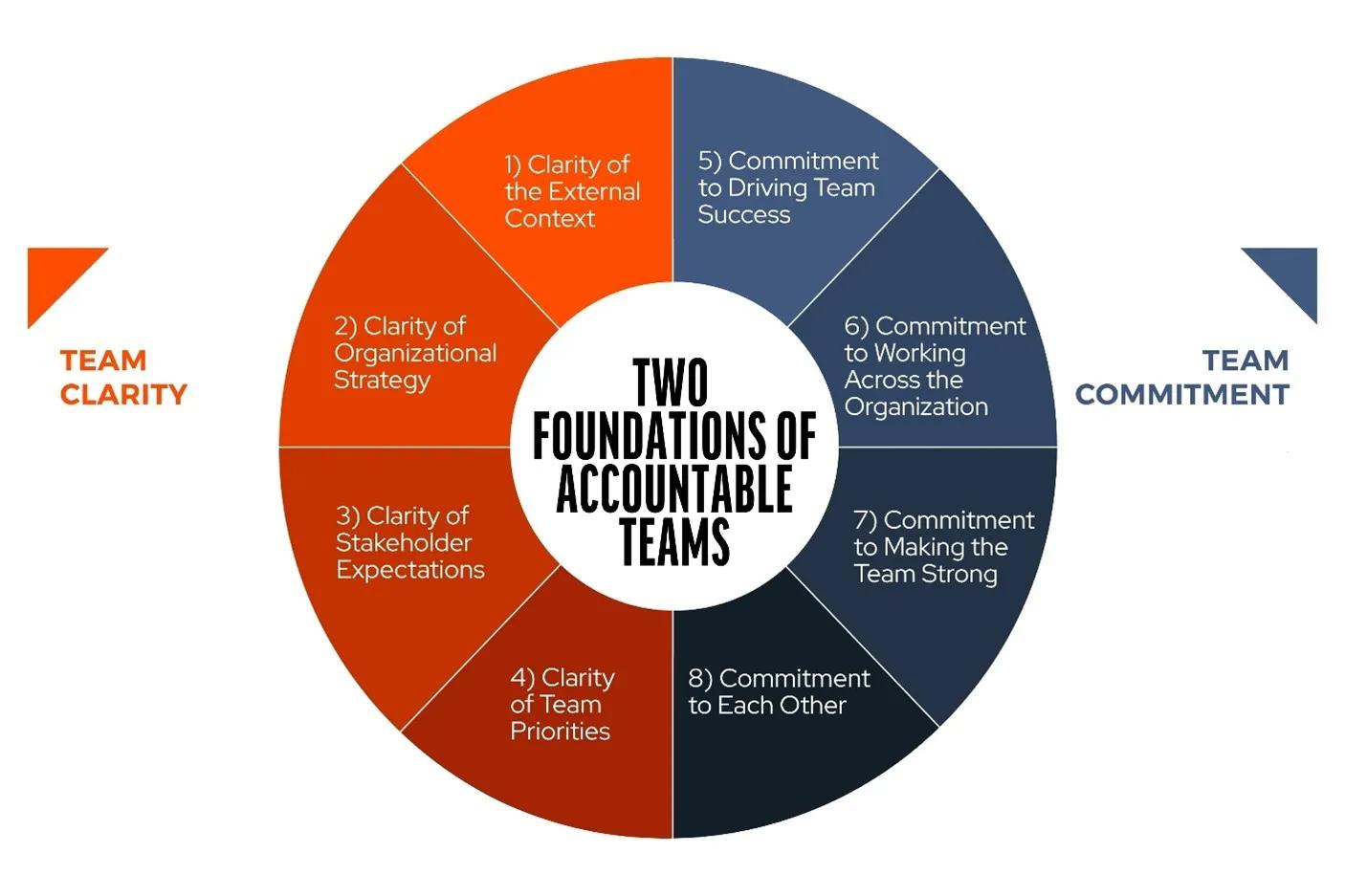
Our research identified two core dimensions that define accountable teams: Team Clarity and Team Commitment. Together, they shape how teams think, interact, and deliver results.
Our research identified two core dimensions that define accountable teams: Team Clarity and Team Commitment. Together, they shape how teams think, interact, and deliver results.
Content
Team Clarity refers to a shared understanding of the team's environment, priorities, and expectations. It’s not simply about having information; it’s about having a common interpretation of what matters most.
Team Clarity refers to a shared understanding of the team's environment, priorities, and expectations. It’s not simply about having information; it’s about having a common interpretation of what matters most.
Content
Team Commitment, on the other hand, represents the collective discipline and resolve of team members to uphold standards, collaborate effectively, and hold one another accountable for results.
Team Commitment, on the other hand, represents the collective discipline and resolve of team members to uphold standards, collaborate effectively, and hold one another accountable for results.
Content
High-performing teams excel at both.
High-performing teams excel at both.
Content
When clarity exists without commitment, teams may understand what needs to be done but fail to execute. When commitment exists without clarity, teams work hard but lack alignment. The strongest teams combine both—clear direction and disciplined follow-through.
When clarity exists without commitment, teams may understand what needs to be done but fail to execute. When commitment exists without clarity, teams work hard but lack alignment. The strongest teams combine both—clear direction and disciplined follow-through.
Content
For trainers designing leadership or team development programs, this distinction is critical.
For trainers designing leadership or team development programs, this distinction is critical.
The Practices That Separate Strong Teams From the Rest
Content
The compelling part of our research is that we uncovered 16 practices that consistently differentiate high-performing teams from average ones. These practices fall across the two dimensions of clarity and commitment.
The compelling part of our research is that we uncovered 16 practices that consistently differentiate high-performing teams from average ones. These practices fall across the two dimensions of clarity and commitment.
Content
Among the most important clarity practices are:
Among the most important clarity practices are:
Content
Understanding the external business environment, including trends, disruptions, and market shifts
Understanding the external business environment, including trends, disruptions, and market shifts
Content
Connecting the team’s work clearly to organizational strategy and priorities
Connecting the team’s work clearly to organizational strategy and priorities
Content
Maintaining a strong awareness of stakeholder expectations and interdependencies across the organization
Maintaining a strong awareness of stakeholder expectations and interdependencies across the organization
Content
Ensuring the team has a shared view of roles, priorities, and execution plans
Ensuring the team has a shared view of roles, priorities, and execution plans
Content
In other words, accountable teams continually work to align themselves with the realities of the business.
In other words, accountable teams continually work to align themselves with the realities of the business.
Content
But clarity is the starting point. The second set of practices focuses on commitment.
But clarity is the starting point. The second set of practices focuses on commitment.
Content
High-performing accountable teams demonstrate strong commitment by:
High-performing accountable teams demonstrate strong commitment by:
Content
Taking personal responsibility for delivering strategic priorities
Taking personal responsibility for delivering strategic priorities
Content
Working collaboratively across organizational boundaries
Working collaboratively across organizational boundaries
Content
Investing in the strength and effectiveness of the team itself
Investing in the strength and effectiveness of the team itself
Content
Holding one another accountable with candor, trust, and respect
Holding one another accountable with candor, trust, and respect
Content
Perhaps the most important finding is this: Accountable teams are willing to tackle difficult issues directly. They do not avoid conflict or uncomfortable conversations. Instead, they address them constructively to support the organization’s success.
Perhaps the most important finding is this: Accountable teams are willing to tackle difficult issues directly. They do not avoid conflict or uncomfortable conversations. Instead, they address them constructively to support the organization’s success.
Why This Matters for Corporate Trainers
Content
For learning and development professionals, the implications are significant.
For learning and development professionals, the implications are significant.
Content
Many leadership programs emphasize individual leadership competencies. But if organizations want stronger execution and culture, they must also develop team-level accountability.
Many leadership programs emphasize individual leadership competencies. But if organizations want stronger execution and culture, they must also develop team-level accountability.
Content
This means shifting some development efforts from “how individuals lead” to “how teams work together.” Team-based training programs can incorporate several practical elements:
This means shifting some development efforts from “how individuals lead” to “how teams work together.” Team-based training programs can incorporate several practical elements:
Content
1. Team Clarity Workshops. Facilitate sessions to align leadership teams with strategy, stakeholder expectations, and shared priorities. Structured dialogue helps create the shared understanding necessary for accountability.
1. Team Clarity Workshops. Facilitate sessions to align leadership teams with strategy, stakeholder expectations, and shared priorities. Structured dialogue helps create the shared understanding necessary for accountability.
Content
2. Team Accountability Diagnostics. Use surveys or assessments to help teams identify gaps in clarity or commitment. These diagnostics can reveal hidden misalignment within teams.
2. Team Accountability Diagnostics. Use surveys or assessments to help teams identify gaps in clarity or commitment. These diagnostics can reveal hidden misalignment within teams.
Content
3. Practice-Based Development. Focus development programs on real team behaviors—such as addressing tough issues, improving cross-functional collaboration, and strengthening trust.
3. Practice-Based Development. Focus development programs on real team behaviors—such as addressing tough issues, improving cross-functional collaboration, and strengthening trust.
Content
4. Leadership Team Coaching. Coaching entire leadership teams can accelerate the adoption of accountability practices that individuals often struggle to implement on their own.
4. Leadership Team Coaching. Coaching entire leadership teams can accelerate the adoption of accountability practices that individuals often struggle to implement on their own.
The Opportunity for Learning and Development Professionals
Content
The broader lesson from this research is that accountability is a team discipline.
The broader lesson from this research is that accountability is a team discipline.
Content
It emerges not simply from strong individual leaders but from teams that share clarity, demonstrate commitment, and hold one another responsible for results.
It emerges not simply from strong individual leaders but from teams that share clarity, demonstrate commitment, and hold one another responsible for results.
Content
For corporate trainers, this represents a powerful opportunity. By embedding these practices into leadership programs, team development initiatives, and coaching engagements, learning professionals can help organizations move beyond leadership theory and toward sustained performance.
For corporate trainers, this represents a powerful opportunity. By embedding these practices into leadership programs, team development initiatives, and coaching engagements, learning professionals can help organizations move beyond leadership theory and toward sustained performance.
Content
Ultimately, building accountable teams is not just about improving teamwork; it’s about strengthening execution, culture, and organizational success.
Ultimately, building accountable teams is not just about improving teamwork; it’s about strengthening execution, culture, and organizational success.
Content
And that is work worth training for.
And that is work worth training for.