
ATD Blog
Where Leadership, Strategy, and Learning Intersect
Content
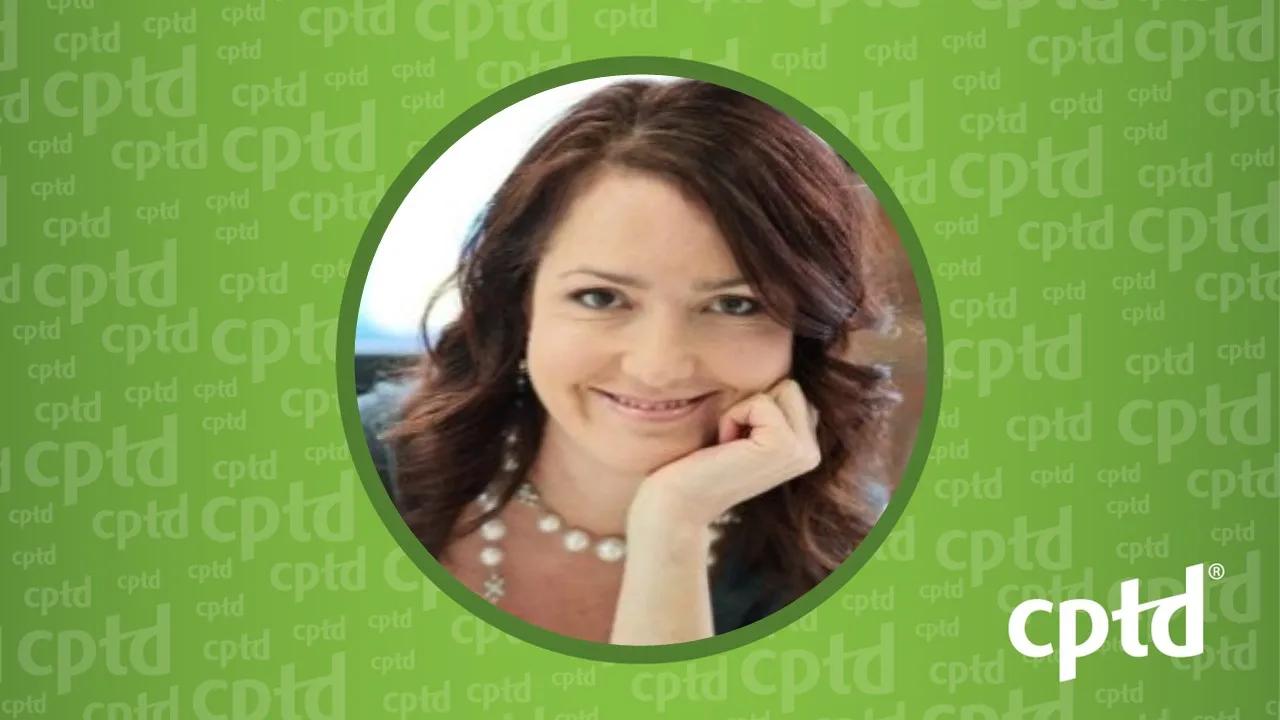
Meet Cassandra Gierden, a learning experience consultant who earned the Certified Professional in Talent Development (CPTD®) credential in 2024.
Meet Cassandra Gierden, a learning experience consultant who earned the Certified Professional in Talent Development (CPTD®) credential in 2024.
Published Mon Mar 09 2026
Content
Who are the more than 5,000 talent development professionals who have earned the APTD or CPTD credential? Get to know the talented and diverse community: Cassandra Gierden is a Organizational Effectiveness and Performance Consultant in Learning and Development. She earned the Certified Professional in Talent Development (CPTD®) credential in 2024.
Who are the more than 5,000 talent development professionals who have earned the APTD or CPTD credential? Get to know the talented and diverse community:
Cassandra Gierden is a Organizational Effectiveness and Performance Consultant in Learning and Development. She earned the Certified Professional in Talent Development (CPTD®) credential in 2024.
Content
Why did you pursue the APTD/CPTD? I pursued the CPTD later in my career as a way to both validate and sharpen my professional practice. After years of working across leadership development, coaching, organization development, and business performance consulting, I wanted a credential that reflected the full scope of talent development—not just facilitation or training delivery. The CPTD offered a rigorous, holistic framework that allowed me to identify gaps in my portfolio, confirm where my strengths were deeply embedded, and reconnect my real-world experience with a comprehensive, research-based capability model. What surprised me most during the preparation process was how clearly I could see the areas that felt most natural to me—and where I was most energized. That self-awareness alone made the pursuit worthwhile. How have you benefited from the credential—professionally and/or personally? Professionally, the CPTD gave me language, structure, and confidence to articulate the interconnected nature of talent development as a business system—from strategy and culture to performance, succession, learning design, and knowledge management. Preparing for the exam was demanding, but it was also affirming. I remember reminding myself to “trust my abilities” going into the exam. Passing wasn’t just about the result—it validated that I could draw on both academic foundations and decades of applied practice across the full talent development landscape. Personally, achieving the CPTD at this stage of my career was empowering. It reinforced that growth doesn’t plateau with experience—it deepens when you intentionally integrate learning with reflection. What advice would you share with others considering certification? My advice is simple: “Throw your hat over the fence, then go get it,” which, in other words, is “commit, then trust yourself.” For those early in their careers, I strongly recommend pursuing certification early and using continuing education to deliberately build capability across all three domains of the Talent Development Capability Model™. For seasoned professionals, don’t underestimate how valuable the APTD/CPTD can be as a diagnostic tool—it helps you see patterns in your work, clarify your strengths, and intentionally stretch into new areas. Most importantly: book your exam date. Too many capable professionals stay on the fence. I scheduled mine sooner than expected and decided I’d rather take the risk of failing than postpone indefinitely. That decision created momentum—and ultimately success. How do you think certification helps the talent development field? Talent development certifications help define and legitimize the field as a strategic business capability, not simply training or recruitment. As awareness grows, the opportunity is for organizations to more clearly recognize these credentials as indicators of systems-level thinking—and to intentionally seek credentialed professionals when building high-impact talent and organizational roles. I’m proud to hold a credential from the Association for Talent Development that reflects both rigor and relevance—and I look forward to continuing to champion the value of talent development as a core driver of business success What does having your credential mean to you? The CPTD represents more than a designation for me — it represents integration. It bridges business strategy, leadership development, coaching, and organizational effectiveness into a single, coherent framework. In a world where organizations are still learning how to truly leverage people as a strategic asset — especially with AI reshaping work — this capability set is not optional. I genuinely believe the CPTD is not only for talent development practitioners. It is a credential that every senior business leader would benefit from, because it teaches how organizations actually function as interconnected systems — and how talent, culture, and performance move together. How did you get into the talent development field? I didn’t enter talent development by design — I arrived by evolution. My early career was in hospitality management, where I initially thought I’d become a general manager of a five-star property. In my mid-20s, I questioned that path and moved into coaching just as the profession was emerging in the late 1990s — before most people knew what coaching was. I helped grow the field through my work with the International Coach Federation and my own coaching and consulting practice for over a decade. From there, my work moved internally into franchises and large organizations, where coaching expanded into leadership development, curriculum design, facilitation, and organizational effectiveness. Over time, talent development became the natural intersection point — blending business strategy, people systems, and leadership capability. Today, I see my work as an integration of everything I’ve learned, applied, and refined over the years. What is the best advice you’ve ever received? “Don’t be a secret.” That advice has shaped both my professional and personal life. Whether coaching executives, building a business, or navigating career transitions, being clear about what you care about, what you’re working toward, and what you offer creates opportunity and connection. It also invites support. The same applies personally—when we name our goals and challenges, we discover how rarely we’re alone. I see this principle play out daily in leadership, culture, and coaching work: visibility builds trust, momentum, and meaningful relationships. What is a great book you’ve read recently? One that continues to influence me is The Untethered Soul by Michael A. Singer. While often categorized as a personal development classic, its application to leadership and culture is powerful. The ideas around awareness, identity, and internal narrative deeply inform how I work with leaders navigating complexity, change, and pressure. What is your favorite hobby or pastime? Spending time with my two chocolate labradors will always top the list—but a close second is cold plunging. For over a year and a half, I practiced cold plunging consistently through Canadian winters and summers, often outdoors in rivers with a community of like-minded people. I continue the practice today—at home, in Nordic spas, and whenever I can get outside. There is nothing quite like jumping into cold water to reset perspective, build resilience, and reconnect to presence What is the most unusual job you've had? Bungee Jump Operations Assistant. At 16, I worked at the Bungee Jumping Zone, Nanaimo, BC, helping manage guest intakes—including waivers, questions, line flow, and on-site coordination. Despite a fear of heights, one condition of working there was having to jump. I did—five times, always in tandem. It remains my most unusual (and formative) job.
Why did you pursue the APTD/CPTD?
I pursued the CPTD later in my career as a way to both validate and sharpen my professional practice.
After years of working across leadership development, coaching, organization development, and business performance consulting, I wanted a credential that reflected the full scope of talent development—not just facilitation or training delivery. The CPTD offered a rigorous, holistic framework that allowed me to identify gaps in my portfolio, confirm where my strengths were deeply embedded, and reconnect my real-world experience with a comprehensive, research-based capability model.
What surprised me most during the preparation process was how clearly I could see the areas that felt most natural to me—and where I was most energized. That self-awareness alone made the pursuit worthwhile.
How have you benefited from the credential—professionally and/or personally?
Professionally, the CPTD gave me language, structure, and confidence to articulate the interconnected nature of talent development as a business system—from strategy and culture to performance, succession, learning design, and knowledge management.
Preparing for the exam was demanding, but it was also affirming. I remember reminding myself to “trust my abilities” going into the exam. Passing wasn’t just about the result—it validated that I could draw on both academic foundations and decades of applied practice across the full talent development landscape.
Personally, achieving the CPTD at this stage of my career was empowering. It reinforced that growth doesn’t plateau with experience—it deepens when you intentionally integrate learning with reflection.
What advice would you share with others considering certification?
My advice is simple: “Throw your hat over the fence, then go get it,” which, in other words, is “commit, then trust yourself.”
For those early in their careers, I strongly recommend pursuing certification early and using continuing education to deliberately build capability across all three domains of the Talent Development Capability Model™. For seasoned professionals, don’t underestimate how valuable the APTD/CPTD can be as a diagnostic tool—it helps you see patterns in your work, clarify your strengths, and intentionally stretch into new areas.
Most importantly: book your exam date. Too many capable professionals stay on the fence. I scheduled mine sooner than expected and decided I’d rather take the risk of failing than postpone indefinitely. That decision created momentum—and ultimately success.
How do you think certification helps the talent development field?
Talent development certifications help define and legitimize the field as a strategic business capability, not simply training or recruitment. As awareness grows, the opportunity is for organizations to more clearly recognize these credentials as indicators of systems-level thinking—and to intentionally seek credentialed professionals when building high-impact talent and organizational roles.
I’m proud to hold a credential from the Association for Talent Development that reflects both rigor and relevance—and I look forward to continuing to champion the value of talent development as a core driver of business success
What does having your credential mean to you?
The CPTD represents more than a designation for me — it represents integration.
It bridges business strategy, leadership development, coaching, and organizational effectiveness into a single, coherent framework. In a world where organizations are still learning how to truly leverage people as a strategic asset — especially with AI reshaping work — this capability set is not optional.
I genuinely believe the CPTD is not only for talent development practitioners. It is a credential that every senior business leader would benefit from, because it teaches how organizations actually function as interconnected systems — and how talent, culture, and performance move together.
How did you get into the talent development field?
I didn’t enter talent development by design — I arrived by evolution.
My early career was in hospitality management, where I initially thought I’d become a general manager of a five-star property. In my mid-20s, I questioned that path and moved into coaching just as the profession was emerging in the late 1990s — before most people knew what coaching was. I helped grow the field through my work with the International Coach Federation and my own coaching and consulting practice for over a decade.
From there, my work moved internally into franchises and large organizations, where coaching expanded into leadership development, curriculum design, facilitation, and organizational effectiveness. Over time, talent development became the natural intersection point — blending business strategy, people systems, and leadership capability. Today, I see my work as an integration of everything I’ve learned, applied, and refined over the years.
What is the best advice you’ve ever received?
“Don’t be a secret.”
That advice has shaped both my professional and personal life. Whether coaching executives, building a business, or navigating career transitions, being clear about what you care about, what you’re working toward, and what you offer creates opportunity and connection. It also invites support.
The same applies personally—when we name our goals and challenges, we discover how rarely we’re alone. I see this principle play out daily in leadership, culture, and coaching work: visibility builds trust, momentum, and meaningful relationships.
What is a great book you’ve read recently?
One that continues to influence me is The Untethered Soul by Michael A. Singer. While often categorized as a personal development classic, its application to leadership and culture is powerful. The ideas around awareness, identity, and internal narrative deeply inform how I work with leaders navigating complexity, change, and pressure.
What is your favorite hobby or pastime?
Spending time with my two chocolate labradors will always top the list—but a close second is cold plunging. For over a year and a half, I practiced cold plunging consistently through Canadian winters and summers, often outdoors in rivers with a community of like-minded people. I continue the practice today—at home, in Nordic spas, and whenever I can get outside. There is nothing quite like jumping into cold water to reset perspective, build resilience, and reconnect to presence
What is the most unusual job you've had?
Bungee Jump Operations Assistant. At 16, I worked at the Bungee Jumping Zone, Nanaimo, BC, helping manage guest intakes—including waivers, questions, line flow, and on-site coordination. Despite a fear of heights, one condition of working there was having to jump. I did—five times, always in tandem. It remains my most unusual (and formative) job.
Content
Have you earned the APTD or CPTD? Share your story with the community.
Have you earned the APTD or CPTD? Share your story with the community.