
ATD Blog
Why Building Strength at the Frontline Is the Leadership Imperative Organizations Can’t Ignore
Content
When frontline managers are equipped with the right mindset, skills, and support, they become powerful drivers of performance and culture.
When frontline managers are equipped with the right mindset, skills, and support, they become powerful drivers of performance and culture.
Thu Apr 09 2026

Brought to you by

Content
In many organizations, frontline managers are the critical link between strategy and execution. They translate priorities into action, guide teams through change, and shape the everyday employee experience.
In many organizations, frontline managers are the critical link between strategy and execution. They translate priorities into action, guide teams through change, and shape the everyday employee experience.
Content
Yet, despite their importance, frontline managers are often the least developed group of leaders in the organization.
Yet, despite their importance, frontline managers are often the least developed group of leaders in the organization.
Content
In our e-book, Building Strength at the Frontline , we summarize some of the key research that reflects the realities many organizations face today.
In our e-book, Building Strength at the Frontline, we summarize some of the key research that reflects the realities many organizations face today.
Content
Frontline managers typically represent 50–75 percent of the leadership population, with as many as 80 percent of employees reporting directly to them. Their ability to lead well directly affects employee engagement, productivity, and the customer experience.
Frontline managers typically represent 50–75 percent of the leadership population, with as many as 80 percent of employees reporting directly to them. Their ability to lead well directly affects employee engagement, productivity, and the customer experience.
Content
Yet, organizations are falling short in preparing them for success. Up to 82 percent of new managers receive little to no formal development, many becoming what we call “accidental managers.”
Yet, organizations are falling short in preparing them for success. Up to 82 percent of new managers receive little to no formal development, many becoming what we call “accidental managers.”
Content
At the same time, nearly 70 percent of frontline managers say they want to grow their leadership skills, but organizations aren’t meeting that demand.
At the same time, nearly 70 percent of frontline managers say they want to grow their leadership skills, but organizations aren’t meeting that demand.
Content
Perhaps most concerning, 60 percent of new managers fail within their first 24 months in the role.
Perhaps most concerning, 60 percent of new managers fail within their first 24 months in the role.
Content
The message is clear: Organizations cannot afford to overlook the development of their frontline leaders.
The message is clear: Organizations cannot afford to overlook the development of their frontline leaders.
The Role of the Frontline Manager Has Changed
Content
Part of the challenge is that expectations for frontline managers have evolved dramatically. In the past, frontline managers were primarily responsible for supervising work and executing directives from senior leaders. Today, their roles are far more complex.
Part of the challenge is that expectations for frontline managers have evolved dramatically. In the past, frontline managers were primarily responsible for supervising work and executing directives from senior leaders. Today, their roles are far more complex.
Content
First, they face what we might call the performance imperative. Organizations are under intense pressure to deliver results, and frontline leaders play a central role in ensuring strategic priorities are understood and executed. They must translate strategy into meaningful work for their teams while maintaining focus on what matters most.
First, they face what we might call the performance imperative. Organizations are under intense pressure to deliver results, and frontline leaders play a central role in ensuring strategic priorities are understood and executed. They must translate strategy into meaningful work for their teams while maintaining focus on what matters most.
Content
Second, many organizations now operate in hybrid or distributed environments, which requires managers to build trust, maintain performance, and create team cohesion without the benefit of daily face-to-face interaction.
Second, many organizations now operate in hybrid or distributed environments, which requires managers to build trust, maintain performance, and create team cohesion without the benefit of daily face-to-face interaction.
Content
Third, the rapid rise of artificial intelligence and digital transformation is changing how work gets done. Managers must help teams navigate technological change while balancing automation with human connection.
Third, the rapid rise of artificial intelligence and digital transformation is changing how work gets done. Managers must help teams navigate technological change while balancing automation with human connection.
Content
Finally, frontline managers have become essential to shaping the employee experience. They are responsible for fostering engagement, creating inclusive team cultures, and supporting the development of their people.
Finally, frontline managers have become essential to shaping the employee experience. They are responsible for fostering engagement, creating inclusive team cultures, and supporting the development of their people.
Content
These expanded expectations require new capabilities—and far greater support from organizations.
These expanded expectations require new capabilities—and far greater support from organizations.
Why Most Development Approaches Fall Short
Content
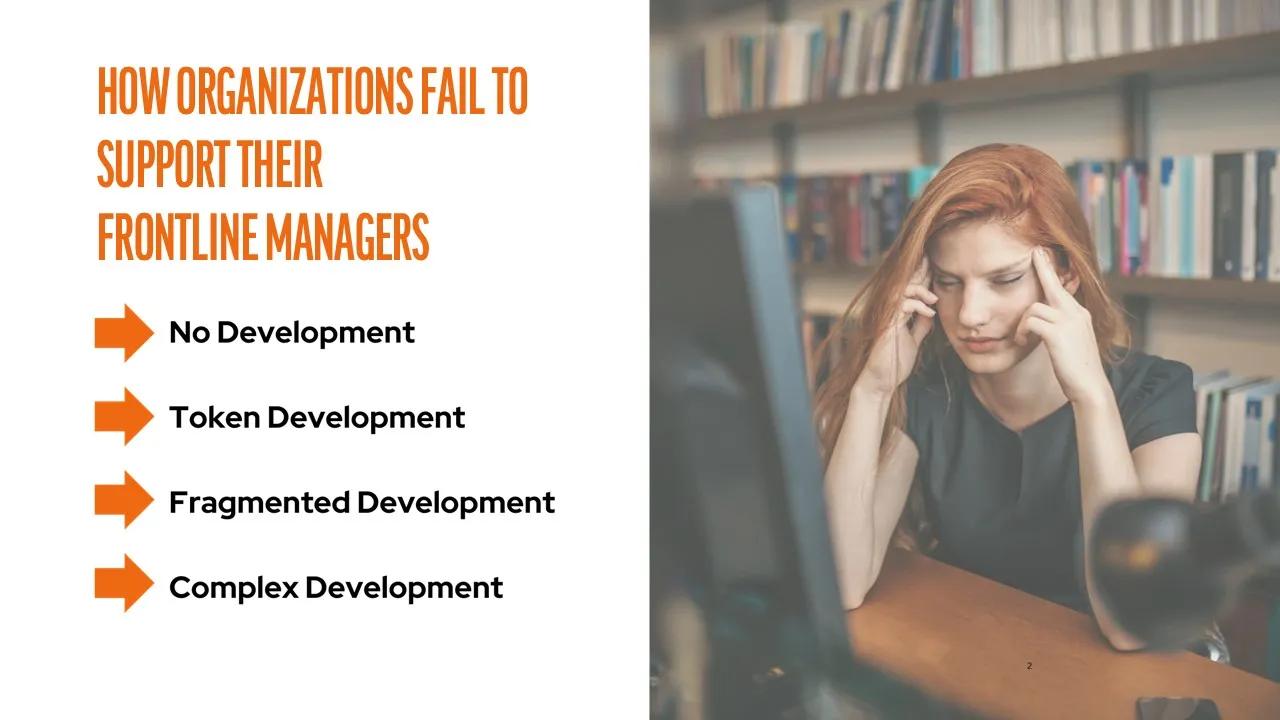
Unfortunately, many organizations rely on ineffective approaches when developing frontline managers.
Unfortunately, many organizations rely on ineffective approaches when developing frontline managers.
Content
For example, many organizations provide little to no development at all, expecting new managers to simply figure it out on their own.
For example, many organizations provide little to no development at all, expecting new managers to simply figure it out on their own.
Content
Others offer token development, such as a single course or a generic online module that fails to address real leadership challenges.
Others offer token development, such as a single course or a generic online module that fails to address real leadership challenges.
Content
Another common issue is fragmented development, where managers are exposed to disconnected resources—books, webinars, or isolated training sessions—without a coherent learning journey. In other cases, development becomes overly complex, introducing too many abstract models that fail to translate into practical leadership behaviors.
Another common issue is fragmented development, where managers are exposed to disconnected resources—books, webinars, or isolated training sessions—without a coherent learning journey. In other cases, development becomes overly complex, introducing too many abstract models that fail to translate into practical leadership behaviors.
Content
None of these approaches adequately prepares leaders for the realities of managing people and delivering results.
None of these approaches adequately prepares leaders for the realities of managing people and delivering results.
A Better Way to Build Strength at the Frontline
Content
Organizations that succeed in developing frontline leaders tend to focus on three key strategies:
Organizations that succeed in developing frontline leaders tend to focus on three key strategies:
Content
1. Support the transition into management. The shift from individual contributor to leader is one of the most important career transitions a person will experience. Organizations must help new managers understand the expectations of the role and develop the mindset required to lead others.
1. Support the transition into management. The shift from individual contributor to leader is one of the most important career transitions a person will experience. Organizations must help new managers understand the expectations of the role and develop the mindset required to lead others.
Content
2. Emphasize leadership accountability. One of the fastest ways to help managers step up is by focusing on accountability. Effective leaders take ownership of their role, lead deliberately, and demonstrate resilience and courage when facing challenges.
2. Emphasize leadership accountability. One of the fastest ways to help managers step up is by focusing on accountability. Effective leaders take ownership of their role, lead deliberately, and demonstrate resilience and courage when facing challenges.
Content
3. Create an integrated development experience. The most effective programs combine workshops, real-world practice, peer learning, coaching, and digital resources into a structured learning journey that builds practical leadership skills over time.
3. Create an integrated development experience. The most effective programs combine workshops, real-world practice, peer learning, coaching, and digital resources into a structured learning journey that builds practical leadership skills over time.
Content
When done well, this kind of integrated approach helps managers build accountability at three levels: personally, within their teams, and across the organization.
When done well, this kind of integrated approach helps managers build accountability at three levels: personally, within their teams, and across the organization.
The Leadership Imperative
Content
If organizations want stronger cultures, higher engagement, and better results, they must start by strengthening leadership where it matters most.
If organizations want stronger cultures, higher engagement, and better results, they must start by strengthening leadership where it matters most.
Content
Frontline managers are the leaders who shape the day-to-day reality of work. When they are equipped with the right mindset, skills, and support, they become powerful drivers of performance and culture.
Frontline managers are the leaders who shape the day-to-day reality of work. When they are equipped with the right mindset, skills, and support, they become powerful drivers of performance and culture.
Content
In other words, building frontline strength isn’t just a leadership initiative. It’s a strategic imperative.
In other words, building frontline strength isn’t just a leadership initiative. It’s a strategic imperative.