
ATD Blog
Why Vocal Empowerment Matters More Than Ever in the Age of AI
Content
Actionable strategies to help employees confidently speak up that you can integrate into your training and overall talent development strategy.
Actionable strategies to help employees confidently speak up that you can integrate into your training and overall talent development strategy.
Wed Apr 23 2025

Content
There’s no question that AI is transforming the talent development landscape.
There’s no question that AI is transforming the talent development landscape.
Content
From AI’s ability to tailor an employee’s learning journey, learning preferences, and previous courses to virtual training that uses AI chatbots to answer questions and provide on-demand microlearning support, AI has opened so many developmental possibilities.
From AI’s ability to tailor an employee’s learning journey, learning preferences, and previous courses to virtual training that uses AI chatbots to answer questions and provide on-demand microlearning support, AI has opened so many developmental possibilities.
Content
While some trainers, understandably, are worried about being rendered irrelevant, here’s some context (and potentially good news) about skills-based communication and leadership training.
While some trainers, understandably, are worried about being rendered irrelevant, here’s some context (and potentially good news) about skills-based communication and leadership training.
Content
Organizations are not seeking external training for purely knowledge-based issues, since AI can put together training on just about anything.
Organizations are not seeking external training for purely knowledge-based issues, since AI can put together training on just about anything.
Content
Good information is not a differentiator. But with more technology comes more miscommunication.
Good information is not a differentiator. But with more technology comes more miscommunication.
Content
Employees may have instant access to information, but retention of that information, and the emotional intelligence and ability to navigate high-stakes conversations are still deeply human skills that require live, synchronous training, real-time coaching, and feedback to build.
Employees may have instant access to information, but retention of that information, and the emotional intelligence and ability to navigate high-stakes conversations are still deeply human skills that require live, synchronous training, real-time coaching, and feedback to build.
The Shift from Knowledge Acquisition to Skill Embodiment
Content
AI can provide knowledge, but it cannot replace human connection, trust, or the ability to adjust in real time to the nuances of communication. The most effective L&D initiatives aren’t just about acquiring knowledge; they’re about building the confidence and competence to use it when it matters most.
AI can provide knowledge, but it cannot replace human connection, trust, or the ability to adjust in real time to the nuances of communication. The most effective L&D initiatives aren’t just about acquiring knowledge; they’re about building the confidence and competence to use it when it matters most.
Content
Skills-based trainers can make the most impact by using role play to help people practice communication and aligned leadership skills for learning transfer to happen.
Skills-based trainers can make the most impact by using role play to help people practice communication and aligned leadership skills for learning transfer to happen.
Content
The best way to ensure that learning sticks? Live, immersive role-play training.
The best way to ensure that learning sticks? Live, immersive role-play training.
What True Role-Play Training Looks Like
Content
Many trainers say they use role playing for skill development, but it’s often a surface-level exercise—scripted, predictable, and failing to replicate the real-world pressures of high-stakes communication.
Many trainers say they use role playing for skill development, but it’s often a surface-level exercise—scripted, predictable, and failing to replicate the real-world pressures of high-stakes communication.
Content
True role-play training requires:
True role-play training requires:
Content
Tension and unpredictability . Learners can experience and navigate the realities of high-stakes conversations.
Tension and unpredictability. Learners can experience and navigate the realities of high-stakes conversations.
Content
Customization . Scenarios are tailored to an organization’s or team’s specific challenges and areas for communication growth.
Customization. Scenarios are tailored to an organization’s or team’s specific challenges and areas for communication growth.
Content
Live coaching and feedback . Participants can adjust in real-time and retry their communication to make it more meaningful.
Live coaching and feedback. Participants can adjust in real-time and retry their communication to make it more meaningful.
Content
Psychological safety. Learners can take necessary risks and try out different messages and styles before communicating their ideas in real life.
Psychological safety. Learners can take necessary risks and try out different messages and styles before communicating their ideas in real life.
Vocal Empowerment: The Key to a Speak-Up Culture
Content
As AI reshapes the learning landscape, organizations must prioritize training that helps employees not just know what to say but embody the skills to say it effectively. This is especially critical for fostering a speak-up culture.
As AI reshapes the learning landscape, organizations must prioritize training that helps employees not just know what to say but embody the skills to say it effectively. This is especially critical for fostering a speak-up culture.
Content
Every time an employee fails to speak up in the workplace, research shows it costs a company at least $7,500 USD ( Crucial Learning ). And yet nearly 70 percent of employees feel they cannot speak up about their concerns or issues at work ( Harvard Business Review , 2022).
Every time an employee fails to speak up in the workplace, research shows it costs a company at least $7,500 USD (Crucial Learning). And yet nearly 70 percent of employees feel they cannot speak up about their concerns or issues at work (Harvard Business Review, 2022).
Content
The top reasons employees give for not speaking up include:
The top reasons employees give for not speaking up include:
Content
A perceived lack of safety and trust
A perceived lack of safety and trust
Content
Fear of retaliation or career derailment
Fear of retaliation or career derailment
Content
Not knowing how to communicate or who to communicate with in high-stakes situations
Not knowing how to communicate or who to communicate with in high-stakes situations
Content
Lacking the skills to move through the discomfort that typically accompanies speaking up
Lacking the skills to move through the discomfort that typically accompanies speaking up
Content
While talent development is only one piece of ensuring organizations foster a speak-up culture, it is a critical component.
While talent development is only one piece of ensuring organizations foster a speak-up culture, it is a critical component.
Content
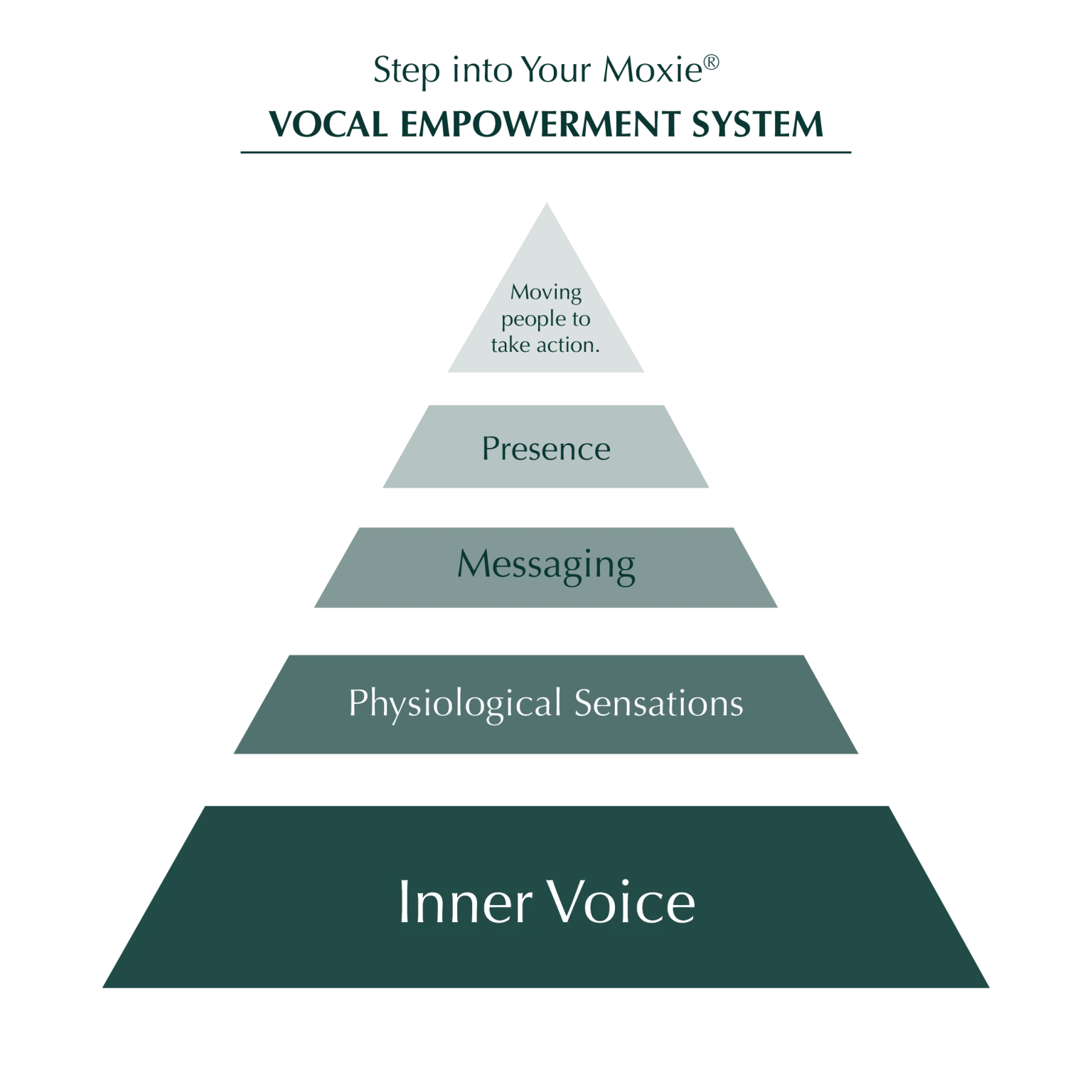
Unfortunately, too much speak-up training doesn’t work because it doesn’t address all five communication competencies that Step Into Your Moxie has identified are necessary for vocal empowerment.
Unfortunately, too much speak-up training doesn’t work because it doesn’t address all five communication competencies that Step Into Your Moxie has identified are necessary for vocal empowerment.
Content
Self-talk – Managing the inner narrative that shapes confidence and clarity.
Self-talk – Managing the inner narrative that shapes confidence and clarity.
Content
Navigating discomfort – Recognizing and moving through uncomfortable sensations that often arise during important communication.
Navigating discomfort – Recognizing and moving through uncomfortable sensations that often arise during important communication.
Content
Messaging – Knowing what words to use in high-stakes moments.
Messaging – Knowing what words to use in high-stakes moments.
Content
Presence – Communicating with credibility and authenticity while cultivating safety and trust.
Presence – Communicating with credibility and authenticity while cultivating safety and trust.
Content
Moving people to action – Ensuring messages ethically influence and drive lasting change.
Moving people to action – Ensuring messages ethically influence and drive lasting change.
Join Me at ATD25 for a Deep Dive Into Vocal Empowerment
Content
If you want to learn actionable strategies to help employees confidently speak up that you can integrate into your training and overall talent development strategy, be sure to attend my session at the ATD International Conference on Wednesday, May 21, from 8–9 a.m. , “ Foster a Speak-Up Culture Through Vocal Empowerment Training .”
If you want to learn actionable strategies to help employees confidently speak up that you can integrate into your training and overall talent development strategy, be sure to attend my session at the ATD International Conference on Wednesday, May 21, from 8–9 a.m., “Foster a Speak-Up Culture Through Vocal Empowerment Training.”
Content
In this session, we’ll cover:
In this session, we’ll cover:
Content
The financial and cultural costs when employees don’t speak up
The financial and cultural costs when employees don’t speak up
Content
The key impediments to employee vocal empowerment
The key impediments to employee vocal empowerment
Content
The five core communication competencies that employees at all levels need to advocate for themselves, their coworkers, and their clients
The five core communication competencies that employees at all levels need to advocate for themselves, their coworkers, and their clients
Content
Role-play activities focused on self-advocacy, naming injustice, and navigating high-stakes conversations that you can integrate into future speak-up training experiences
Role-play activities focused on self-advocacy, naming injustice, and navigating high-stakes conversations that you can integrate into future speak-up training experiences
Content
How to create trauma-sensitive and psychologically safe training environments
How to create trauma-sensitive and psychologically safe training environments
Content
Strategies to gain buy-in from senior leaders by connecting speak-up training to its financial benefits
Strategies to gain buy-in from senior leaders by connecting speak-up training to its financial benefits
Content
In the age of AI, human connection and vocal empowerment are more essential than ever. They aren’t just a nice-to-have; they’ve become a business imperative.
In the age of AI, human connection and vocal empowerment are more essential than ever. They aren’t just a nice-to-have; they’ve become a business imperative.

Content