ATD, association for talent development

Press Release

New Research From ATD: Developing Early-Career Employees Proves Challenging for Organizations

By

Thu Jan 24 2019

New Research From ATD: Developing Early-Career Employees Proves Challenging for Organizations
Loading...

Content

(ALEXANDRIA, VA) January 24, 2019 —A new study by ATD Research found that organizations face challenges in developing emerging talent, a term used to describe those with less than five years of full-time work experience. Some of the biggest challenges are in the areas of career development and addressing skill gaps. Emerging talent makes up 50 percent or more of the workforce for one out of five participants in the study.

(ALEXANDRIA, VA) January 24, 2019—A new study by ATD Research found that organizations face challenges in developing emerging talent, a term used to describe those with less than five years of full-time work experience. Some of the biggest challenges are in the areas of career development and addressing skill gaps. Emerging talent makes up 50 percent or more of the workforce for one out of five participants in the study.

Content

This challenge is significant because developing emerging talent has valuable benefits, including improved retention, increased engagement and morale, and increased overall organizational performance. Other benefits include building more robust pipelines for leadership roles and an improved ability to attract top emerging talent. Failing to develop this group has potentially troublesome consequences.

This challenge is significant because developing emerging talent has valuable benefits, including improved retention, increased engagement and morale, and increased overall organizational performance. Other benefits include building more robust pipelines for leadership roles and an improved ability to attract top emerging talent. Failing to develop this group has potentially troublesome consequences.

Content

Key findings of the research:

Key findings of the research:

Content

Skills gap—20 percent of respondents said their current organization is effective at developing specific skills in emerging talent to meet immediate needs. The biggest skills gaps in emerging talent exist in future leader development, managerial and supervisory skills, process improvement, and critical thinking.

Skills gap—20 percent of respondents said their current organization is effective at developing specific skills in emerging talent to meet immediate needs. The biggest skills gaps in emerging talent exist in future leader development, managerial and supervisory skills, process improvement, and critical thinking.

Content

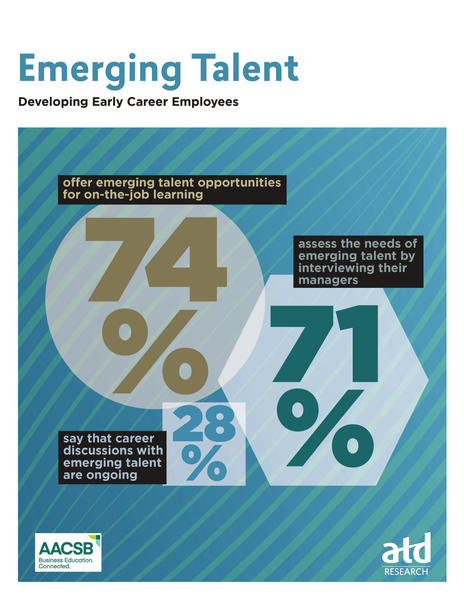
Career development—Only 12 percent of respondents said that their current organization provides effective career development for emerging talent. Leading career development opportunities include on-the-job learning (74 percent), mentoring or coaching (70 percent), and regular performance or development feedback (69 percent).
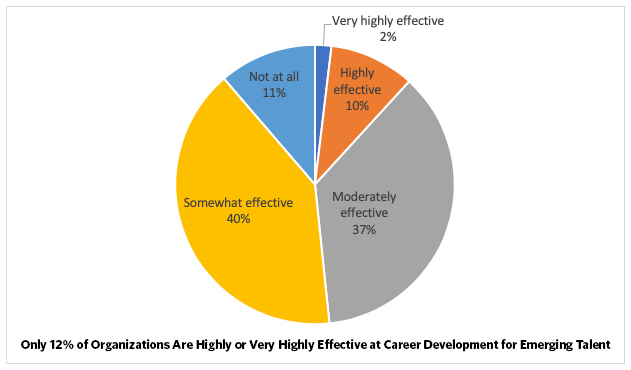
Career development—Only 12 percent of respondents said that their current organization provides effective career development for emerging talent. Leading career development opportunities include on-the-job learning (74 percent), mentoring or coaching (70 percent), and regular performance or development feedback (69 percent).

New Research From ATD: Developing Early-Career Employees Proves Challenging for Organizations-12 Percent.jpg

Content

Discussions about goals and career paths are ongoing, according to 28 percent of participants, with 65 percent saying that individual managers are primarily responsible for these conversations.

Discussions about goals and career paths are ongoing, according to 28 percent of participants, with 65 percent saying that individual managers are primarily responsible for these conversations.

Content

Technology preferred—Emerging talent is more likely to both use just-in-time learning and embrace emerging technologies (60 percent); members of this group often access learning through mobile devices (59 percent) and use workplace social media or collaboration tools such as Slack or Yammer (58 percent). As mostly digital natives, their preferences for learning delivery methods make sense.

Technology preferred—Emerging talent is more likely to both use just-in-time learning and embrace emerging technologies (60 percent); members of this group often access learning through mobile devices (59 percent) and use workplace social media or collaboration tools such as Slack or Yammer (58 percent). As mostly digital natives, their preferences for learning delivery methods make sense.

Content

Top Recommendations

Top Recommendations

Content

Noting the challenge to effectively develop emerging talent due to resource constraints, the study recommends the following to improve developing employees new to the workforce:

Noting the challenge to effectively develop emerging talent due to resource constraints, the study recommends the following to improve developing employees new to the workforce:

Content

· Talk directly with emerging talent.

· Talk directly with emerging talent.

Content

· Consider your delivery methods.

· Consider your delivery methods.

Content

· Avoid always lumping together or separating out emerging talent.

· Avoid always lumping together or separating out emerging talent.

Content

· Involve mentors and leaders.

· Involve mentors and leaders.

Content

Emerging Talent: Developing Early Career Employees can be found at www.td.org/emergingtalent .

Emerging Talent: Developing Early Career Employees can be found at www.td.org/emergingtalent.

Content

To learn more about best practices and other recommendations for developing emerging talent, join ATD Research for a webcast on February 7 .

To learn more about best practices and other recommendations for developing emerging talent, join ATD Research for a webcast on February 7.

Content

About ATD

About ATD

Content

The Association for Talent Development (ATD) is the world’s largest professional membership organization supporting those who develop the knowledge and skills of employees, improve performance, and help to achieve results for the organizations they serve. Originally established in 1943, the association was previously known as the American Society for Training & Development (ASTD).

The Association for Talent Development (ATD) is the world’s largest professional membership organization supporting those who develop the knowledge and skills of employees, improve performance, and help to achieve results for the organizations they serve. Originally established in 1943, the association was previously known as the American Society for Training & Development (ASTD).

Content

ATD’s members come from more than 120 countries and work in public and private organizations in every industry sector. ATD supports talent development professionals who gather locally in volunteer-led U.S. chapters and international member networks, and with international strategic partners. For more information, visit www.td.org .

ATD’s members come from more than 120 countries and work in public and private organizations in every industry sector. ATD supports talent development professionals who gather locally in volunteer-led U.S. chapters and international member networks, and with international strategic partners. For more information, visit www.td.org.

You've Reached ATD Member-only Content

Become an ATD member to continue

Already a member?Sign In


Copyright © 2026 ATD

ASTD changed its name to ATD to meet the growing needs of a dynamic, global profession.

Terms of UsePrivacy NoticeCookie Policy