ATD, association for talent development

TD Magazine Article

Member Benefit

Channel Your Storytelling Superpower

Content

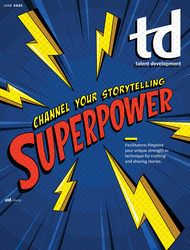
Facilitators: Pinpoint your unique strength or technique for crafting and sharing stories.

Facilitators: Pinpoint your unique strength or technique for crafting and sharing stories.

By

Sun Jun 01 2025

A comic-style illustration of six lightning bolts in a circle.
Loading...

Content

Have you ever wished for a superhero to rescue your training? I have. After months of preparation, practice, and endless slide revisions, I stood in front of a glassy-eyed group of learners who had assembled for two hours of compliance training. My task felt simple: Present the session to convey the impact and importance of new financial policies on each employee. Yet, I was losing them. The group would have loved to be anywhere else. I couldn't help but glance out the window, wishing someone in a cape would fly in to save the day.

Have you ever wished for a superhero to rescue your training? I have. After months of preparation, practice, and endless slide revisions, I stood in front of a glassy-eyed group of learners who had assembled for two hours of compliance training. My task felt simple: Present the session to convey the impact and importance of new financial policies on each employee. Yet, I was losing them. The group would have loved to be anywhere else. I couldn't help but glance out the window, wishing someone in a cape would fly in to save the day.

Content

As it turns out (in training, at least), superheroes exist. They don't always wear capes, but they do have one essential skill that can turn a training session around faster than a speeding bullet: storytelling. And you have that superpower.

As it turns out (in training, at least), superheroes exist. They don't always wear capes, but they do have one essential skill that can turn a training session around faster than a speeding bullet: storytelling. And you have that superpower.

Content

Storytelling is a powerful technique that infuses learning experiences with emotion, relevance, and human connection. It can simplify complex ideas, foster curiosity, and encourage learners to consider how their own experiences align to content. There are many ways to incorporate storytelling into a training program. From enhancing your training session's effectiveness to encouraging engagement and retention, your storytelling superpower can be a true force for good—once you know what it is and how to use it.

Storytelling is a powerful technique that infuses learning experiences with emotion, relevance, and human connection. It can simplify complex ideas, foster curiosity, and encourage learners to consider how their own experiences align to content. There are many ways to incorporate storytelling into a training program. From enhancing your training session's effectiveness to encouraging engagement and retention, your storytelling superpower can be a true force for good—once you know what it is and how to use it.

The X factor

Content

Your specific brand of storytelling superpower represents how you most authentically and effectively share stories in a training environment. For some facilitators, the act of telling a story to a group of willing listeners is electrifying. For others, encouraging learners to share their own experiences feels more comfortable in the flow of a learning experience. For all of us, our respective storytelling archetype reflects how we want to connect with learners.

Your specific brand of storytelling superpower represents how you most authentically and effectively share stories in a training environment. For some facilitators, the act of telling a story to a group of willing listeners is electrifying. For others, encouraging learners to share their own experiences feels more comfortable in the flow of a learning experience. For all of us, our respective storytelling archetype reflects how we want to connect with learners.

Content

Knowing your storytelling archetype (see sidebar) and how to use those strengths helps you to engage, inspire, and inform learners without losing sight of what feels natural to you and your facilitation style. Your superhero type offers insight into how storytelling can work for you, which makes it much easier to decide how you can integrate stories into your training programs.

Knowing your storytelling archetype (see sidebar) and how to use those strengths helps you to engage, inspire, and inform learners without losing sight of what feels natural to you and your facilitation style. Your superhero type offers insight into how storytelling can work for you, which makes it much easier to decide how you can integrate stories into your training programs.

Four archetypes

Content

Once you know which storytelling superhero you are, discover how those traits can benefit you.

Once you know which storytelling superhero you are, discover how those traits can benefit you.

Content

The motivator. Motivators inspire action and encourage change. They have a natural ability to identify and share stories that energize others, leaving learners feeling empowered and ready to tackle challenges. Their narratives often center on resilience, growth, and achievement; they love to shine a spotlight on how tough experiences help individuals unleash the best of who they are.

The motivator. Motivators inspire action and encourage change. They have a natural ability to identify and share stories that energize others, leaving learners feeling empowered and ready to tackle challenges. Their narratives often center on resilience, growth, and achievement; they love to shine a spotlight on how tough experiences help individuals unleash the best of who they are.

Content

Motivators are experts at igniting enthusiasm and tapping into a learner's inner drive, helping them see potential and stay engaged during challenging topics or transitions. They can amplify their impact by grounding their stories in relatable experiences and including actionable takeaways.

Motivators are experts at igniting enthusiasm and tapping into a learner's inner drive, helping them see potential and stay engaged during challenging topics or transitions. They can amplify their impact by grounding their stories in relatable experiences and including actionable takeaways.

Content

Motivators often use storytelling by:

Motivators often use storytelling by:

  • Content

    Sharing a personal triumph. They excel when sharing stories about overcoming significant challenges. Such stories set the tone for encouraging resilience and growth as part of a learner's personal or professional development.

    Sharing a personal triumph. They excel when sharing stories about overcoming significant challenges. Such stories set the tone for encouraging resilience and growth as part of a learner's personal or professional development.

  • Content

    Using before-and-after narratives. Stories that illustrate mindset shifts can reinforce how adopting new attitudes can lead to successful outcomes.

    Using before-and-after narratives. Stories that illustrate mindset shifts can reinforce how adopting new attitudes can lead to successful outcomes.

  • Content

    Incorporating future-focused storytelling. Painting a vivid picture of a desired future state can help learners imagine their future selves thriving, which builds excitement and motivation to take action.

    Incorporating future-focused storytelling. Painting a vivid picture of a desired future state can help learners imagine their future selves thriving, which builds excitement and motivation to take action.

Content

The problem solver. These individuals are particularly skilled at breaking down complex challenges and presenting solutions through logical, relatable narratives. They excel at helping the audience understand processes and outcomes, often incorporating questions that encourage participants to consider their own stories and experiences as they seek solutions. Problem solvers are also adept at connecting seemingly unrelated ideas, helping learners discover innovative solutions by drawing from varied perspectives and experiences.

The problem solver. These individuals are particularly skilled at breaking down complex challenges and presenting solutions through logical, relatable narratives. They excel at helping the audience understand processes and outcomes, often incorporating questions that encourage participants to consider their own stories and experiences as they seek solutions. Problem solvers are also adept at connecting seemingly unrelated ideas, helping learners discover innovative solutions by drawing from varied perspectives and experiences.

Content

Through their storytelling, problem solvers empower participants to approach challenges with clarity and actionable insights, which can foster critical thinking and equip them to tackle real-world challenges with confidence.

Through their storytelling, problem solvers empower participants to approach challenges with clarity and actionable insights, which can foster critical thinking and equip them to tackle real-world challenges with confidence.

Content

Problem solvers often use storytelling by:

Problem solvers often use storytelling by:

  • Content

    Incorporating case studies. Sharing a case study as a story and highlighting how story components lead to specific outcomes can help participants understand key processes and apply similar strategies in their work.

    Incorporating case studies. Sharing a case study as a story and highlighting how story components lead to specific outcomes can help participants understand key processes and apply similar strategies in their work.

  • Content

    Asking for learner feedback. Using open-ended stories that pause at critical decision points can encourage individuals to consider how they would approach a challenge. That boosts critical thinking and enables the audience to explore different solutions before the facilitator reveals the actual outcome.

    Asking for learner feedback. Using open-ended stories that pause at critical decision points can encourage individuals to consider how they would approach a challenge. That boosts critical thinking and enables the audience to explore different solutions before the facilitator reveals the actual outcome.

  • Content

    Sharing stories about failure. Tales about mistakes and how missteps are part of a process can reassure learners that challenges are a natural part of work.

    Sharing stories about failure. Tales about mistakes and how missteps are part of a process can reassure learners that challenges are a natural part of work.

Content

The entertainer. Often captivating participants through humor, a bit of flair, and even theatrics when sharing stories, entertainers know how to make learning fun by engaging individuals with lively anecdotes punctuated by dynamic delivery methods. They thrive when creating a positive and memorable learning environment, making content easier to access and retain while fostering a sense of joy and connection.

The entertainer. Often captivating participants through humor, a bit of flair, and even theatrics when sharing stories, entertainers know how to make learning fun by engaging individuals with lively anecdotes punctuated by dynamic delivery methods. They thrive when creating a positive and memorable learning environment, making content easier to access and retain while fostering a sense of joy and connection.

Content

Entertainers often use storytelling by:

Entertainers often use storytelling by:

  • Content

    Infusing humor into stories. Sharing a lighthearted, relatable story that ties into the training topic can put learners at ease, create a positive atmosphere, and make content feel approachable.

    Infusing humor into stories. Sharing a lighthearted, relatable story that ties into the training topic can put learners at ease, create a positive atmosphere, and make content feel approachable.

  • Content

    Incorporating interactive storytelling. Storytelling-based activities that encourage the audience to be actively involved can be just as entertaining as they are memorable. Consider options where learners can make decisions that shape a story's outcome, such as a "Choose Your Own Adventure" activity.

    Incorporating interactive storytelling. Storytelling-based activities that encourage the audience to be actively involved can be just as entertaining as they are memorable. Consider options where learners can make decisions that shape a story's outcome, such as a "Choose Your Own Adventure" activity.

  • Content

    Embracing a bit of drama. Stories that emphasize the highs and lows of a journey just as much as the outcome can keep the audience engaged during content delivery. Providing vivid details and encouraging reactions can help participants stay focused and connected.

    Embracing a bit of drama. Stories that emphasize the highs and lows of a journey just as much as the outcome can keep the audience engaged during content delivery. Providing vivid details and encouraging reactions can help participants stay focused and connected.

Content

The empath. These facilitators excel at creating deep emotional connections with their audience. They tell stories that evoke understanding and compassion, helping learners relate to diverse perspectives. Empaths often pair emotional resonance with actionable steps to ensure their stories drive both connection and learning outcomes. They foster inclusive learning environments by encouraging openness, vulnerability, and collaboration among participants.

The empath. These facilitators excel at creating deep emotional connections with their audience. They tell stories that evoke understanding and compassion, helping learners relate to diverse perspectives. Empaths often pair emotional resonance with actionable steps to ensure their stories drive both connection and learning outcomes. They foster inclusive learning environments by encouraging openness, vulnerability, and collaboration among participants.

Content

Their ability to sense and respond to learners' emotional needs enables them to adapt their storytelling in real time, ensuring everyone feels seen and heard.

Their ability to sense and respond to learners' emotional needs enables them to adapt their storytelling in real time, ensuring everyone feels seen and heard.

Content

Empaths often use storytelling by:

Empaths often use storytelling by:

  • Content

    Sharing personal stories. Opening a training event by sharing a personal story that incorporates a challenge, achievement, or emotional turning point can encourage the audience to connect on a human level and create space for open dialogue and reflection.

    Sharing personal stories. Opening a training event by sharing a personal story that incorporates a challenge, achievement, or emotional turning point can encourage the audience to connect on a human level and create space for open dialogue and reflection.

  • Content

    Highlighting learner stories. Inviting participants to share their own stories related to the training topic can validate their experiences and help them connect those experiences to the training content.

    Highlighting learner stories. Inviting participants to share their own stories related to the training topic can validate their experiences and help them connect those experiences to the training content.

  • Content

    Using reflection points. Encouraging learners to reflect on content in real time enables them to consider how they may use what they are learning in the flow of their work.

    Using reflection points. Encouraging learners to reflect on content in real time enables them to consider how they may use what they are learning in the flow of their work.

With great power comes great responsibility

Content

Although your storytelling archetype sheds light on how you may naturally incorporate stories in a training environment, a few universal strategies can help you get ready to use your superpower.

Although your storytelling archetype sheds light on how you may naturally incorporate stories in a training environment, a few universal strategies can help you get ready to use your superpower.

Content

Start with the learner. In training, nothing is more important than your learners. It is a fundamentally human experience, and learners connect to every aspect of successful delivery. Before you begin developing a single story, consider who will experience it. What are their needs? What challenges do they face? How might they like to share their own stories as part of a training program?

Start with the learner. In training, nothing is more important than your learners. It is a fundamentally human experience, and learners connect to every aspect of successful delivery. Before you begin developing a single story, consider who will experience it. What are their needs? What challenges do they face? How might they like to share their own stories as part of a training program?

Content

The more you know about the participants, the easier it will be to unleash your storytelling superpower to introduce a story that will resonate with them in a way that feels comfortable and authentic to you. Look for themes or common characteristics that unite or connect learners.

The more you know about the participants, the easier it will be to unleash your storytelling superpower to introduce a story that will resonate with them in a way that feels comfortable and authentic to you. Look for themes or common characteristics that unite or connect learners.

Content

A motivator may look for how individuals aspire to grow or change during a training program, while an entertainer may consider how they can deliver a story that draws learners in and keeps them hooked as they begin a training event. Similarly, a problem solver may identify a challenge that resonates with their learners, and an empath may select an example that encourages learners to reflect on their own experiences.

A motivator may look for how individuals aspire to grow or change during a training program, while an entertainer may consider how they can deliver a story that draws learners in and keeps them hooked as they begin a training event. Similarly, a problem solver may identify a challenge that resonates with their learners, and an empath may select an example that encourages learners to reflect on their own experiences.

Content

Focus on content. Stories do much more than amuse an audience during a training event; their primary purpose is to educate. That's why it is essential to ensure you connect any narrative to the content you are presenting. Also, the story must advance your learning outcomes.

Focus on content. Stories do much more than amuse an audience during a training event; their primary purpose is to educate. That's why it is essential to ensure you connect any narrative to the content you are presenting. Also, the story must advance your learning outcomes.

Content

When incorporating your storytelling superpower into a training program, start with your content rather than the anecdote itself. That way you prioritize the content, so your stories support your key messages—and not the other way around. If you let stories guide your content development, you may find that the training session loses focus and becomes more centered on the storytelling experience.

When incorporating your storytelling superpower into a training program, start with your content rather than the anecdote itself. That way you prioritize the content, so your stories support your key messages—and not the other way around. If you let stories guide your content development, you may find that the training session loses focus and becomes more centered on the storytelling experience.

Content

When you have finalized the content, select a story and let your superpower guide how you will incorporate it to advance the learning outcomes. Think about whether you like to tell stories, share them through activities, or encourage others to take on the role of the storyteller. That can help select delivery methods that you are comfortable facilitating.

When you have finalized the content, select a story and let your superpower guide how you will incorporate it to advance the learning outcomes. Think about whether you like to tell stories, share them through activities, or encourage others to take on the role of the storyteller. That can help select delivery methods that you are comfortable facilitating.

Content

Practice. Rehearsing anecdotes before sharing them with an audience can ensure they remain clear, focused, and aligned to learning outcomes. Outline or write your story and share it with a trusted colleague, friend, or family member for their reaction. Their insights can help you identify where additional detail may help or hurt, indicate whether your pacing is appropriate, and provide ideas for how to strengthen your delivery. If you plan to share a case study or scenario, feedback can help you confirm whether learners will receive the activity as you hope or whether revisions may make it even stronger.

Practice. Rehearsing anecdotes before sharing them with an audience can ensure they remain clear, focused, and aligned to learning outcomes. Outline or write your story and share it with a trusted colleague, friend, or family member for their reaction. Their insights can help you identify where additional detail may help or hurt, indicate whether your pacing is appropriate, and provide ideas for how to strengthen your delivery. If you plan to share a case study or scenario, feedback can help you confirm whether learners will receive the activity as you hope or whether revisions may make it even stronger.

Content

Your brand of storytelling superpower can be of great use when it's time to practice your story. For example, an empath may practice telling stories by focusing on their word choice and how they can help learners visualize the story's content. Problem solvers may create anecdotes with clear pause points so they can ask learners to weigh in with thoughts and ideas; practicing can ensure you don't accidentally miss pause points.

Your brand of storytelling superpower can be of great use when it's time to practice your story. For example, an empath may practice telling stories by focusing on their word choice and how they can help learners visualize the story's content. Problem solvers may create anecdotes with clear pause points so they can ask learners to weigh in with thoughts and ideas; practicing can ensure you don't accidentally miss pause points.

Content

For motivators, rehearsing a narrative can offer space to fine-tune a call to action or identify the right words of encouragement. Entertainers can ensure their delivery doesn't overshadow their main idea by using practice sessions to focus on the appropriate points to balance delivery with messaging.

For motivators, rehearsing a narrative can offer space to fine-tune a call to action or identify the right words of encouragement. Entertainers can ensure their delivery doesn't overshadow their main idea by using practice sessions to focus on the appropriate points to balance delivery with messaging.

Know your weaknesses

Content

Like Superman and kryptonite, every superhero has a weakness—even when it comes to storytelling. Knowing where you may stumble and how to both avoid or recover from it can be just as important as using your superpower.

Like Superman and kryptonite, every superhero has a weakness—even when it comes to storytelling. Knowing where you may stumble and how to both avoid or recover from it can be just as important as using your superpower.

Content

While motivators excel at energizing learners, it can be easy to focus more on inspiration than actionable takeaways. Because motivators naturally want to encourage learners to explore possibilities, they may inadvertently paint an overly optimistic picture that doesn't consider the real-world challenges learners face. Be sure your stories center on practical solutions and realistic expectations. That way, whereas your words may inspire them, your call to action will fuel their behavior change and growth.

While motivators excel at energizing learners, it can be easy to focus more on inspiration than actionable takeaways. Because motivators naturally want to encourage learners to explore possibilities, they may inadvertently paint an overly optimistic picture that doesn't consider the real-world challenges learners face. Be sure your stories center on practical solutions and realistic expectations. That way, whereas your words may inspire them, your call to action will fuel their behavior change and growth.

Content

Problem solvers often face a different challenge: When they focus on solutions, they can run the risk of telling anecdotes that feel disconnected from the human experience. They also may concentrate on solutions rather than exploring problem-solving approaches, which can stifle creativity and limit participants from brainstorming alternative perspectives. Let your stories embrace the people who are part of them, as well as their journeys and challenges, just as much as the story's outcome. That will invite learners to see themselves in the narrative and more strongly connect to key takeaways.

Problem solvers often face a different challenge: When they focus on solutions, they can run the risk of telling anecdotes that feel disconnected from the human experience. They also may concentrate on solutions rather than exploring problem-solving approaches, which can stifle creativity and limit participants from brainstorming alternative perspectives. Let your stories embrace the people who are part of them, as well as their journeys and challenges, just as much as the story's outcome. That will invite learners to see themselves in the narrative and more strongly connect to key takeaways.

Content

Entertainers are usually natural storytellers—sometimes to a fault. They can get caught up in the details and drama of a tale and may prioritize entertainment over learning, which can overshadow the story's purpose in a training environment. They may become engrossed in their learners' reactions and go offtrack, adding unnecessary detail that creates an unfocused delivery. Take time to consider how every element of storytelling delivers on your commitment to achieve the learning outcomes. That can help you prioritize content and strategically choose the delivery mechanisms that will resonate for participants.

Entertainers are usually natural storytellers—sometimes to a fault. They can get caught up in the details and drama of a tale and may prioritize entertainment over learning, which can overshadow the story's purpose in a training environment. They may become engrossed in their learners' reactions and go offtrack, adding unnecessary detail that creates an unfocused delivery. Take time to consider how every element of storytelling delivers on your commitment to achieve the learning outcomes. That can help you prioritize content and strategically choose the delivery mechanisms that will resonate for participants.

Content

For empaths, storytelling often has its roots in emotions, which can lead to a more intense learner experience than desired. If a narrative is too emotionally heavy, participants may experience overwhelm that leaves them frustrated or even lost within the experience; they may focus more on how they feel than how they relate to the story. Balance storytelling with objective analysis or perspectives, which can ground participants without losing their emotional connection to the story. That strategy will encourage individuals to embrace vulnerability and openness as they consider how they can use the anecdote's teachings in their own experiences.

For empaths, storytelling often has its roots in emotions, which can lead to a more intense learner experience than desired. If a narrative is too emotionally heavy, participants may experience overwhelm that leaves them frustrated or even lost within the experience; they may focus more on how they feel than how they relate to the story. Balance storytelling with objective analysis or perspectives, which can ground participants without losing their emotional connection to the story. That strategy will encourage individuals to embrace vulnerability and openness as they consider how they can use the anecdote's teachings in their own experiences.

Unleash your superpower

Content

I didn't have a cape to whisk me away as I matched the gaze of my compliance training learners, but as it turned out, I didn't need one. My storytelling archetype is the entertainer: I just needed to unleash it.

I didn't have a cape to whisk me away as I matched the gaze of my compliance training learners, but as it turned out, I didn't need one. My storytelling archetype is the entertainer: I just needed to unleash it.

Content

Reflecting on the policy I had just introduced—new requirements for keeping receipts for reimbursement—I pivoted from my prepared slides and shared the story of one of my colleagues at a different organization that held employees to a similar requirement. His situation didn't have a particularly happy outcome; I watched as learners' eyes widened and some sat forward in their chairs while I told them about when my colleague lost all his receipts from a 10-day business trip. Although he should have received a hefty reimbursement check, the amount the company owed him dwindled to zero without record of what he spent. I paused at the end of the story and listened to several people chuckle about the outcome.

Reflecting on the policy I had just introduced—new requirements for keeping receipts for reimbursement—I pivoted from my prepared slides and shared the story of one of my colleagues at a different organization that held employees to a similar requirement. His situation didn't have a particularly happy outcome; I watched as learners' eyes widened and some sat forward in their chairs while I told them about when my colleague lost all his receipts from a 10-day business trip. Although he should have received a hefty reimbursement check, the amount the company owed him dwindled to zero without record of what he spent. I paused at the end of the story and listened to several people chuckle about the outcome.

Content

"I'll never forget that guy," muttered one person in the front row. "That's one powerful story."

"I'll never forget that guy," muttered one person in the front row. "That's one powerful story."

Content

That learner was right: There's a lot of power in a meaningful anecdote. That's why knowing and using storytelling—and your specific hero type—can be so important. When we let our strengths guide how we select and share stories that connect with learners, those same stories can be more than instructional tools—they can inspire participants long after a training experience concludes.

That learner was right: There's a lot of power in a meaningful anecdote. That's why knowing and using storytelling—and your specific hero type—can be so important. When we let our strengths guide how we select and share stories that connect with learners, those same stories can be more than instructional tools—they can inspire participants long after a training experience concludes.


What Kind of Storytelling Superhero Are You?

Content

This quick, four-question quiz will help you identify which storytelling archetype most aligns to your strengths and skills. Although many facilitators have one type they love to use, you may find you have more than one.

This quick, four-question quiz will help you identify which storytelling archetype most aligns to your strengths and skills. Although many facilitators have one type they love to use, you may find you have more than one.

Content

When a learner has an aha moment during your training event, what do you feel?

When a learner has an aha moment during your training event, what do you feel?

  1. Content

    Excited: They recognized their potential.

    Excited: They recognized their potential.

  2. Content

    Satisfied: They solved a tough challenge.

    Satisfied: They solved a tough challenge.

  3. Content

    Joyful: You made learning fun and memorable.

    Joyful: You made learning fun and memorable.

  4. Content

    Fulfilled: You created a meaningful connection.

    Fulfilled: You created a meaningful connection.

Content

Which feedback makes you the happiest to hear?

Which feedback makes you the happiest to hear?

  1. Content

    "Your training gave me the confidence to succeed."

    "Your training gave me the confidence to succeed."

  2. Content

    "You helped me solve a real problem at work."

    "You helped me solve a real problem at work."

  3. Content

    "I had so much fun—I didn't even realize I was learning."

    "I had so much fun—I didn't even realize I was learning."

  4. Content

    "I felt that you heard and understood me. You really connected with me."

    "I felt that you heard and understood me. You really connected with me."

Content

If your training style had a catchphrase, what would it be?

If your training style had a catchphrase, what would it be?

  1. Content

    "Empowering you to reach new heights"

    "Empowering you to reach new heights"

  2. Content

    "Turning problems into possibilities"

    "Turning problems into possibilities"

  3. Content

    "Learning that's as fun as it is effective"

    "Learning that's as fun as it is effective"

  4. Content

    "Making real connections that last"

    "Making real connections that last"

Content

What part of designing a learning experience excites you most?

What part of designing a learning experience excites you most?

  1. Content

    Crafting experiences that inspire and drive action

    Crafting experiences that inspire and drive action

  2. Content

    Building scenarios where learners solve real-life problems

    Building scenarios where learners solve real-life problems

  3. Content

    Adding humor and energy to keep the experience upbeat

    Adding humor and energy to keep the experience upbeat

  4. Content

    Creating moments that foster trust and emotional connection

    Creating moments that foster trust and emotional connection

Content

Key:

Key:

Content

Mostly A's: Motivator

Mostly A's: Motivator

Content

Mostly B's: Problem solver

Mostly B's: Problem solver

Content

Mostly C's: Entertainer

Mostly C's: Entertainer

Content

Mostly D's: Empath

Mostly D's: Empath

You've Reached ATD Member-only Content

Become an ATD member to continue

Already a member?Sign In

issue

ISSUE

June 2025 - TD Magazine

View Articles

Copyright © 2026 ATD

ASTD changed its name to ATD to meet the growing needs of a dynamic, global profession.

Terms of UsePrivacy NoticeCookie Policy