
TD Magazine Article
Member Benefit
Feedback Hijacks
Content
A review of Thanks for the Feedback: The Science and Art of Receiving Feedback Well by Douglas Stone and Sheila Heen
A review of Thanks for the Feedback: The Science and Art of Receiving Feedback Well by Douglas Stone and Sheila Heen
Sat Mar 08 2014
Content
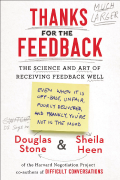
Thanks for the Feedback: The Science and Art of Receiving Feedback Well
Thanks for the Feedback: The Science and Art of Receiving Feedback Well
Content
By Douglas Stone and Sheila Heen
By Douglas Stone and Sheila Heen
Content
Viking Adult, 368 pp., $20.39
Viking Adult, 368 pp., $20.39
Content
Effective feedback is critical for developing and sustaining high-performing employees. So why leave the success of these high-stakes interactions in the hands of those providing the feedback?
Effective feedback is critical for developing and sustaining high-performing employees. So why leave the success of these high-stakes interactions in the hands of those providing the feedback?
Content
Thanks for the Feedback takes a 180-degree turn in the usual approach to feedback. Instead of teaching readers to deliver it effectively, Stone and Heen show them how to receive it in a way that builds self-awareness and action planning for improvement.
Thanks for the Feedback takes a 180-degree turn in the usual approach to feedback. Instead of teaching readers to deliver it effectively, Stone and Heen show them how to receive it in a way that builds self-awareness and action planning for improvement.
Content
Each of us receives feedback constantly, whether it is offered formally, informally, or even unintentionally. The authors explain how these exchanges are at a critical junction of conflicting human desires—to learn how we can improve and to be accepted as we are.
Each of us receives feedback constantly, whether it is offered formally, informally, or even unintentionally. The authors explain how these exchanges are at a critical junction of conflicting human desires—to learn how we can improve and to be accepted as we are.
Content
Interpersonal relationships often are much more complicated than the content of the feedback dialogue itself. Recipients often allow external circumstances or their relationship with the person providing the feedback to influence how they will act on it. To help employees ward off internal biases and receive feedback objectively, Stone and Heen identify three types of feedback triggers—ways in which we "hijack" the feedback received from others—and how to watch out for and temper those reactions.
Interpersonal relationships often are much more complicated than the content of the feedback dialogue itself. Recipients often allow external circumstances or their relationship with the person providing the feedback to influence how they will act on it. To help employees ward off internal biases and receive feedback objectively, Stone and Heen identify three types of feedback triggers—ways in which we "hijack" the feedback received from others—and how to watch out for and temper those reactions.
Content
For example, so-called "truth triggers" engage our internal error-detection circuits and build our anxiety as we try to find something in the content of the feedback that we can internally falsify (" that's not exactly true, therefore the whole measure of this feedback must be wrong"). "Relationship triggers" are pulled when feedback is viewed through a lens distorted by the relationship between the giver and receiver, and "identity triggers" are set off when we hear how others view us, and it is in stark contrast to our own opinions of ourselves. These are important triggers to recognize because without them, we cannot learn to accept feedback gracefully and interpret it constructively.
For example, so-called "truth triggers" engage our internal error-detection circuits and build our anxiety as we try to find something in the content of the feedback that we can internally falsify ("that's not exactly true, therefore the whole measure of this feedback must be wrong"). "Relationship triggers" are pulled when feedback is viewed through a lens distorted by the relationship between the giver and receiver, and "identity triggers" are set off when we hear how others view us, and it is in stark contrast to our own opinions of ourselves. These are important triggers to recognize because without them, we cannot learn to accept feedback gracefully and interpret it constructively.
Content
Stone and Heen describe in a meaningful way what is entirely true about the feedback process: It's a complex interchange that is inevitably influenced by the perceptions and biases of the giver and receiver. An excellent follow-up to their bestselling book Difficult Conversations, Thanks for the Feedback provides a powerful framework for making feedback work—no matter what it is or how it is given.
Stone and Heen describe in a meaningful way what is entirely true about the feedback process: It's a complex interchange that is inevitably influenced by the perceptions and biases of the giver and receiver. An excellent follow-up to their bestselling book Difficult Conversations, Thanks for the Feedback provides a powerful framework for making feedback work—no matter what it is or how it is given.
Content
Flex: The New Playbook for Managing Across Differences
Flex: The New Playbook for Managing Across Differences

Content
Jane Hyun and Audrey S. Lee
Jane Hyun and Audrey S. Lee
Content
HarperBusiness, 336 pp., $28
HarperBusiness, 336 pp., $28
Content
The skills gap isn't the only gap managers have to worry about. According to the authors of Flex, there's also a widening "power gap" between managers and the increasingly young, female, and multicultural workforce they have in their command. However, with the right skills and knowledge, managers can effectively lead employees of different cultures, generations, and gender. From authors who have advised Fortune 500 companies on global leadership skills, this book shows managers how to leverage the diversity on their teams with intelligence and grace, and improve retention, engagement, collaboration, and results.
The skills gap isn't the only gap managers have to worry about. According to the authors of Flex, there's also a widening "power gap" between managers and the increasingly young, female, and multicultural workforce they have in their command. However, with the right skills and knowledge, managers can effectively lead employees of different cultures, generations, and gender. From authors who have advised Fortune 500 companies on global leadership skills, this book shows managers how to leverage the diversity on their teams with intelligence and grace, and improve retention, engagement, collaboration, and results.
Content
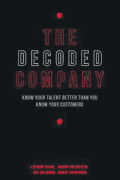
The Decoded Company: Know Your Talent Better Than You Know Your Customers
The Decoded Company: Know Your Talent Better Than You Know Your Customers
Content
Leerom Segal, Aaron Goldstein, Jay Goldman, and Rahaf Harfoush
Leerom Segal, Aaron Goldstein, Jay Goldman, and Rahaf Harfoush
Content
Penguin, 326 pp., $27.95
Penguin, 326 pp., $27.95
Content
Talent analytics is a branch of big data that is destined to be a hot topic in 2014. Many companies capture and interpret data that help them understand the needs and expectations of their customers, but few do it to understand what really makes their businesses tick—their employees. The Decoded Company shows how organizations can create data-driven cultures that unlock employees' full potential, which increases engagement, retention, and profit. Filled with insightful examples and thoroughly action-oriented, this book makes talent analytics accessible for every company.
Talent analytics is a branch of big data that is destined to be a hot topic in 2014. Many companies capture and interpret data that help them understand the needs and expectations of their customers, but few do it to understand what really makes their businesses tick—their employees. The Decoded Company shows how organizations can create data-driven cultures that unlock employees' full potential, which increases engagement, retention, and profit. Filled with insightful examples and thoroughly action-oriented, this book makes talent analytics accessible for every company.
Content
The New Corporate Facts of Life: Rethink Your Business to Transform Today's Challenges Into Tomorrow's Profits
The New Corporate Facts of Life: Rethink Your Business to Transform Today's Challenges Into Tomorrow's Profits

Content
Diana Rivenburgh
Diana Rivenburgh
Content
AMACOM, 244 pp., $27.95
AMACOM, 244 pp., $27.95
Content
We all know that the global business environment is changing, technology is evolving, we must be agile and social, and so on. But sometimes we may think, "A bulleted list of what's changing and how it affects my company, and some action items on how to deal with these changes would be nice." This is exactly what Rivenburgh presents to readers. Her book is for those who are uncomfortably aware that their companies are not on the cutting edge, but aren't quite sure how to get there.
We all know that the global business environment is changing, technology is evolving, we must be agile and social, and so on. But sometimes we may think, "A bulleted list of what's changing and how it affects my company, and some action items on how to deal with these changes would be nice." This is exactly what Rivenburgh presents to readers. Her book is for those who are uncomfortably aware that their companies are not on the cutting edge, but aren't quite sure how to get there.
Content
What's on Lisa Bodell's Bookshelf?
What's on Lisa Bodell's Bookshelf?
Content
Give and Take: A Revolutionary Approach to Success by Adam Grant. It's a great book on the psychology that can drive good business.
Give and Take: A Revolutionary Approach to Success by Adam Grant. It's a great book on the psychology that can drive good business.
Content
Let's Explore Diabetes with Owls by David Sedaris. I enjoy this because it's just hilarious to read. It's a great plane-reading book.
Let's Explore Diabetes with Owls by David Sedaris. I enjoy this because it's just hilarious to read. It's a great plane-reading book.
Content
The Social Animal: The Hidden Sources of Love, Character, and Achievement by David Brooks. This is a great story woven with facts about human nature.
The Social Animal: The Hidden Sources of Love, Character, and Achievement by David Brooks. This is a great story woven with facts about human nature.