
TD Magazine Article
Member Benefit
In the Clouds
Content
Most likely you have at least heard about the ambiguous “cloud” and are familiar with a talent management system that claims to be “cloud-based.” But what is the cloud all about, really? Read on for some basic definitions.
Most likely you have at least heard about the ambiguous “cloud” and are familiar with a talent management system that claims to be “cloud-based.” But what is the cloud all about, really? Read on for some basic definitions.
Mon May 07 2012
Content
Most likely you have at least heard about the ambiguous "cloud" and are familiar with a talent management system that claims to be "cloud-based." But what is the cloud all about, really? Read on for some basic definitions.
Most likely you have at least heard about the ambiguous "cloud" and are familiar with a talent management system that claims to be "cloud-based." But what is the cloud all about, really? Read on for some basic definitions.
Content
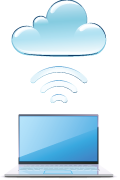
The cloud is a metaphor for the Internet in cloud computing.
The cloud is a metaphor for the Internet in cloud computing.
Content
Cloud computing enables a user to access software applications, hardware, data, and computer-processing power over the web, rather than by loading software onto an organization's server or a personal computer. Consequently, the user can use the power of the Internet (the cloud) as his personal computer, processor, and storage environment—connecting to tools and resources as needed.
Cloud computing enables a user to access software applications, hardware, data, and computer-processing power over the web, rather than by loading software onto an organization's server or a personal computer. Consequently, the user can use the power of the Internet (the cloud) as his personal computer, processor, and storage environment—connecting to tools and resources as needed.
Content
A cloud-native system or application is designed from the ground up to work in the cloud. It is not an existing software or legacy system with a web front-end attached to it. Cloud-native systems must be inherently distributed to support operating in a cloud, and they are elastic—they should be able to scale applications down as well as up, based on load.
A cloud-native system or application is designed from the ground up to work in the cloud. It is not an existing software or legacy system with a web front-end attached to it. Cloud-native systems must be inherently distributed to support operating in a cloud, and they are elastic—they should be able to scale applications down as well as up, based on load.
Content
Additionally, a cloud-native system must offer multitenancy, which means that only a single instance of an application runs on a server, but it serves multiple client organizations or "tenants." Finally, these applications typically are self-service and offer granular billing (pay per use rather than pay by user or pay by timeframe).
Additionally, a cloud-native system must offer multitenancy, which means that only a single instance of an application runs on a server, but it serves multiple client organizations or "tenants." Finally, these applications typically are self-service and offer granular billing (pay per use rather than pay by user or pay by timeframe).
Content
For more on cloud computing, check out "2010 Trends Create a New World of Learning" in the December 2010 issue of T+D .
For more on cloud computing, check out "2010 Trends Create a New World of Learning" in the December 2010 issue of T+D.