
TD Magazine Article
Member Benefit
Informal Learning Is Vital to Workforce Development
Content
Specifically, cross-generational mentoring is a key strategy.
Specifically, cross-generational mentoring is a key strategy.
Fri Mar 08 2013

Content
With four generations, an influx of new employees, and more experienced professionals working longer hours, a greater variety of skills, talent, and experiences are represented in today's workforce than ever before. And as the makeup of the workforce evolves, so should companies' approaches to training and development.
With four generations, an influx of new employees, and more experienced professionals working longer hours, a greater variety of skills, talent, and experiences are represented in today's workforce than ever before. And as the makeup of the workforce evolves, so should companies' approaches to training and development.
Content
While formal learning will continue to be central to professional development, the diversity of the future workforce elevates the need to further embrace informal learning. Recent research emphasizes the social aspect of learning—individuals drive learning, of course, but they also share knowledge with one another to help the organization learn. To capitalize on the range of ideas exchanged within today's diverse workforce, the fostering of informal learning is vital.
While formal learning will continue to be central to professional development, the diversity of the future workforce elevates the need to further embrace informal learning. Recent research emphasizes the social aspect of learning—individuals drive learning, of course, but they also share knowledge with one another to help the organization learn. To capitalize on the range of ideas exchanged within today's diverse workforce, the fostering of informal learning is vital.
Content
The key is for organizations to strike a proper balance between formal and informal learning. With traditional learning—classroom-led or formalized content—usually comprising approximately 20 percent of a given workforce's education, it is imperative that organizations identify real-time, hands-on informal learning experiences for the other 80 percent.
The key is for organizations to strike a proper balance between formal and informal learning. With traditional learning—classroom-led or formalized content—usually comprising approximately 20 percent of a given workforce's education, it is imperative that organizations identify real-time, hands-on informal learning experiences for the other 80 percent.
Content
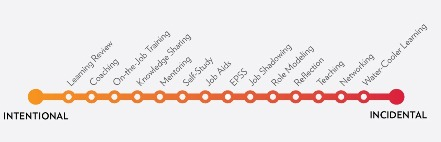
There are numerous opportunities for informal learning activities, as represented in AchieveGlobal's i-2-i continuum that ranks these activities from intentional to incidental based on their structure and purpose.
There are numerous opportunities for informal learning activities, as represented in AchieveGlobal's i-2-i continuum that ranks these activities from intentional to incidental based on their structure and purpose.
Content
One activity on the continuum, mentoring, is perhaps the oldest form of informal learning and meets a range of task, career, and psychosocial needs. Mentoring may incorporate some structured learning, but at its heart is a voluntary, natural, and caring relationship that endures over time. Mentoring can be especially valuable if it involves people of different ages and backgrounds.
One activity on the continuum, mentoring, is perhaps the oldest form of informal learning and meets a range of task, career, and psychosocial needs. Mentoring may incorporate some structured learning, but at its heart is a voluntary, natural, and caring relationship that endures over time. Mentoring can be especially valuable if it involves people of different ages and backgrounds.
Content
Cross-generational mentoring and coaching provide mutual benefits throughout the workforce. Each generation has strengths to share and skills gaps to fill. This type of mentoring promotes the transfer of knowledge between newer and more seasoned professionals, and drives greater collaboration and creativity. Such structured informal learning also keeps perceived generational differences and stereotypes from derailing organization success.
Cross-generational mentoring and coaching provide mutual benefits throughout the workforce. Each generation has strengths to share and skills gaps to fill. This type of mentoring promotes the transfer of knowledge between newer and more seasoned professionals, and drives greater collaboration and creativity. Such structured informal learning also keeps perceived generational differences and stereotypes from derailing organization success.
Content
Mentorships add value when applied to concepts and skills acquired during formal training. Traditional reinforcement pushes people into post-training activities they otherwise would not perform—such as a facilitated group discussion about training content. Informal learning, by contrast, pulls people toward continued learning and application by integrating formal training into daily tasks.
Mentorships add value when applied to concepts and skills acquired during formal training. Traditional reinforcement pushes people into post-training activities they otherwise would not perform—such as a facilitated group discussion about training content. Informal learning, by contrast, pulls people toward continued learning and application by integrating formal training into daily tasks.
Content
As organizations invest in the workforce of the future, they must embrace the role of both formal and informal learning. Those that support cross-generational mentorships and coaching are better positioned to develop the talent necessary for success in the global marketplace.
As organizations invest in the workforce of the future, they must embrace the role of both formal and informal learning. Those that support cross-generational mentorships and coaching are better positioned to develop the talent necessary for success in the global marketplace.
Content
Image source: AchieveGlobal
Image source: AchieveGlobal