TD Magazine Article
Member Benefit
Is VR the Solution for Soft Skills Training?
Content
Training delivered via virtual reality increases learners’ confidence in discussing diversity and inclusion.
Training delivered via virtual reality increases learners’ confidence in discussing diversity and inclusion.
Thu Dec 31 2020
Content
Training delivered via virtual reality increases learners' confidence in discussing diversity and inclusion.
Training delivered via virtual reality increases learners' confidence in discussing diversity and inclusion.
Content
Virtual reality could be a good method for delivering training on sensitive topics. The 2020 PwC report The Effectiveness of Virtual Reality Soft Skills Training in the Enterprise sheds light on that proposition.
Virtual reality could be a good method for delivering training on sensitive topics. The 2020 PwC report The Effectiveness of Virtual Reality Soft Skills Training in the Enterprise sheds light on that proposition.
Content
For the study, researchers wanted to see how the delivery mode for soft skills training affected the learning experience. The topic of choice was inclusive leadership. The training "focused on how familiarity, comfort and trust (FCT) influence hiring, staffing and performance reviews. … The goal of the training is for learners to commit to using only objective criteria in decision making."
For the study, researchers wanted to see how the delivery mode for soft skills training affected the learning experience. The topic of choice was inclusive leadership. The training "focused on how familiarity, comfort and trust (FCT) influence hiring, staffing and performance reviews. … The goal of the training is for learners to commit to using only objective criteria in decision making."
Content
Prior to conducting the study, more than 13,000 PwC employees completed the inclusive leadership training program in its original classroom format. Evaluation comments ranged from "awkward" to "phenomenal." Sample feedback from those who opined that the training was awkward included concerns that other participants could have misinterpreted their classroom contributions.
Prior to conducting the study, more than 13,000 PwC employees completed the inclusive leadership training program in its original classroom format. Evaluation comments ranged from "awkward" to "phenomenal." Sample feedback from those who opined that the training was awkward included concerns that other participants could have misinterpreted their classroom contributions.
Content
For the study, PwC researchers divided the employee test group into three subgroups. Each subgroup took the same class via different modalities: in class, online, and using virtual reality technology.
For the study, PwC researchers divided the employee test group into three subgroups. Each subgroup took the same class via different modalities: in class, online, and using virtual reality technology.
Content
The in-class format ran for two hours; facilitators used videos, reflection exercises, and discussion topics. For the online version, learners were afforded increased flexibility and could use their laptops to complete the 45-minute course at any time. Learners were guided through the same activities as the classroom version.
The in-class format ran for two hours; facilitators used videos, reflection exercises, and discussion topics. For the online version, learners were afforded increased flexibility and could use their laptops to complete the 45-minute course at any time. Learners were guided through the same activities as the classroom version.
Content
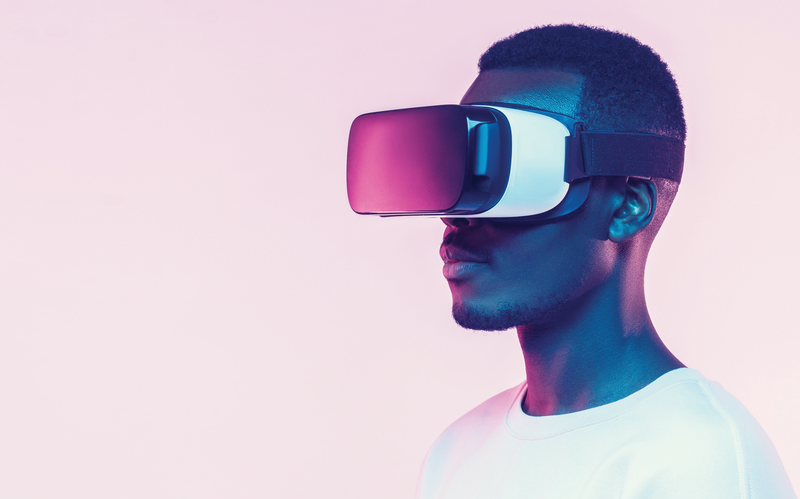
PwC, however, leveraged the greater affordances of VR technology to provide a completely immersive experience for the final subgroup—the v-learners. Participants wore head-mounted displays and, according to the study, "instead of watching a video, the v-learner would be one of the team members participating in the discussion."
PwC, however, leveraged the greater affordances of VR technology to provide a completely immersive experience for the final subgroup—the v-learners. Participants wore head-mounted displays and, according to the study, "instead of watching a video, the v-learner would be one of the team members participating in the discussion."
Content
Post-training assessments make a strong case for using VR technology for training programs. The researchers discovered that v-learners were more confident in discussing issues of diversity and inclusion as well as in acting on what they had learned. Moreover, participants said the VR learning format was less awkward.
Post-training assessments make a strong case for using VR technology for training programs. The researchers discovered that v-learners were more confident in discussing issues of diversity and inclusion as well as in acting on what they had learned. Moreover, participants said the VR learning format was less awkward.
Content
Despite the strong findings, VR likely isn't the end-all be-all solution for soft skills or diversity, equity, and inclusion training needs. The report indicates that "While VR training will not replace classroom or e-learn modalities anytime soon, it should be considered as part of a blended learning curriculum when training specific types of skills."
Despite the strong findings, VR likely isn't the end-all be-all solution for soft skills or diversity, equity, and inclusion training needs. The report indicates that "While VR training will not replace classroom or e-learn modalities anytime soon, it should be considered as part of a blended learning curriculum when training specific types of skills."