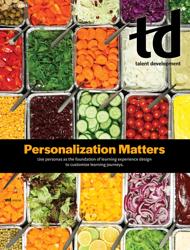
TD Magazine Article
Member Benefit
Learning Platforms, August 2025
Content
Consider how new technology platforms can upgrade your L&D operations.
Consider how new technology platforms can upgrade your L&D operations.
Published Fri Aug 01 2025
Brought to you by

Content
Is your L&D function's technology stack fully stocked? L&D leaders have a large assortment of tools, software, and platforms from which to choose to address training, talent management, and performance management needs.
Is your L&D function's technology stack fully stocked? L&D leaders have a large assortment of tools, software, and platforms from which to choose to address training, talent management, and performance management needs.
Content
Is your talent strategy built for today's reality? The pace of business transformation is relentless. With 87 percent of executives citing significant skills gaps as a top concern, it's clear that traditional, role-based talent management is no longer enough to stay competitive. Relying on static job descriptions in a dynamic world is like navigating with an outdated map.
Is your talent strategy built for today's reality? The pace of business transformation is relentless. With 87 percent of executives citing significant skills gaps as a top concern, it's clear that traditional, role-based talent management is no longer enough to stay competitive. Relying on static job descriptions in a dynamic world is like navigating with an outdated map.
Content
Forward-thinking enterprises are making a crucial pivot. They're shifting their focus from rigid job titles to a more fluid and powerful currency: skills.
Forward-thinking enterprises are making a crucial pivot. They're shifting their focus from rigid job titles to a more fluid and powerful currency: skills.
Content
A skills-based strategy is about understanding the actual, verifiable capabilities of your workforce. It reframes the core talent question from "What is their job title?" to "What can our people do, and what do they need to learn to drive our future success?" That approach unlocks profound agility, enabling you to deploy the right talent to critical projects with precision and speed.
A skills-based strategy is about understanding the actual, verifiable capabilities of your workforce. It reframes the core talent question from "What is their job title?" to "What can our people do, and what do they need to learn to drive our future success?" That approach unlocks profound agility, enabling you to deploy the right talent to critical projects with precision and speed.
Content
By prioritizing capabilities over credentials, you not only build a more resilient and innovative workforce but also foster a culture of continuous growth that boosts employee engagement and retention. This isn't just about modernizing HR; it's about building a sustainable competitive advantage. Is your organization ready to make the shift?
By prioritizing capabilities over credentials, you not only build a more resilient and innovative workforce but also foster a culture of continuous growth that boosts employee engagement and retention. This isn't just about modernizing HR; it's about building a sustainable competitive advantage. Is your organization ready to make the shift?
Content
peoplefluent.com
peoplefluent.com
Content
Game-based learning isn't just about making training fun—it's about making it stick. With the right mechanics in place, you can transform disengaged learners into active problem solvers and communicators.
Game-based learning isn't just about making training fun—it's about making it stick. With the right mechanics in place, you can transform disengaged learners into active problem solvers and communicators.
Content
Sequencing. Helps learners arrange processes logically, reinforcing procedural knowledge and critical thinking. From medical triage to manufacturing workflows, understanding a sequence correctly is vital.
Sequencing. Helps learners arrange processes logically, reinforcing procedural knowledge and critical thinking. From medical triage to manufacturing workflows, understanding a sequence correctly is vital.
Content
Matching and sorting. Helps categorize information quickly, whether it's sorting safety gear by hazard type or pairing product features with customer needs. Promotes recall and pattern recognition; ideal for onboarding, compliance, and product training.
Matching and sorting. Helps categorize information quickly, whether it's sorting safety gear by hazard type or pairing product features with customer needs. Promotes recall and pattern recognition; ideal for onboarding, compliance, and product training.
Content
Visualizing and spatial reasoning. Helps build mental maps and design layouts. A great fit for fields such as construction, architecture, and logistics.
Visualizing and spatial reasoning. Helps build mental maps and design layouts. A great fit for fields such as construction, architecture, and logistics.
Content
Role-play. Creates immersive simulations where learners practice handling customer complaints or coaching employees. Such interactions build emotional intelligence and communication without real-world stakes.
Role-play. Creates immersive simulations where learners practice handling customer complaints or coaching employees. Such interactions build emotional intelligence and communication without real-world stakes.
Content
Memorization. Focuses on rapid recall and retention, making it ideal for teaching terminology or compliance standards. Incorporating trivia adds a layer of excitement.
Memorization. Focuses on rapid recall and retention, making it ideal for teaching terminology or compliance standards. Incorporating trivia adds a layer of excitement.
Content
Communication. Pushes learners to explain and interpret clearly. Builds confidence and is useful in customer service, sales, and team-based settings.
Communication. Pushes learners to explain and interpret clearly. Builds confidence and is useful in customer service, sales, and team-based settings.
Content
Decision making. Empowers learners to evaluate scenarios and choose actions with real consequences. Powerful for leadership training and project management.
Decision making. Empowers learners to evaluate scenarios and choose actions with real consequences. Powerful for leadership training and project management.
Content
elblearning.com
elblearning.com