TD Magazine Article
Member Benefit
Personality Preferences
Use personality type insights to improve work-life balance.
Mon Mar 02 2020
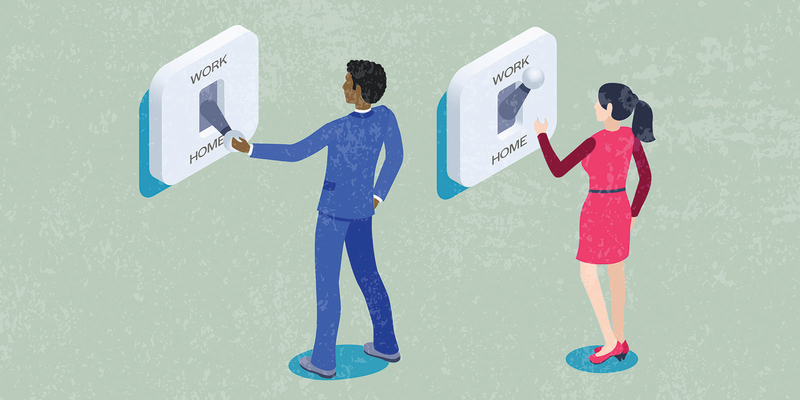
Have you ever pulled your hair out trying to help your organization strike the right balance for engagement but discover that everyone sees it differently? Do two employees receive the same volume of after-work email and one thrives on it while the other says it's too much? It turns out that personality type can play a part in how people perceive their work-life balance, regardless of the actual pervasiveness of work or technology in their lives.
According to Type and the Always-On Culture, a new research study from the Myers-Briggs Company, results of the organization's eponymous personality tests can help individuals achieve a better work-life balance in a technology-driven, always-on world. Understanding how people tick can be more valuable for building a supportive culture than throwing wads of cash at the problem.
The study reveals that people with extroverted personality types are more likely to use technology to bring work home, while introverts tend to prefer more space between work and home life. Perhaps that isn't surprising, but what you may not have guessed is that respondents who fall into the Sensing and Judging personality categories of the Myers-Briggs assessment prefer a stronger separation between work and home life than people who fall into those categories' counterparts, Intuition and Perceiving.
What does this mean for organizations? The Myers-Briggs Company has three main categories for recommendations:
Switch off—cultivate a workplace culture that allows people to switch off in their free time.
Set boundaries—set clear expectations about technology use in- and outside of work.
Consider and communicate with others—ensure leaders model the behavior expected of employees to embed a "sometimes-off" culture.
When employers apply those recommendations, they build cultures that enable different types of employees to find the work-life balance that works for them. However, it may be best to start with yourself: What's your Myers-Briggs type, and what does the research say about your preferences for work-life balance? Do your preferences about work-life balance match the findings? Understanding yourself may help you build a better organization for everyone.
View Courses Recommended for You