TD Magazine Article
Member Benefit
Reshape Learning in the Healthcare Industry
Design the future of workers’ education with purpose, people, and progress.
Wed Oct 01 2025
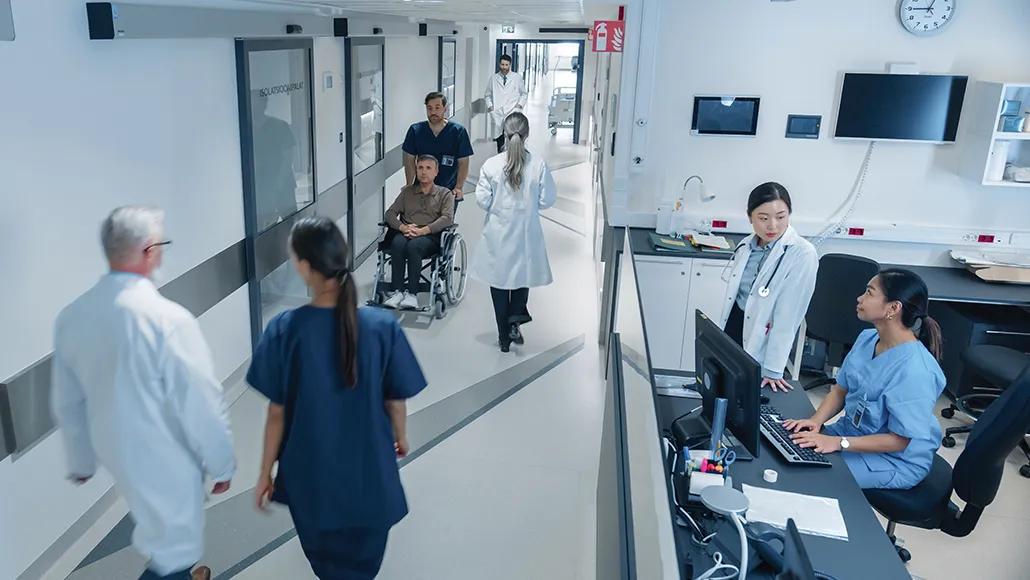
Healthcare stands at a defining crossroads. The pace of medical innovation is accelerating, workforce shortages continue to grow, and patient needs are becoming more complex and diverse. Amid all that, how L&D professionals prepare and empower healthcare professionals remains dangerously outdated.
For years, training in healthcare has largely followed traditional models: one-size-fits-all courses, annual competency checks, and classroom-based sessions that often do not align with the realities of bedside care or clinical decision making. But times have changed. And so must we.
As L&D leaders in the healthcare industry, we must rethink how we deliver training as well as how we design entire learning ecosystems that prioritize flexibility, relevance, empathy, and continuous growth. That is more than an education challenge—it's a leadership imperative. The question is no longer "Should we change?" but rather "How will we lead the change?"
Transformational learning
The healthcare workforce is facing a new level of pressure. Consider this: A nurse may treat patients across multiple units in a single shift. A radiology technologist may need to learn a new imaging system overnight. Frontline leaders must manage through staffing crises while maintaining patient satisfaction and safety scores. Technicians, patient care assistants, and allied health professionals often must take on additional responsibilities beyond their original training. Those rapid swings, while essential, can leave team members feeling overwhelmed, lacking support, and at risk of burnout.
The old model where learning is episodic and reactive doesn't fit that reality. In many settings, clinicians must complete annual education modules that do little more than meet regulatory requirements. What the healthcare industry needs is a shift toward transformational learning that:
Meets employees where they are
Delivers content when and how they need it
Helps them grow both professionally and personally
Transformational learning is learner-centric, adaptive, and deeply connects to purpose. It acknowledges the diverse learning preferences across generations in the workforce, from seasoned clinicians to new graduates entering the industry for the first time. It's flexible enough for learners to consume on the go yet comprehensive enough to support complex skill development.
At the core of transformational learning are organizations creating cultures of learning where education feels like a lifeline, not a chore. In such an environment, learning is no longer the sole responsibility of the L&D team; it becomes a shared commitment across the company.
One example is the shift to team-based simulations that combine clinical scenarios with communication and leadership skills. At an academic medical center in the Midwest US, for instance, teams participate in learning huddles every week. The huddles include a short clinical review followed by a peer-led discussion around empathy, burnout, and equity in care. The initiative has improved performance and rebuilt trust among teams who were once siloed by specialty or schedule. It's not uncommon for huddles to surface challenges that lead to broader system improvements.
In New York, a large hospital network launched a program called Learning Rounds, where educators join clinicians on their daily patient rounds, offering real-time teaching moments and feedback. That model of learning builds trust between educators and clinicians as well as ensures that workers can immediately put what they learn into practice.
Another growing trend is the redesign of mandatory training, which learners have traditionally viewed as time-consuming or unengaging. Organizations now use gamification, storytelling, and reflective journaling to make requisite training meaningful and even enjoyable.
For instance, after a health system in Texas turned its annual compliance modules into interactive stories based on real patient experiences, staff reported a 30 percent increase in retention of the material and a stronger emotional connection to the training program's purpose.
Transformational learning is a reimagining that creates spaces where people feel safe to ask questions, empowered to challenge outdated practices, and inspired to pursue excellence—not because they have to, but because they want to. It's how healthcare organizations retain talent, reignite purpose, and ultimately improve the quality of care they deliver.
Microlearning, AI, and dashboards
Technology is playing a critical role in enabling the shift to transformational learning. Microlearning, for example, enables clinicians to absorb critical knowledge in short, focused bursts perfect for environments where time is scarce. Microlearning modules often last less than 10 minutes; deliver them via mobile devices or embed them within existing workflows.
The bite-size, high-impact learning moments may include short videos that learners access on their cellphone during a break, interactive decision-making tools that embed into electronic medical records, or brief reflections staff share during team meetings.
The modules may also take the form of flashcards; quizzes; or short, scenario-based simulations. The brevity and specificity of microlearning empower healthcare workers to learn without stepping away from their responsibilities for extended periods.
More advanced technology, such as platforms powered by artificial intelligence, are now helping personalize learning paths, offering:
Skills gap analysis
Role-specific content recommendations
Adaptive testing to ensure competency
Such tools enable healthcare organizations to rightsize education, targeting the right content to the right learner at the right moment. For instance, a children's hospital in Pennsylvania has integrated an AI-supported system that analyzes patient cases and nurse feedback to trigger suggestions for modules on pediatric safety protocols. Within three months, completion rates for optional safety modules rose 68 percent, and incidents related to medication administration dropped significantly.
In California, a large teaching hospital enrolls new clinical residents in an AI-guided learning system that adapts weekly content based on patient cases they have encountered, feedback from supervisors, and self- assessment quizzes. The model reduces redundancy and ensures relevance, resulting in higher learner engagement and greater confidence among early-career clinicians.
In addition, AI tools at a New York health system monitor real-time performance data and automatically recommend microlearning modules for clinicians who may be at risk for skills gaps. For example, a nurse struggling with a new electronic health record workflow receives a five-minute, scenario-based refresher video on their mobile device between patient rounds. The result? Fewer errors, greater confidence, and a learning culture that feels proactive, not punitive. AI tools aren't replacing human educators. Rather, they're amplifying their reach and making learning more personalized and meaningful for each worker.
Another innovation gaining traction is the use of learning nudges, which are gentle prompts that L&D embeds in digital workflows to remind staff of key behaviors. In one pilot, a health system in the US Midwest used nudges within its emergency medical records to prompt evidence-based guidelines during medication reconciliation. The solution improved adherence and sparked demand for deeper learning, leading to voluntary enrollment in advanced pharmacology microcourses.
Forward-thinking systems are also integrating learning analytics dashboards that enable learners and managers to visualize progress, view course recommendations, access peer-reviewed case studies relevant to the learner's unit or specialty, and co-create professional development plans. Such tools encourage self-directed learning while aligning with systemwide goals. By giving healthcare professionals insight into their own learning data, organizations foster ownership, motivation, and purpose.
In the end, the goal of microlearning and AI isn't simply efficiency; it's human-centric transformation. When we support clinicians with timely, tailored, and compassionate education, they are better able to provide excellent care, grow in their roles, and stay connected to their sense of mission.
Human-centered design
Technology alone isn't the solution, however. We must pair those tools with human-centered strategies that keep empathy, safety, and connection at the forefront. After all, education in healthcare isn't just about knowledge transfer. It also involves supporting human beings doing incredibly hard and meaningful work.
Human-centered design asks a simple but profound question: What does the learner really need? Rather than design content in isolation, educators co-create learning experiences with clinicians, technicians, and other frontline staff.
Key principles in action are:
Use empathy mapping. Understand learner pain points before designing solutions.
Apply rapid prototyping. Test educational approaches quickly and iterate based on feedback.
Listen to learners' voices. Invite frontline perspectives into every phase of program design.
In an urban health system on the US East Coast, emergency department staff helped co-design a de-escalation training module for high-stress patient encounters. Because L&D involved learners in the design from day one, the program achieved a 90 percent completion rate and resulted in a measurable drop in security calls. The approach fosters engagement, ownership, and ultimately better outcomes for both staff and patients.
As another example, more healthcare organizations are hiring dedicated instructional designers and digital learning specialists with clinical backgrounds. Their role is to bridge the gap between frontline challenges and learning design. For instance, a healthcare system on the US West Coast created a role titled clinical learning advocate that is responsible for walking the floors, gathering insights from staff, and feeding those insights into content development. Such integration ensures learning stays timely and relevant.
Human-centered design also affects how we approach leadership development. At a health system in the Southeast US, the L&D team guides rising nurse leaders through a six-month program where they co-develop learning agendas based on their unit's needs. The agendas include project-based learning and team coaching sessions. As a result, new leaders become better equipped and more confident in managing people, processes, and change.
Interdisciplinary collaboration and systems thinking
Healthcare doesn't operate in silos, and neither should healthcare education. Leaders from clinical education, HR, IT, and patient experience teams are coming together to design more integrated learning strategies. That matters because:
Clinical staff need more than clinical skills. They also need training in communication, leadership, cultural humility, and resilience.
Nonclinical teams from revenue cycle to supply chain also need education that connects their roles to patient outcomes.
A remarkable example comes from a health network in California that created learning pathways for entire care teams, not just individual roles. Respiratory therapists, nurses, case managers, and patient transporters all completed a joint learning experience that focused on trauma-informed care. The initiative resulted in greater collaboration and a dramatic improvement in patient satisfaction among individuals whom the facility recently discharged from intensive care units.
Other health systems are partnering with academic institutions to build interdisciplinary bridge programs. A recent collaboration between a large Midwest US hospital and a local university led to a joint curriculum on care coordination, bringing together social-work students and registered-nurse residents. The program has strengthened care transitions and reduced readmission rates by 12 percent.
The hospital's transformation to tie training to all aspects of organizational performance and patient safety has resulted in the biggest shift: The organization now views workforce development not as an isolated training function but as a strategic driver of organizational performance and patient safety.
A culture of continuous learning
Such work won't succeed without courageous leadership. Leaders at all levels, from the C-suite to department managers, must champion learning as a strategic priority and not just a compliance checkbox. What does that leadership look like?
Modeling curiosity and growth mindsets
Allocating time and resources for education
Rewarding learning behaviors, not just job performance
Creating psychological safety for teams to ask questions and admit gaps
In a health system in the Southeast US, for example, executive leaders participate in monthly learning forums alongside clinical teams. The sessions include storytelling from the bedside, reflection on recent learning challenges, and recognition of peer educators. The initiative is a simple yet profound way to signal that the organization values learning from the top down.
To help staff adopt a mindset of lifelong learning, some systems have incorporated learning goals into annual performance reviews for clinical staff as well as executives. Organizations are evaluating leaders based on how well they support professional development, mentorship, and education initiatives within their teams.
Education as a force for healing
View talent investment, learning design, and workforce development strategies as not merely technical skills building, but as supporting the people behind the profession: clinicians, caregivers, and staff. Design learning experiences that meet clinicians at 3 a.m. during a night shift; that support a new hire walking into their first day of patient care; and that remind burned-out team members that their growth and well-being matter. Education can be a force for healing for individuals, organizations, and entire communities. The organizations that prioritize continuous learning will be the ones best positioned to innovate, retain top talent, and respond to disruption.
Lessons From Outside Healthcare
Some of the best learning innovations in healthcare are those that organizations borrow from industries such as aviation, technology, and retail. Take, for example, scenario-based learning from flight simulators. Or artificial-intelligence-driven upskilling models from big technology firms. Or even emotional-intelligence training approaches that customer-service-based firms use.
At the heart of every industry is the same challenge: Empowering people to perform their best, especially in high-pressure situations. Healthcare may be unique in its stakes, but it's not alone in its need for agile, human-centric learning solutions. L&D professionals should look across industries for inspiration and bring back lessons that elevate both their people and their mission.
Five Reflection Questions to Drive Change
True transformation starts with asking better questions and listening to the answers.
When was the last time I asked frontline employees how they prefer to learn?
Am I designing learning around compliance or around growth and performance?
How am I leveraging technology to personalize education while keeping it human-centric?
Do our learning strategies address both technical skills and emotional resilience?
What one bold change can I champion in the next six months to reshape how we support our people?
View Courses Recommended for You