
ATD Blog
15 Strategies to Generate Connections Across Generations
Wed Jul 09 2014

Content
There has been a great deal of focus on the unprecedented phenomenon of four generations in the workplace (soon to be five generations, as the group born after 2000 begins to enter the workforce). As competiton for talent is increasing, successful organizations pursue strategies to become the employer of choice.
There has been a great deal of focus on the unprecedented phenomenon of four generations in the workplace (soon to be five generations, as the group born after 2000 begins to enter the workforce). As competiton for talent is increasing, successful organizations pursue strategies to become the employer of choice.
Content
By no means homogenous, the four generations are shaped not only by the societal times they are born into, but also by multiple dimensions of diversity (including ethnicity, religion, gender, socio-economic class, country of origin, race, sexual orientation and identity, to name a few) that influence their perspectives, motivations, and beliefs.
By no means homogenous, the four generations are shaped not only by the societal times they are born into, but also by multiple dimensions of diversity (including ethnicity, religion, gender, socio-economic class, country of origin, race, sexual orientation and identity, to name a few) that influence their perspectives, motivations, and beliefs.
Content
Traditionalists (born 1945 and before) strongly value hard work and are shaped by the wake of World War II and their parent’s experiences of the Great Depression. This generation tends to be respectful of authority and work in organizations and the military where structures were hierarchical, deploying command and control processes. Growing up in the era of radio,
Traditionalists (born 1945 and before) strongly value hard work and are shaped by the wake of World War II and their parent’s experiences of the Great Depression. This generation tends to be respectful of authority and work in organizations and the military where structures were hierarchical, deploying command and control processes. Growing up in the era of radio,
Content
Traditionalists are focused on the traditional nuclear family with very defined male/female roles. Preferred methods of communication, in addition to in- person, are rotary phones, handwritten letters, or typewritten memos.
Traditionalists are focused on the traditional nuclear family with very defined male/female roles. Preferred methods of communication, in addition to in- person, are rotary phones, handwritten letters, or typewritten memos.
Content
The Baby Boom Generation (1946-1964) is the largest cohort in today’s workplace, and 8,000 of this group are turning 65 every day. Television provided a shared experience across the United States. They have been strongly shaped by the Vietnam War and anti-war protests, the first landing on the moon, Civil Rights legislation,Woodstock, the inspirational messages and tragic assassinations of John F. Kennedy, Robert Kennedy, and Martin Luther King Jr.
The Baby Boom Generation (1946-1964) is the largest cohort in today’s workplace, and 8,000 of this group are turning 65 every day. Television provided a shared experience across the United States. They have been strongly shaped by the Vietnam War and anti-war protests, the first landing on the moon, Civil Rights legislation,Woodstock, the inspirational messages and tragic assassinations of John F. Kennedy, Robert Kennedy, and Martin Luther King Jr.
Content
The emerging feminist movement; the Cultural Revolution in China; and the Cold War were major events. Unionization was at its peak in 1960 and the Polio vaccine became readily available in 1962.
The emerging feminist movement; the Cultural Revolution in China; and the Cold War were major events. Unionization was at its peak in 1960 and the Polio vaccine became readily available in 1962.
Content
Baby boomers tend to like collegial working environments and team work.
Baby boomers tend to like collegial working environments and team work.
Content
Preferred communication methods growing up were in-person, touch- tone telephone, and typewritten memos, but this group has also embraced technology. After all, Steve Jobs, the legendary inventor, was of this generation.
Preferred communication methods growing up were in-person, touch- tone telephone, and typewritten memos, but this group has also embraced technology. After all, Steve Jobs, the legendary inventor, was of this generation.
Content
Generation X (1965-1980) has been shaped by a rapidly changing world, marked by several recessions, (including massive corporate layoffs in 1979), the fall of the Berlin Wall in 1989, the AIDs epidemic, and the Tianamen Square uprisings. Estimated to comprise approximately 33 percent of the U.S. labor market, this cohort, also known as “latchkey kids” have felt the impact of high divorce rates.
Generation X (1965-1980) has been shaped by a rapidly changing world, marked by several recessions, (including massive corporate layoffs in 1979), the fall of the Berlin Wall in 1989, the AIDs epidemic, and the Tianamen Square uprisings. Estimated to comprise approximately 33 percent of the U.S. labor market, this cohort, also known as “latchkey kids” have felt the impact of high divorce rates.
Content
Known to be self-reliant, computer-savvy, they enjoy results-driven organizations, often have high expectations for advancement and value balance in work/life. Preferred communications growing up, in addition to face-to-face, were cell phones and e-mails.
Known to be self-reliant, computer-savvy, they enjoy results-driven organizations, often have high expectations for advancement and value balance in work/life. Preferred communications growing up, in addition to face-to-face, were cell phones and e-mails.
Content
The Millennials (1981-2000), also known as the “Digital Natives,” represent the fastest growing cohort in the workplace. Shaped by massive change around them, including a marked increase in globalization, climate change, the end of Apartheid in South Africa, school massacres, and the indelible effects of 9/11 on the country’s psyche, the Millennials are sometimes referred to as post-racial. This generation has seen the legalization of same sex marriage in 11 states and increased acceptance of gay rights nationwide.
The Millennials (1981-2000), also known as the “Digital Natives,” represent the fastest growing cohort in the workplace. Shaped by massive change around them, including a marked increase in globalization, climate change, the end of Apartheid in South Africa, school massacres, and the indelible effects of 9/11 on the country’s psyche, the Millennials are sometimes referred to as post-racial. This generation has seen the legalization of same sex marriage in 11 states and increased acceptance of gay rights nationwide.
Content
They are known to have high expectations about workplace environments, are attracted to organizations committed to social responsibility, and readily share their reactions (both postive and negative) about institutions, brands and trends, using social media. Growing up in the 24/7 hyper-connected world, their preferred communications methods growing up are texting, Facebook posts, and other instantaneous electronic messages.
They are known to have high expectations about workplace environments, are attracted to organizations committed to social responsibility, and readily share their reactions (both postive and negative) about institutions, brands and trends, using social media. Growing up in the 24/7 hyper-connected world, their preferred communications methods growing up are texting, Facebook posts, and other instantaneous electronic messages.
Content
For an amusing and informative quiz about this last generation, take the Pew Research Center quiz . Research has shown that many Millennials prefer non-traditional career paths and often want to be involved with or create a start-up .
For an amusing and informative quiz about this last generation, take the Pew Research Center quiz. Research has shown that many Millennials prefer non-traditional career paths and often want to be involved with or create a start-up.
Content
Career ladder vs. career lattice
Career ladder vs. career lattice
Content
Layered on top of these social and historical times, career issues vary by age, job movement, and experiences. In the traditional vertical career ladder, individuals begin in a learning mode and depend on others. As they become more experienced, they become independent contributors and focus on being recognized. Over time, they may be become managers of others and as they “move up the ladder,” they lead the enterprise though vision and business savvy.
Layered on top of these social and historical times, career issues vary by age, job movement, and experiences. In the traditional vertical career ladder, individuals begin in a learning mode and depend on others. As they become more experienced, they become independent contributors and focus on being recognized. Over time, they may be become managers of others and as they “move up the ladder,” they lead the enterprise though vision and business savvy.
Content
We now recognize that the career ladder is an outmoded way of thinking. Young people may quickly progress without moving through expected rungs; others may plateau early on due to personal situations, skill levels, a desire to seek greater balance or other factors. A more current and accurate metaphor for careers today is the “ career lattice ,” in which career movement may be lateral, cross-functional, fast or slow, related to issues such a juggling work and family, starting out in the workforce, or preparing to retire.
We now recognize that the career ladder is an outmoded way of thinking. Young people may quickly progress without moving through expected rungs; others may plateau early on due to personal situations, skill levels, a desire to seek greater balance or other factors. A more current and accurate metaphor for careers today is the “career lattice,” in which career movement may be lateral, cross-functional, fast or slow, related to issues such a juggling work and family, starting out in the workforce, or preparing to retire.
Content
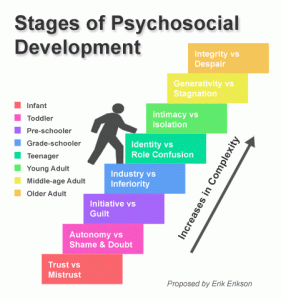
Moreover, lifecycle stages come into play. As Erik Erikson first proposed in Identity and the Lifecycle , individuals navigate major changes and challenges as they age. The fundamental tasks facing a young adult, such as defining personal identity, are quite different from someone who is mature, who is likely more focused on their legacy.
Moreover, lifecycle stages come into play. As Erik Erikson first proposed in Identity and the Lifecycle, individuals navigate major changes and challenges as they age. The fundamental tasks facing a young adult, such as defining personal identity, are quite different from someone who is mature, who is likely more focused on their legacy.
Content
{Source: Brianne Thompson}
{Source: Brianne Thompson}
Content
Engaging across generations
Engaging across generations
Content
The presence of four generations presents a new set of challenges and an exciting opportunity to leverage diverse skill sets and experiences to drive innovation and collaboration. Doing so requires a thoughtful approach that recognizes differences and creating a workplace culture that is based on respect, recognition, trust, and valuing unique perspectives. Here are 15 strategies to connect the generations:
The presence of four generations presents a new set of challenges and an exciting opportunity to leverage diverse skill sets and experiences to drive innovation and collaboration. Doing so requires a thoughtful approach that recognizes differences and creating a workplace culture that is based on respect, recognition, trust, and valuing unique perspectives. Here are 15 strategies to connect the generations:
Content
Provide training about the four generations to build greater awareness and understanding.
Provide training about the four generations to build greater awareness and understanding.
Content
Implement programs that leverage the specific skill sets of each generation, including reverse mentoring, where tech-savvy employees, the Gen Y and Millenials, also known as “digital natives” can share their knowledge with others.
Implement programs that leverage the specific skill sets of each generation, including reverse mentoring, where tech-savvy employees, the Gen Y and Millenials, also known as “digital natives” can share their knowledge with others.
Content
Examine the generational composition of workforce and where relevant, modify workplace practices to address unique needs.
Examine the generational composition of workforce and where relevant, modify workplace practices to address unique needs.
Content
Match the generations in the workforce with marketplace needs to promote adaptation to the desired customer base.
Match the generations in the workforce with marketplace needs to promote adaptation to the desired customer base.
Content
Recognize the institutional wisdom of older employees and engage in active knowledge management to prevent “brain drain.”
Recognize the institutional wisdom of older employees and engage in active knowledge management to prevent “brain drain.”
Content
Focus on the positive strengths that different generations bring, vs. making disparaging remarks (such as, “I’m sure you won’t know how to use this App” to a Boomer, or “Your generation expects instant rewards” to a Gen Y.)
Focus on the positive strengths that different generations bring, vs. making disparaging remarks (such as, “I’m sure you won’t know how to use this App” to a Boomer, or “Your generation expects instant rewards” to a Gen Y.)
Content
Individualize approaches in terms of career development, stretch assignments, and recognition; www.hrmorning.com/finding-the-right-motivators-for-the-right-generation-infographic .
Individualize approaches in terms of career development, stretch assignments, and recognition; www.hrmorning.com/finding-the-right-motivators-for-the-right-generation-infographic.
Content
Offer employee resource groups to build communities and education across the generations. Use different generations as Think Tanks to understand how to frame issues and solve problems from multiple perspectives.
Offer employee resource groups to build communities and education across the generations. Use different generations as Think Tanks to understand how to frame issues and solve problems from multiple perspectives.
Content
Deploy varied communication vehicles (Town Halls, team meetings, social media, e-learning) to share the larger purpose of the organization and the meaning of work.
Deploy varied communication vehicles (Town Halls, team meetings, social media, e-learning) to share the larger purpose of the organization and the meaning of work.
Content
Leverage the power of social networks to promote collaboration across the generations.
Leverage the power of social networks to promote collaboration across the generations.
Content
Use the career lattice concept to promote creative ways to develop employees, especially important in today’s flattened organizations.
Use the career lattice concept to promote creative ways to develop employees, especially important in today’s flattened organizations.
Content
Create an inclusive environment in which all voices can be heard.
Create an inclusive environment in which all voices can be heard.
Content
Emphasize development for everyone, regardless of age or stage in careers.
Emphasize development for everyone, regardless of age or stage in careers.
Content
Offer benefits that match the lifestyle and lifecycle needs (such as providing coverage for same sex partners, providing elder care benefits, long-term care insurance, and so forth).
Offer benefits that match the lifestyle and lifecycle needs (such as providing coverage for same sex partners, providing elder care benefits, long-term care insurance, and so forth).
Content
Find creative ways to promote flexibility in the workplace (such as job sharing, flex time, and telecommuting), which is increasingly desired across the four generations.
Find creative ways to promote flexibility in the workplace (such as job sharing, flex time, and telecommuting), which is increasingly desired across the four generations.
Content
How do you create connections across generations?
How do you create connections across generations?