
ATD Blog
Learning Transfer: Come to Las Vegas and Stop Gambling
Wed Nov 12 2014

Content
Training without a well-conceived learning transfer strategy is a gamble. Obtaining results from training requires more than just good instruction; it also requires a process approach for ensuring learning transfer. Without learning transfer, there are no positive training results.
Training without a well-conceived learning transfer strategy is a gamble. Obtaining results from training requires more than just good instruction; it also requires a process approach for ensuring learning transfer. Without learning transfer, there are no positive training results.
Content
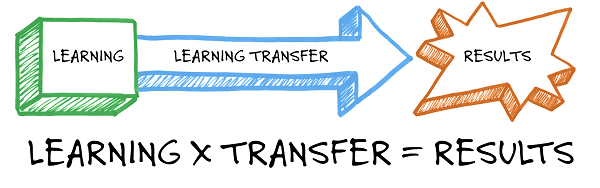
It does not matter how good your instruction is if learning transfer fails. In the above equation, if your learning is a perfect 10 and your transfer is a zero, then your results are also a zero. Are you prepared to gamble on learning without a transfer strategy?
It does not matter how good your instruction is if learning transfer fails. In the above equation, if your learning is a perfect 10 and your transfer is a zero, then your results are also a zero. Are you prepared to gamble on learning without a transfer strategy?
Content
Instead of hoping that by some miracle the investment in training will produce results, training professionals need to take more responsibility for influencing the transfer climate. Our future depends on it because the transfer climate can make or break the success of any training program.
Instead of hoping that by some miracle the investment in training will produce results, training professionals need to take more responsibility for influencing the transfer climate. Our future depends on it because the transfer climate can make or break the success of any training program.
Content
We first became interested in the problem of learning transfer 13 years ago. Initially we thought the solution was simple: Just remind learners periodically after training of the need to revisit, reflect on, and apply what they had learned. That certainly helped, but it seemed to work much better for some programs than for others. Why was that?
We first became interested in the problem of learning transfer 13 years ago. Initially we thought the solution was simple: Just remind learners periodically after training of the need to revisit, reflect on, and apply what they had learned. That certainly helped, but it seemed to work much better for some programs than for others. Why was that?
Content
We discovered that the success or failure of learning transfer often goes all the way back to the initial request for training. This influences every subsequent step in the process, most significantly the transfer rate and ultimate results.
We discovered that the success or failure of learning transfer often goes all the way back to the initial request for training. This influences every subsequent step in the process, most significantly the transfer rate and ultimate results.
Content
The following six disciplines (6Ds) are essential to driving learning transfer and business-relevant results:
The following six disciplines (6Ds) are essential to driving learning transfer and business-relevant results:
Content
Make sure that the business needs that training is meant to address are fully and clearly understood.
Make sure that the business needs that training is meant to address are fully and clearly understood.
Content
Design the learner’s complete experience. Don’t stop with the training event; the ultimate results depend as much or more on the learner’s experience before and after the training.
Design the learner’s complete experience. Don’t stop with the training event; the ultimate results depend as much or more on the learner’s experience before and after the training.
Content
Deliver training in ways that enhance the learner’s ability to apply the training. That means paying attention to the findings of learning research and, in general, delivering a lot less content and a lot more practice with feedback.
Deliver training in ways that enhance the learner’s ability to apply the training. That means paying attention to the findings of learning research and, in general, delivering a lot less content and a lot more practice with feedback.
Content
Take responsibility for driving learning transfer by developing strategies, systems, and structures that keep learning the priority. Also, hold learners accountable for using what they learned.
Take responsibility for driving learning transfer by developing strategies, systems, and structures that keep learning the priority. Also, hold learners accountable for using what they learned.
Content
Make developing and deploying performance support an integral part of training. This might include job aids, online support, help desks, or any other means of support that help optimize success when learners try new approaches for the first time.
Make developing and deploying performance support an integral part of training. This might include job aids, online support, help desks, or any other means of support that help optimize success when learners try new approaches for the first time.
Content
Evaluate the outcomes in ways that are relevant, credible, and compelling. The evaluation should not only show that the program is contributing to the desired business results, but also provide insights to support continuous improvement.
Evaluate the outcomes in ways that are relevant, credible, and compelling. The evaluation should not only show that the program is contributing to the desired business results, but also provide insights to support continuous improvement.
Content
Taken together, these six disciplines have proven to be a powerful—and much more predictable—alternative to gambling that something akin to a miracle will cause learning transfer and produce results. They have provided real and demonstrable value to training organizations large and small in companies around the world.
Taken together, these six disciplines have proven to be a powerful—and much more predictable—alternative to gambling that something akin to a miracle will cause learning transfer and produce results. They have provided real and demonstrable value to training organizations large and small in companies around the world.
Content
Would you like to learn more about the 6Ds and how to drive learning transfer and improve business impact? Join us in Las Vegas at the ATD TechKnowledge 2015 preconference Learning Transfer Certificate Program , January 12–13.
Would you like to learn more about the 6Ds and how to drive learning transfer and improve business impact? Join us in Las Vegas at the ATD TechKnowledge 2015 preconference Learning Transfer Certificate Program, January 12–13.