ATD, association for talent development

ATD Blog

Smarter Together: Emotional Intelligence with Diversity Inclusion

By

Fri Aug 29 2014

Smarter Together: Emotional Intelligence with Diversity Inclusion
Loading...

Content

Since Daniel Goleman published his groundbreaking book, Emotional Intelligence, more than two decades ago, this concept has helped us appreciate the multiple types of intelligence beyond IQ, and recognize that EQ is actually a better predictor of success in life and business than cognitive intelligence. While being smart can help to excel in school and obtain competitive jobs initially, long-term effectiveness requires interacting with others, building relationships, promoting collaboration and having the requisite resilience to deal with the inevitable obstacles that occur.

Since Daniel Goleman published his groundbreaking book, Emotional Intelligence, more than two decades ago, this concept has helped us appreciate the multiple types of intelligence beyond IQ, and recognize that EQ is actually a better predictor of success in life and business than cognitive intelligence. While being smart can help to excel in school and obtain competitive jobs initially, long-term effectiveness requires interacting with others, building relationships, promoting collaboration and having the requisite resilience to deal with the inevitable obstacles that occur.

Content

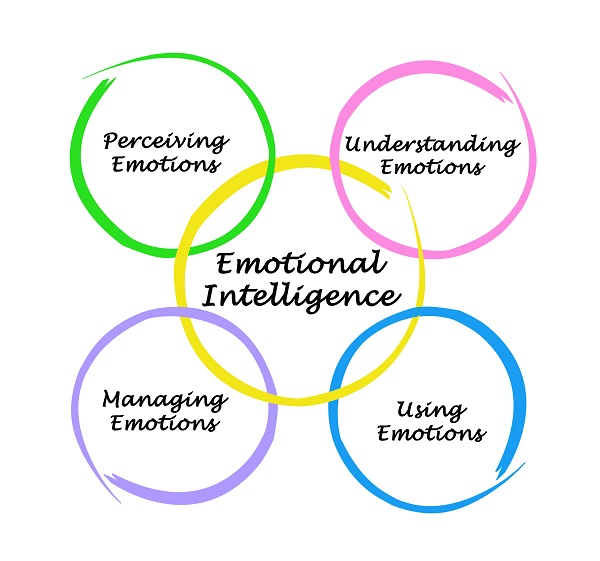
EQ requires awareness of one’s own emotions and the emotions of others, and using such knowledge to guide thinking and action. This begins with understanding one's own emotional reactions to situations and people (self-awareness), then making better, more informed decisions about how to react (self-management). Without this foundational understanding, people are reactive and may respond ineffectively to situations. Self-knowledge is what makes it possible to then become more attuned to the emotions of others (social awareness) and then be choose more effectively how to respond (relationship management).

EQ requires awareness of one’s own emotions and the emotions of others, and using such knowledge to guide thinking and action. This begins with understanding one's own emotional reactions to situations and people (self-awareness), then making better, more informed decisions about how to react (self-management). Without this foundational understanding, people are reactive and may respond ineffectively to situations. Self-knowledge is what makes it possible to then become more attuned to the emotions of others (social awareness) and then be choose more effectively how to respond (relationship management).

Content

Content

Content

Content


Content

UNDERSTAND

UNDERSTAND

Content

ACT

ACT

Content

SELF

SELF

Content

Self-Awareness

Self-Awareness

Content

Self-Management

Self-Management

Content

OTHERS

OTHERS

Content

Social Awareness

Social Awareness

Content

Relationship Management

Relationship Management

Content

Research across multiple industries and job functions has demonstrated that EQ makes a significant difference in on-the-job productivity:

Research across multiple industries and job functions has demonstrated that EQ makes a significant difference in on-the-job productivity:

  • Content

    L’Oreal found that when sales representatives were recruited for EQ, they outsold their peers by an average of $90K.

    L’Oreal found that when sales representatives were recruited for EQ, they outsold their peers by an average of $90K.

  • Content

    PepsiCo found that executives recruited for emotional intelligence had 10 percent lower turnover and delivered $3.75 million more in value.

    PepsiCo found that executives recruited for emotional intelligence had 10 percent lower turnover and delivered $3.75 million more in value.

  • Content

    EQ is twice as important as cognitive abilities in predicting outstanding employee performance.

    EQ is twice as important as cognitive abilities in predicting outstanding employee performance.

  • Content

    EQ accounts for 60 percent of job performance when other variables are removed.

    EQ accounts for 60 percent of job performance when other variables are removed.

  • Content

    AT&T research found that across different populations, EQ resulted in 20 percent higher productivity, on average.

    AT&T research found that across different populations, EQ resulted in 20 percent higher productivity, on average.

Content

Whether in leadership, sales, technical, or other roles, EQ helps people to interact with others so we demonstrate:

Whether in leadership, sales, technical, or other roles, EQ helps people to interact with others so we demonstrate:

Content

Right Response —> Right Time —> Right Person

Right Response —> Right Time —> Right Person

Content

With the rate of change and complexity in today’s organizations, EQ is more important than ever. Levels of stress have increased exponentially as a result of the increasing requirement to “do more with less,” and other factors. In fact, according to the report Attitudes in the American Workplace VII , 40 percent report their jobs as “very” or “extremely’ stressful. Stress triggers our primitive “fight or flight” responses and promotes tunnel vision—an adaptive mechanism for ancient cave dwellers fleeing predatory animals, but highly ineffective when today’s leaders are trying to influence others to support a change initiative or working across functions that have competing priorities.

With the rate of change and complexity in today’s organizations, EQ is more important than ever. Levels of stress have increased exponentially as a result of the increasing requirement to “do more with less,” and other factors. In fact, according to the report Attitudes in the American Workplace VII, 40 percent report their jobs as “very” or “extremely’ stressful. Stress triggers our primitive “fight or flight” responses and promotes tunnel vision—an adaptive mechanism for ancient cave dwellers fleeing predatory animals, but highly ineffective when today’s leaders are trying to influence others to support a change initiative or working across functions that have competing priorities. 

Content

Increasingly, we are working across borders, cultures, and very diverse team members—driven by changing demographics and globalization. These changes make EQ foundational for success. However, EQ is not enough: we also need Diversity & Inclusion practices to become embedded into our organizations to maximize talent and marketplace opportunities.

Increasingly, we are working across borders, cultures, and very diverse team members—driven by changing demographics and globalization. These changes make EQ foundational for success. However, EQ is not enough: we also need Diversity & Inclusion practices to become embedded into our organizations to maximize talent and marketplace opportunities. 

Content

Enter D&I

Enter D&I 

Content

To fully engage with today’s workforce, organizations are recognizing that Diversity & Inclusion (D&I) has become a business imperative to attract and retain the best talent. This requires sensitivity and awareness that diversity has myriad visible dimensions, including gender, generational differences, race, and ethnicity, while other factors such as sexual orientation, education, religion, and culture may be below the surface or not immediately apparent.

To fully engage with today’s workforce, organizations are recognizing that Diversity & Inclusion (D&I) has become a business imperative to attract and retain the best talent. This requires sensitivity and awareness that diversity has myriad visible dimensions, including gender, generational differences, race, and ethnicity, while other factors such as sexual orientation, education, religion, and culture may be  below the surface or not immediately apparent. 

Content

Recent findings from neuroscience has revealed that we all have “unconscious bias” hardwired into us, which enabled our species to spot danger quickly, assessing friend vs. foe; this immediate response is highly dysfunctional in today’s world. As discussed in Blindspot: Hidden Biases of Good People, by Mahzarin Banaji and Anthony Greenwald, hidden biases are universal. They influence all kinds of workplace dynamics, including who gets promoted, who is in the “go to” circle and who has access to important information.

Recent findings from neuroscience has revealed that we all have “unconscious bias” hardwired into us, which enabled our species to spot danger quickly, assessing friend vs. foe; this immediate response is highly dysfunctional in today’s world. As discussed in Blindspot: Hidden Biases of Good People, by Mahzarin Banaji and Anthony Greenwald, hidden biases are universal. They influence all kinds of workplace dynamics, including who gets promoted, who is in the “go to” circle and who has access to important information. 

Content

Even well-intentioned people may be unaware that they have a higher comfort level with one group and consequently may engage in “micro-inequities” without even realizing it, making comments or acting in a way that undermines individuals seen as different. Examples include:

Even well-intentioned people may be unaware that they have a higher comfort level with one group and consequently may engage in “micro-inequities” without even realizing it, making comments or acting in a way that undermines individuals seen as different. Examples include:

  • Content

    Comments such as “What she meant to say was…” or “You young people are not as motivated as my generation was.”

    Comments such as “What she meant to say was…” or “You young people are not as motivated as my generation was.”

  • Content

    Behaviors such as omitting individuals from distribution lists or not given consideration for stretch assignments or promotions.

    Behaviors such as omitting individuals from distribution lists or not given consideration for stretch assignments or promotions.

Content

Researcher David Rock reported that the feeling of being excluded provokes a similar reaction in the brain that physical pain may cause—clearly not conducive to promoting high performance!

Researcher David Rock reported that the feeling of being excluded provokes a similar reaction in the brain that physical pain may cause—clearly not conducive to promoting high performance!

Content

Because these biases are often unconscious, leveraging EQ may not be sufficient to create an inclusive environment. To test your own unconscious bias, go to https://implicit.harvard.edu/implicit .

Because these biases are often unconscious, leveraging EQ may not be sufficient to create an inclusive environment. To test your own unconscious bias, go to https://implicit.harvard.edu/implicit.

Content

Moving the needle on D&I will require systemic, organizational change (see http://www.astd.org/Publications/Blogs/Human-Capital-Blog/2013/06/Obtaining-Star-Results-from-Diversity-Inclusion ), and promoting positive interpersonal relationships. To be smart about D&I, build on a foundation of EQ while using a diversity lens.

Moving the needle on D&I will require systemic, organizational change (see http://www.astd.org/Publications/Blogs/Human-Capital-Blog/2013/06/Obtaining-Star-Results-from-Diversity-Inclusion), and promoting positive interpersonal relationships. To be smart about D&I, build on a foundation of EQ while using a diversity lens.

Content

What does your organization do to become smarter about creating a workplace environment that is inclusive?

What does your organization do to become smarter about creating a workplace environment that is inclusive?

Content

To read more D&I blog posts, go to http://www.astd.org/Communities-of-Practice/Human-Capital/Best-Practices-in-Diversity-and-Inclusion .

To read more D&I blog posts, go to http://www.astd.org/Communities-of-Practice/Human-Capital/Best-Practices-in-Diversity-and-Inclusion.

You've Reached ATD Member-only Content

Become an ATD member to continue

Already a member?Sign In


Copyright © 2026 ATD

ASTD changed its name to ATD to meet the growing needs of a dynamic, global profession.

Terms of UsePrivacy NoticeCookie Policy