
ATD Blog
The Power of Behavioral Skills
Thu Apr 25 2019

Content
Behavior is not limited to your actions; it also determines your chain of thoughts and your attitudes. Human behavior is experienced throughout an individual’s lifetime. It includes the way they act based on various factors such as genetics, faith, attitude, and social norms. Communication skills like assertiveness, clarity, and consistency make a difference in how someone is perceived by others.
Behavior is not limited to your actions; it also determines your chain of thoughts and your attitudes. Human behavior is experienced throughout an individual’s lifetime. It includes the way they act based on various factors such as genetics, faith, attitude, and social norms. Communication skills like assertiveness, clarity, and consistency make a difference in how someone is perceived by others.
Content
The workforce is designed to focus more on the domain expertise, but in doing so employees miss opportunities to develop the managerial and leadership skills that equip them to provide enhanced deliverables. Employees who do rise to the managerial level then have to combat challenges like silo working, communication barriers, and conflicts. They may be prudent with their domain expertise, but their knack or aptitude for managing relationships, extracting work, and communicating clearly and concisely impacts the end results of projects and office dynamics.
The workforce is designed to focus more on the domain expertise, but in doing so employees miss opportunities to develop the managerial and leadership skills that equip them to provide enhanced deliverables. Employees who do rise to the managerial level then have to combat challenges like silo working, communication barriers, and conflicts. They may be prudent with their domain expertise, but their knack or aptitude for managing relationships, extracting work, and communicating clearly and concisely impacts the end results of projects and office dynamics.
Content
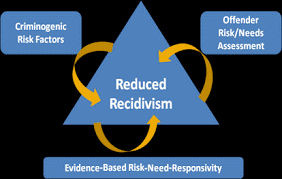
To further my point, let’s explore criminal recidivism in the United States. The inmates, while on parole, voluntarily nominate themselves for treatment programs that teach important life and behavioral tools. These tools focus on their criminogenic needs, the reason they committed their crime, and based upon their providers’ recommendations, their substance abuse, housing challenges, detoxification, education, and employment.
To further my point, let’s explore criminal recidivism in the United States. The inmates, while on parole, voluntarily nominate themselves for treatment programs that teach important life and behavioral tools. These tools focus on their criminogenic needs, the reason they committed their crime, and based upon their providers’ recommendations, their substance abuse, housing challenges, detoxification, education, and employment.
Content
An important principle supports the evidence-based practices that validate these behavioral tools: the risk, need, and responsivity principle (RNR Principle) .
An important principle supports the evidence-based practices that validate these behavioral tools: the risk, need, and responsivity principle (RNR Principle).
Content
1. The risk principle is one of re-offending and going back to crime. It evaluates the risk that the offender may have to recidivate.
1. The risk principle is one of re-offending and going back to crime. It evaluates the risk that the offender may have to recidivate.
Content
2. The second is the needs principle, where the criminogenic needs determine the criminal needs owing to which he did what he did. These criminogenic needs are further divided into the BIG 4 and the MODERATE 5.
2. The second is the needs principle, where the criminogenic needs determine the criminal needs owing to which he did what he did. These criminogenic needs are further divided into the BIG 4 and the MODERATE 5.
Content
The BIG 4 could be the AABC:
The BIG 4 could be the AABC:
Content
antisocial attitudes, values, and beliefs
antisocial attitudes, values, and beliefs
Content
antisocial peers
antisocial peers
Content
behavioral characteristics
behavioral characteristics
Content
criminal history.
criminal history.
Content
And the MODERATE 5 are FEELS:
And the MODERATE 5 are FEELS:
Content
family/marital
family/marital
Content
education
education
Content
employment
employment
Content
leisure/recreation
leisure/recreation
Content
substance abuse.
substance abuse.
Content
3. The responsivity principle matches the learning needs to that of the offender. Some may have different learning challenges pertaining to culture, language, and abilities while the same is taken into consideration to design the treatment plan that will suit the offender’s learning styles.
3. The responsivity principle matches the learning needs to that of the offender. Some may have different learning challenges pertaining to culture, language, and abilities while the same is taken into consideration to design the treatment plan that will suit the offender’s learning styles.
Content
Training specialists prepare their staff, primarily the case managers, to help them perform suitable case management on these inmates/offenders. The case planning comprises of a plan that fosters our mission to help individuals transition from a life of crime to one of responsibility and productivity. As treatment and behavioral goals are achieved, residents earn the privilege of increased community involvement while maintaining a higher level of responsibility. While administering the case management, the above principles of EBP become the root of the treatment. Based on these, the offenders are given their plans for the six months that they stay in program.
Training specialists prepare their staff, primarily the case managers, to help them perform suitable case management on these inmates/offenders. The case planning comprises of a plan that fosters our mission to help individuals transition from a life of crime to one of responsibility and productivity. As treatment and behavioral goals are achieved, residents earn the privilege of increased community involvement while maintaining a higher level of responsibility. While administering the case management, the above principles of EBP become the root of the treatment. Based on these, the offenders are given their plans for the six months that they stay in program.
Content
All of this happens through an effective technique called motivational interviewing. The offenders are taught to open up, understand the behavior discrepancy, and work toward achieving a new behavior that allows them to achieve their goals. This helps them move past the reasons they may have committed the crime.
All of this happens through an effective technique called motivational interviewing. The offenders are taught to open up, understand the behavior discrepancy, and work toward achieving a new behavior that allows them to achieve their goals. This helps them move past the reasons they may have committed the crime.
Content
No punishments, no being behind bars—just the simple help of resources that foster learning and developing life skills, new behaviors, and transitioning back into society.
No punishments, no being behind bars—just the simple help of resources that foster learning and developing life skills, new behaviors, and transitioning back into society.
Content
This system has helped effectively reduce recidivism—one example of the power of such behavioral tools. If this can be a huge success in the criminal justice system, these tools and imparting correct behavioral skills in our organizations would work wonders. Domain expertise is necessary but this is a level that has long-lasting success and is shaping lives for the betterment. Leaders and managers should focus on these attributes of behavioral skills and ensure that we become better. Through such choices, our lives will be enriched and we will achieve the milestones we set out for.
This system has helped effectively reduce recidivism—one example of the power of such behavioral tools. If this can be a huge success in the criminal justice system, these tools and imparting correct behavioral skills in our organizations would work wonders. Domain expertise is necessary but this is a level that has long-lasting success and is shaping lives for the betterment. Leaders and managers should focus on these attributes of behavioral skills and ensure that we become better. Through such choices, our lives will be enriched and we will achieve the milestones we set out for.