TD Magazine Article
Member Benefit
Productivity Rules the New World
Content
A review of Reinventing Talent Management: Principles and Practices for the New World of Work by Edward E. Lawler III
A review of Reinventing Talent Management: Principles and Practices for the New World of Work by Edward E. Lawler III
Thu Oct 05 2017
Content
Reinventing Talent Management: Principles and Practices for the New World of Work
Reinventing Talent Management: Principles and Practices for the New World of Work
Content
By Edward E. Lawler III
By Edward E. Lawler III
Content
Berrett-Koehler, 130 pp., $26.95
Berrett-Koehler, 130 pp., $26.95
Content
As top managers across the world grapple with changes in business and industry, is HR staying up with the times? Global influences, technology advances, and diverse viewpoints require a new approach to HR management. What should be the path forward in this whirlwind of business opportunity?
As top managers across the world grapple with changes in business and industry, is HR staying up with the times? Global influences, technology advances, and diverse viewpoints require a new approach to HR management. What should be the path forward in this whirlwind of business opportunity?
Content
According to Reinventing Talent Management , there are six traits that should be inherent in all talent management contributions: strategy-driven, performance-focused, skills-based, agile, segmented, and evidence based. Those are significant areas for change. And, when Lawler speaks, we listen.
According to Reinventing Talent Management, there are six traits that should be inherent in all talent management contributions: strategy-driven, performance-focused, skills-based, agile, segmented, and evidence based. Those are significant areas for change. And, when Lawler speaks, we listen.
Content
He is one of the talent industry's most influential and visionary leaders, and the author of more than 400 articles and 50 books. With an eye on research results and current trends, Lawler describes the future world of work as he sees it. With his no-nonsense, easy-to-read writing style, don't be surprised if you finish the book in one sitting.
He is one of the talent industry's most influential and visionary leaders, and the author of more than 400 articles and 50 books. With an eye on research results and current trends, Lawler describes the future world of work as he sees it. With his no-nonsense, easy-to-read writing style, don't be surprised if you finish the book in one sitting.
Content
Lawler says employment will be offered in short-term spurts for contract, gig, and temporary workers. Companies will choose people from the marketplace who own their own development, and screen applicants based on validated interview information and work simulations.
Lawler says employment will be offered in short-term spurts for contract, gig, and temporary workers. Companies will choose people from the marketplace who own their own development, and screen applicants based on validated interview information and work simulations.
Content
Employers will work to keep highly skilled performers content and productive. They will reward workers by skill, knowledge, and performance, not job titles and pay ranges. Valuable employees will be paid well above market rate. Merit pay plans will not exist. Pay will be public and based on defensible decisions. Companies will judge performance on goal accomplishments and review it at least quarterly, without ratings or rankings, and communicate about it through email or other electronic means.
Employers will work to keep highly skilled performers content and productive. They will reward workers by skill, knowledge, and performance, not job titles and pay ranges. Valuable employees will be paid well above market rate. Merit pay plans will not exist. Pay will be public and based on defensible decisions. Companies will judge performance on goal accomplishments and review it at least quarterly, without ratings or rankings, and communicate about it through email or other electronic means.
Content
Integrating the six principles in the same organization at the same time will definitely need a well developed plan, and it will not be easy to implement. In fact, replacing a current workforce with contingent workers whose pay is publicized might be too difficult to imagine. The book, however, does not fall short in provoking questions.
Integrating the six principles in the same organization at the same time will definitely need a well developed plan, and it will not be easy to implement. In fact, replacing a current workforce with contingent workers whose pay is publicized might be too difficult to imagine. The book, however, does not fall short in provoking questions.
Content
Will in-house HR professionals be replaced by outside vendors that use a common application bank? Will line supervisors place orders online for labor, too? Will delivery of workers be Amazon-quick?
Will in-house HR professionals be replaced by outside vendors that use a common application bank? Will line supervisors place orders online for labor, too? Will delivery of workers be Amazon-quick?
Content
What will happen to the job seekers who need stability and longevity, or who are not over-achievers? And for those just beginning their careers, will aspirations about careers change? Will college be attended only by the elite, since average-and below-average contributors will not find jobs waiting, anyway?
What will happen to the job seekers who need stability and longevity, or who are not over-achievers? And for those just beginning their careers, will aspirations about careers change? Will college be attended only by the elite, since average-and below-average contributors will not find jobs waiting, anyway?
Content
These questions, of course, are outside the scope of this book. Instead, Lawler presents thought-provoking,talent management principles that center squarely around organizational strategy.
These questions, of course, are outside the scope of this book. Instead, Lawler presents thought-provoking,talent management principles that center squarely around organizational strategy.
Content
This highly acclaimed author, without a doubt, provides an interesting discussion for executives, managers, consultants, and students of HR. Although the book ends too quickly, it definitely helps us imagine a world where business runs at top productivity—all the time.
This highly acclaimed author, without a doubt, provides an interesting discussion for executives, managers, consultants, and students of HR. Although the book ends too quickly, it definitely helps us imagine a world where business runs at top productivity—all the time.
Content
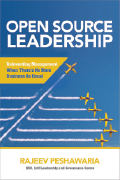
Open Source Leadership: Reinventing Management When There's No More Business as Usual
Open Source Leadership: Reinventing Management When There's No More Business as Usual
Content
Rajeev Peshawaria
Rajeev Peshawaria
Content
McGraw-Hill Education, 288 pp., $30
McGraw-Hill Education, 288 pp., $30
Content
This book takes a scorched-earth approach to conventional wisdom around leadership, performance management, engagement, and innovation. Instead of all-inclusive leadership, it shows that many employees prefer an authoritative style. Instead of measuring whether people accomplish stretch goals, it advocates evaluating performance by asking who completes a bare minimum of work and who goes above and beyond. Instead of centralizing innovation in specialized departments, it recommends crowdsourcing it across the company. Written by an unabashed contrarian, its teachings will help your organization zig while everyone else's zags.
This book takes a scorched-earth approach to conventional wisdom around leadership, performance management, engagement, and innovation. Instead of all-inclusive leadership, it shows that many employees prefer an authoritative style. Instead of measuring whether people accomplish stretch goals, it advocates evaluating performance by asking who completes a bare minimum of work and who goes above and beyond. Instead of centralizing innovation in specialized departments, it recommends crowdsourcing it across the company. Written by an unabashed contrarian, its teachings will help your organization zig while everyone else's zags.
Content
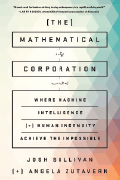
The Mathematical Corporation: Where Machine Intelligence and Human Ingenuity Achieve the Impossible
The Mathematical Corporation: Where Machine Intelligence and Human Ingenuity Achieve the Impossible
Content
Josh Sullivan and Angela Zutavern
Josh Sullivan and Angela Zutavern
Content
PublicAffairs, 304 pp., $28
PublicAffairs, 304 pp., $28
Content
It might sound a touch dystopian, but it's official: Machines are learning to think. Able to discern patterns in massive quantities of information, often better than humans can, machines have created a world where they aren't just tools for conducting business—they're partners. And according to Sullivan and Zutavern, organizations whose people have the critical-thinking skills to lead alongside these partners are the ones best-prepared to succeed now and in the future. These "mathematical corporations," as the authors dub them, will harness the power of data to predict once-unimaginable futures and solve once-intractable problems. This text will help you understand leaders' roles in these organizations.
It might sound a touch dystopian, but it's official: Machines are learning to think. Able to discern patterns in massive quantities of information, often better than humans can, machines have created a world where they aren't just tools for conducting business—they're partners. And according to Sullivan and Zutavern, organizations whose people have the critical-thinking skills to lead alongside these partners are the ones best-prepared to succeed now and in the future. These "mathematical corporations," as the authors dub them, will harness the power of data to predict once-unimaginable futures and solve once-intractable problems. This text will help you understand leaders' roles in these organizations.
Content
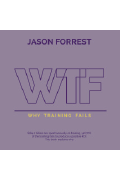
WTF: Why Training Fails
WTF: Why Training Fails
Content
Jason Forrest
Jason Forrest
Content
MJS Press, 43 pp., $13.95
MJS Press, 43 pp., $13.95
Content
As Forrest writes in his book's introduction, many organizational learning departments spend a lot of time and energy teaching knowledge, but pay little attention to the true goal of training: getting people to put instructions into action. That's why, with chapters only a few pages long and based on seemingly outlandish questions—such as "Why Do People Still Buy Roadies When It's Illegal to Drink and Drive?"—the author breaks down the different "leashes" that get in the way of behavior change. Best suited for a sales enablement audience, this short read is funny, irreverent, informative, and thought-provoking.
As Forrest writes in his book's introduction, many organizational learning departments spend a lot of time and energy teaching knowledge, but pay little attention to the true goal of training: getting people to put instructions into action. That's why, with chapters only a few pages long and based on seemingly outlandish questions—such as "Why Do People Still Buy Roadies When It's Illegal to Drink and Drive?"—the author breaks down the different "leashes" that get in the way of behavior change. Best suited for a sales enablement audience, this short read is funny, irreverent, informative, and thought-provoking.
Content
What's on Cynthia Clay's Bookshelf?
What's on Cynthia Clay's Bookshelf?
Content
Smarter, Faster, Better: The Secrets of Being Productive in Life and Business by Charles Duhigg. This book is all about building motivated and productive teams, using eight core concepts that probe ideas around motivation, control, need for closure, mental models, making decisions, and forecasting. It uses terrific stories, well researched and well-told, as diverse as the creativity in making Disney's Frozen to helping U.S. Marines in boot camp build an internal locus of control.
Smarter, Faster, Better: The Secrets of Being Productive in Life and Business by Charles Duhigg. This book is all about building motivated and productive teams, using eight core concepts that probe ideas around motivation, control, need for closure, mental models, making decisions, and forecasting. It uses terrific stories, well researched and well-told, as diverse as the creativity in making Disney's Frozen to helping U.S. Marines in boot camp build an internal locus of control.
Content
A Great Reckoning by Louise Penny. I love this author's work that, on the surface, seems to be part of the mystery genre. Penny's books are usually set in Quebec or a small village near Montreal. She develops deep, rich characters, builds suspenseful plots, and creates a sense of peace in the midst of evil. Throughout her novels, there is always a thread of compassion, understanding, healing, and hope.
A Great Reckoning by Louise Penny. I love this author's work that, on the surface, seems to be part of the mystery genre. Penny's books are usually set in Quebec or a small village near Montreal. She develops deep, rich characters, builds suspenseful plots, and creates a sense of peace in the midst of evil. Throughout her novels, there is always a thread of compassion, understanding, healing, and hope.
Content
Brain Rules: 12 Principles for Surviving and Thriving at Work, Home, and School by John Medina. Written by a developmental molecular biologist at the University of Washington, this book changed the way I design and facilitate learning experiences. It's fun, easy to read, and completely relevant to our work. Medina takes the findings of neuroscience and applies them to our lives. And it's all backed by scientific, peer-reviewed research.
Brain Rules: 12 Principles for Surviving and Thriving at Work, Home, and School by John Medina. Written by a developmental molecular biologist at the University of Washington, this book changed the way I design and facilitate learning experiences. It's fun, easy to read, and completely relevant to our work. Medina takes the findings of neuroscience and applies them to our lives. And it's all backed by scientific, peer-reviewed research.