
Research Report
Chief Talent Development Officers: Driving Strategy and Performance
| Format | Member | Non-Member |
|---|---|---|
- | $499.00 | |
- | $499.00 | |
- | $19.99 |
Because companies recognize the business impact learning has on organizations, the talent development leadership role is experiencing unprecedented expansion in scope and responsibilities. While it goes by many names—chief talent development officer (CTDO) and chief learning officer (CLO) are among the most popular—the learning leadership role demands strong and varied skills wielded by professionals with the courage and vision to fully own and define what has become a key contributor to organizational success.
To show current and aspiring talent development leaders the changes and growth occurring in the role—and what those shifts might mean for them—the Association for Talent Development (ATD) and the Institute for Corporate Productivity (i4cp) collaborated on new research based on the experiences of learning leaders worldwide.
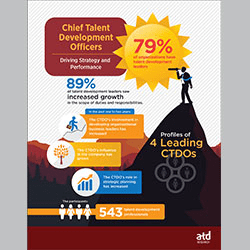
ATD and i4cp found that most organizations (79 percent) have a designated talent development leader or leaders. The talent development leader’s role is expanding in nearly 90 percent of organizations.
Book Details
ISBN: 9781562864385
Pages: 48
Publication Date: April 2017
Formats: Paperback, PDF, Whitepaper
Product Code: 191702