ATD, association for talent development

ATD Blog

Assessing Online Collaborative Learning

By

Thu Apr 28 2016

Assessing Online Collaborative Learning
Loading...

Content

One of the most common concerns about the evaluation of collaborative learning is that even though all participants do not contribute equally, their efforts are grouped with those of their team members in a single score.

One of the most common concerns about the evaluation of collaborative learning is that even though all participants do not contribute equally, their efforts are grouped with those of their team members in a single score. 

Content

A solution to this genuine concern is to assess participants at both the individual and group level. Additionally, as recommended in the previous post in this series , group rewards should be based on individual learning. This reward interdependence helps emphasize individual accountability. It also compels participants to support the learning process of their team members.

A solution to this genuine concern is to assess participants at both the individual and group level. Additionally, as recommended in the previous post in this series, group rewards should be based on individual learning. This reward interdependence helps emphasize individual accountability. It also compels participants to support the learning process of their team members. 

Content

When is the right time to evaluate a collaborative learning program? The assessment of the transformation in knowledge (cognitive domain) or social behavior (affective domain) should be done throughout the collaborative process, while keeping the participants motivated, and not just toward the end.
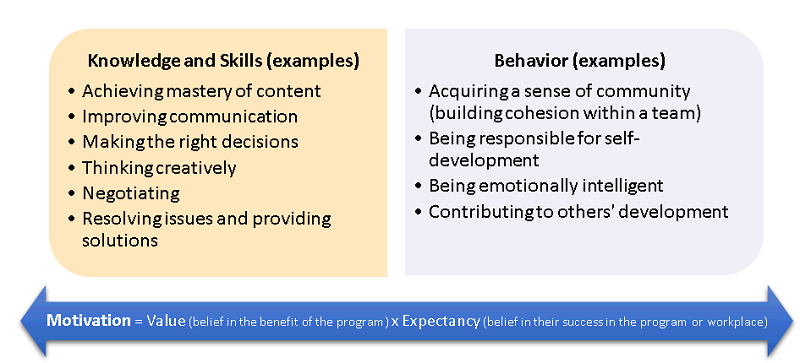
When is the right time to evaluate a collaborative learning program? The assessment of the transformation in knowledge (cognitive domain) or social behavior (affective domain) should be done throughout the collaborative process, while keeping the participants motivated, and not just toward the end. 

Assessing Online Collaborative Learning-fc18b56662da327952b56dc2db57a01d6e37e5af6cb503fdd85c1d3ed4df4a54

Content

Assessing the progress at multiple stages of the program helps identify:

Assessing the progress at multiple stages of the program helps identify:

  • Content

    desired improvements in knowledge, skills, and behavior

    desired improvements in knowledge, skills, and behavior

  • Content

    challenges or conflicts

    challenges or conflicts

  • Content

    required changes to the flow of the program

    required changes to the flow of the program

  • Content

    ·necessary checkpoints.

    ·necessary checkpoints.

Content

Checkpoints should be spaced out in such a way that participants have enough time to reflect on their performance and devise a strategy for subsequent collaborative sessions to improve their performance. This approach will help them develop the necessary skills and behavior for effective collaboration.

Checkpoints should be spaced out in such a way that participants have enough time to reflect on their performance and devise a strategy for subsequent collaborative sessions to improve their performance. This approach will help them develop the necessary skills and behavior for effective collaboration.

Content

An assessment will vary depending on three key elements:

An assessment will vary depending on three key elements: 

Content

#1: Focus

#1: Focus

  • Content

    Knowledge

    Knowledge

  • Content

    Skills

    Skills

  • Content

    Behavior

    Behavior

Content

#2: Type:

#2: Type:

  • Content

    Self-assessment

    Self-assessment

  • Content

    Team self-assessment

    Team self-assessment

  • Content

    Peer assessment ( Tip: If evaluators are hard-pressed for time to grade a session, use peer rating to reduce the evaluators’ workload while keeping participants engaged.)

    Peer assessment (Tip: If evaluators are hard-pressed for time to grade a session, use peer rating to reduce the evaluators’ workload while keeping participants engaged.)

  • Content

    Assessment by facilitator

    Assessment by facilitator

  • Content

    Assessment by sponsor(s)

    Assessment by sponsor(s)

Content

#3: Format

#3: Format

  • Content

    Questionnaires

    Questionnaires

  • Content

    Critical thinking assignments

    Critical thinking assignments

  • Content

    Reflective summary

    Reflective summary

  • Content

    Online research reports

    Online research reports

  • Content

    Online survey

    Online survey

  • Content

    Virtual role plays

    Virtual role plays

  • Content

    Scenario-based questions

    Scenario-based questions

  • Content

    Rating scales

    Rating scales

  • Content

    Feedback forms ( Tip: When collecting feedback on session expectation fulfillment, do not stop after evaluating it only once. Try to gather participants’ opinions using the “step-back-dive-in” approach throughout the program, to be aware of participants’ motivation levels and adjust program activities, if required.)

    Feedback forms (Tip: When collecting feedback on session expectation fulfillment, do not stop after evaluating it only once. Try to gather participants’ opinions using the “step-back-dive-in” approach throughout the program, to be aware of participants’ motivation levels and adjust program activities, if required.)

Content

From the various assessment formats listed above, data can be collected in the form of:

From the various assessment formats listed above, data can be collected in the form of:

  • Content

    individual or group activity outputs

    individual or group activity outputs

  • Content

    ratings by facilitators, peers, team members, and individuals

    ratings by facilitators, peers, team members, and individuals

  • Content

    feedback by facilitators, peers, and team members

    feedback by facilitators, peers, and team members

  • Content

    recorded interactions or log files, such as discussion forums, chats, whiteboard activities, videos, audio files, and transcripts

    recorded interactions or log files, such as discussion forums, chats, whiteboard activities, videos, audio files, and transcripts

  • Content

    change reports or periodical digests from the online learning environment or software.

    change reports or periodical digests from the online learning environment or software.

Content

These data can be collected and managed through the learning environment itself. For example, RSS feeds can help facilitators monitor group activities and indicate when to intervene. Additionally, digital footprints can track participant or group activity. Such advances in digital tracking, data collection, and monitoring tools reduce the task of managing data for multiple groups. Moreover, if relevant data, such as contribution summaries in various discussion threads, new discussions, or top contributors, are available to participants, they feel motivated to contribute and collaborate further.

These data can be collected and managed through the learning environment itself. For example, RSS feeds can help facilitators monitor group activities and indicate when to intervene. Additionally, digital footprints can track participant or group activity. Such advances in digital tracking, data collection, and monitoring tools reduce the task of managing data for multiple groups. Moreover, if relevant data, such as contribution summaries in various discussion threads, new discussions, or top contributors, are available to participants, they feel motivated to contribute and collaborate further. 

Content

By analyzing data from multiple sources throughout a collaborative learning program, we can guide a group or an individual on improving performance through constructive (written or verbal) feedback. A thorough assessment of data, which can be archived and retrieved later, also helps determine the effectiveness of an online collaboration program and the learning environment.

By analyzing data from multiple sources throughout a collaborative learning program, we can guide a group or an individual on improving performance through constructive (written or verbal) feedback. A thorough assessment of data, which can be archived and retrieved later, also helps determine the effectiveness of an online collaboration program and the learning environment. 

Content

This employee-oriented approach of learning is beneficial for organizations on multiple fronts. It provides hands-on experience in working with peers globally, learning from the success and failures of working together, and making things work when working toward a common outcome or goal. It also supports cross-cultural preferences in large organizations, leading to efficacy in operations.

This employee-oriented approach of learning is beneficial for organizations on multiple fronts. It provides hands-on experience in working with peers globally, learning from the success and failures of working together, and making things work when working toward a common outcome or goal. It also supports cross-cultural preferences in large organizations, leading to efficacy in operations. 

Content

However, to sustain a collaborative learning environment, it is important that an organization’s leadership accepts it, communicates its value, drives the learning culture, and supports its implementation. This is crucial in forming a knowledge-based global workforce, which leads to shorter time to efficiency and keeps an organization ahead of its competitors.

However, to sustain a collaborative learning environment, it is important that an organization’s leadership accepts it, communicates its value, drives the learning culture, and supports its implementation. This is crucial in forming a knowledge-based global workforce, which leads to shorter time to efficiency and keeps an organization ahead of its competitors.

You've Reached ATD Member-only Content

Become an ATD member to continue

Already a member?Sign In


Copyright © 2026 ATD

ASTD changed its name to ATD to meet the growing needs of a dynamic, global profession.

Terms of UsePrivacy NoticeCookie Policy