
ATD Blog
Human at the Helm: L&D’s Role in an AI-Driven Workplace
If an organization believes AI can replace its talent function, it is confusing content with capability.
Tue Mar 17 2026
For most of my career in talent development, our value was something you could actually point to. We built programs. We designed courses. We facilitated sessions. We developed materials that helped managers lead and teams perform. When the business faced a performance gap, we produced something concrete – a workshop, a curriculum, or a structured experience.
Today, that clarity is blurring. Any manager with an AI subscription can now generate a facilitator guide, a slide deck, or a six-week learning pathway in about ninety seconds. You don't need a full instructional design team to produce training content anymore. It’s not hard to imagine an executive asking, “If AI can create training, do we still need a learning department?”
It’s an understandable question, but it rests on a narrow definition of what TD has been responsible for delivering.
Learning was never just about producing content. It has always been about diagnosing why people weren't able to perform—aligning skills with a shifting strategy and driving measurable behavior change. Content was simply the vehicle we used to get there.
At a recent ATD Forum Roundtable discussion, Josh Cavalier, author of Applying AI in Learning and Development, brought this shift into sharp focus. What follows draws on this discussion and explores the emerging role of TD in an AI-driven workplace.
AI Is Reshaping Roles, Not Just Work
One of the strongest points made by Josh is that AI is not eliminating work wholesale. Instead, AI is transforming the work inside existing jobs. Citing labor market research, he explained that skills most exposed to automation tend to weaken over time, while skills that complement and augment AI grow in value. Roles don’t necessarily disappear, but what people do in those roles changes in meaningful ways.
Programming offers a clear example. Developers increasingly rely on AI to generate code. Their role shifts from writing every line to reviewing, refining, validating, and setting policy on what the AI produces.
L&D is approaching a similar inflection point.
If AI can generate learning materials at scale, then producing courses cannot define our value. For many learning teams, that never was our value anyway.
But AI strips away any illusion that content alone is enough. What matters is whether the business can see and measure improvements to employee performance. That means asking sharper questions up front. What business problems are we actually trying to solve? What specific behavior must change to improve performance? How do we measure success in dollars or hours, not just completions?
This moment signals the rise of a new dimension in our work: serving as the Human-Machine Performance Analyst. AI can draft lessons, generate multimedia assets, personalize learning pathways, convert documentation into engaging formats, and even simulate practice environments. But generating content is not the same as improving performance. Someone still needs to connect interventions to business metrics, monitor impact over time, and use those results to adjust interventions.
Accountability Still Belongs to Humans
As AI agents take over more operational tasks, someone must ensure that outputs align with the company’s strategy and standards. We are becoming the owners of the human-AI dynamic. We have to “police the police.” That oversight requires business acumen and systemic thinking, not just a knack for instructional expertise.
According to Josh, this also means operating at the “speed of business.” Organizations evolve quickly. The old six-month development cycle is a relic. We have to design integrated ecosystems that enable humans and AI to collaborate in real time.
To frame that collaboration, Josh introduced the Human AI Task Scale, outlining seven levels of interaction between humans and AI. At lower levels, humans prompt and guide. At higher levels, AI assumes increasing autonomy. Yet one principle holds throughout: automation may expand, but accountability does not transfer. When the AI hallucinates or produces flawed outputs, responsibility shifts immediately back to the human. No matter how sophisticated the system becomes, someone is still answerable for the outcome. Humans define policy, set guardrails, and own consequences.
The Questions TD Is Still Grappling With
If accountability remains with humans and TD is evolving into a human-machine performance role, then several difficult issues remain that the industry has not fully addressed.
First, ownership. As AI agents become embedded in workflows, who is ultimately responsible for their performance? IT may manage the systems. HR may oversee policy. Business leaders own the results. But as Josh emphasized, accountability cannot be outsourced to the technology itself. Someone must own the performance implications, and that role requires understanding both human capability and machine output.
Second, capability erosion. If professionals rely too heavily on automation, expertise can weaken. Organizations may gain speed but lose depth. That raises a design challenge for TD. We must use AI to extend capability while intentionally preserving core human skills such as critical thinking, problem framing, coaching, and ethical reasoning.
And then there is what Josh called the “broken bottom rung.” If AI absorbs all the entry-level tasks and the "grunt work" that new hires traditionally use to learn the ropes, we risk breaking the bottom rung of the career ladder. How do we build future experts if those developmental experiences disappear? Without deliberate redesign and intentional human-AI development models, organizations risk creating a gap between seasoned experts and underdeveloped newcomers.
These questions don’t have simple answers. But they reinforce the same principle that runs through the discussion: automation does not remove responsibility. It heightens the need for clarity around ownership, capability development, and performance oversight.
The Bottom Line
TD isn't going away. It is being repositioned. If an organization believes AI can replace its talent function, it is confusing content with capability. AI can generate materials. What it cannot do is decide what good performance looks like in your organization, safeguard the skills that matter most, or develop real expertise over time. That responsibility remains human.
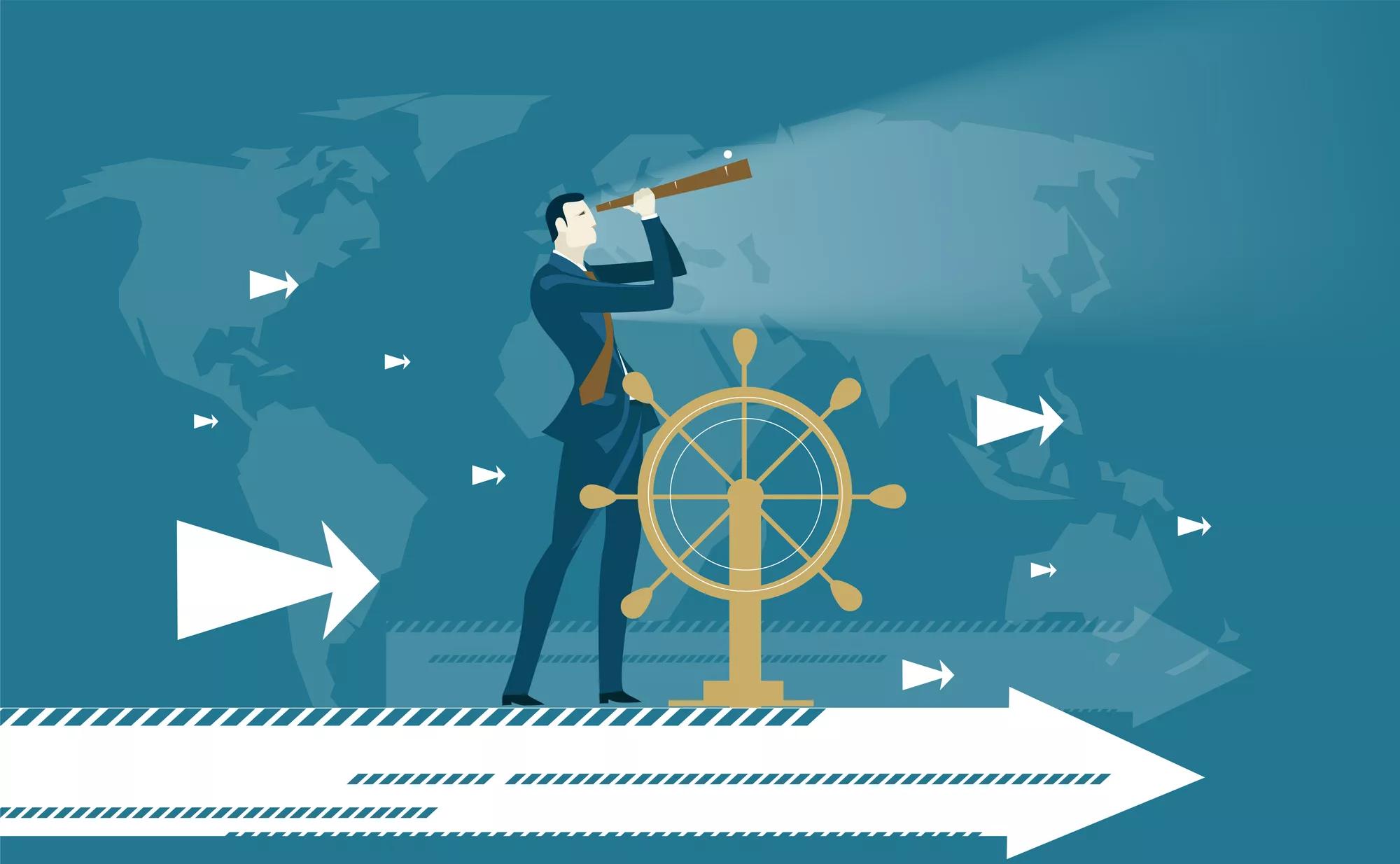
For those of us leading learning and talent development functions, clarifying that distinction may be our most important work. It’s not about defending our relevance; it’s about redefining it in a language the business finally understands. We are still the captains of the ships that build organizational capability and thus enhance the organization's competitive edge.
View Courses Recommended for You