ATD, association for talent development

ATD Blog

Neuro-Agility: A New Paradigm for Safeguarding Learning Organizations

By

Thu Mar 15 2018

Neuro-Agility: A New Paradigm for Safeguarding Learning Organizations
Loading...

Content

To stay competitive in today’s business world requires a fierce desire to learn, improve, and adapt. Former CEO of Shell Oil Company, Arie de Geus, said, “A company’s ability to learn faster than its competitors may be its only sustainable competitive advantage in the future.” The collective mental flexibility of an organization’s workforce to continuously adapt and adjust to new systems, strategies, structures, and technology is their greatest competitive advantage. Learning, therefore, is not only the DNA of the mind but also the DNA of any progressive and competitive organization. A learning organization is an organization that nurtures and improves a culture of learning and innovation—one in which employees continuously seek, share, and apply new knowledge and skills to improve individual and organizational performance and drive business results.

To stay competitive in today’s business world requires a fierce desire to learn, improve, and adapt. Former CEO of Shell Oil Company, Arie de Geus, said, “A company’s ability to learn faster than its competitors may be its only sustainable competitive advantage in the future.” The collective mental flexibility of an organization’s workforce to continuously adapt and adjust to new systems, strategies, structures, and technology is their greatest competitive advantage. Learning, therefore, is not only the DNA of the mind but also the DNA of any progressive and competitive organization. A learning organization is an organization that nurtures and improves a culture of learning and innovation—one in which employees continuously seek, share, and apply new knowledge and skills to improve individual and organizational performance and drive business results.

Content

As organizations become more complex and dynamic, peoples’ ability to learn from experience becomes more important. It is referred to as “learning agility,” and the concept has attracted considerable attention from human resource professionals and consultants interested in selecting and developing employees’ ability to learn from experience.

As organizations become more complex and dynamic, peoples’ ability to learn from experience becomes more important. It is referred to as “learning agility,” and the concept has attracted considerable attention from human resource professionals and consultants interested in selecting and developing employees’ ability to learn from experience.

Content

Before people can be learning-agile, they need to optimize the drivers that influence their brain performance and overall “brain fitness.” People also need to integrate all the neurophysiological attributes that impact their learning agility and learning ability. This competence is referred to as neuro-agility. Developing neuro-agility is a prerequisite for the brain to function at optimum level as an integrated whole-brain system without any neurological hindrances.

Before people can be learning-agile, they need to optimize the drivers that influence their brain performance and overall “brain fitness.” People also need to integrate all the neurophysiological attributes that impact their learning agility and learning ability. This competence is referred to as neuro-agility. Developing neuro-agility is a prerequisite for the brain to function at optimum level as an integrated whole-brain system without any neurological hindrances.

Content

Neuro-agility is a construct whose time has come. This unique neuroscience innovation offers the solution to developing the super learning powers people need for safeguarding themselves against future job losses to AI, as it focuses on the neurological components of learning, thinking, and cognitive processes—components that make people human and determine their competitive advantage. It provides fresh insights into how uniquely people learn and why some learn faster and easier and are more flexible than others—shedding light on issues such as learning problems, risk for error, and brain fitness that have not sufficiently been addressed before. This multidimensional neuroscience approach compliments and strengthens constructs like “ability to learn” and “learning agility”, but is neither exhaustive nor exclusive to any of these concepts.

Neuro-agility is a construct whose time has come. This unique neuroscience innovation offers the solution to developing the super learning powers people need for safeguarding themselves against future job losses to AI, as it focuses on the neurological components of learning, thinking, and cognitive processes—components that make people human and determine their competitive advantage. It provides fresh insights into how uniquely people learn and why some learn faster and easier and are more flexible than others—shedding light on issues such as learning problems, risk for error, and brain fitness that have not sufficiently been addressed before. This multidimensional neuroscience approach compliments and strengthens constructs like “ability to learn” and “learning agility”, but is neither exhaustive nor exclusive to any of these concepts.

Content

Neuro-Link, a boutique consultancy specializing in the neuroscience of performance optimization and neuro-agility, has developed a multidimensional framework to assess people’s neuro-agility. The first dimension consists of six drivers that optimize the brain’s performance, and the second dimension consists of seven neurophysiological attributes that influence a person’s neurological design. The interplay between people’s neurological design (referred to as neuro-design) and the drivers that optimize their brain performance significantly influences the ease, speed, and flexibility with which people learn, their propensity for error, and their learning ability.

Neuro-Link, a boutique consultancy specializing in the neuroscience of performance optimization and neuro-agility, has developed a multidimensional framework to assess people’s neuro-agility. The first dimension consists of six drivers that optimize the brain’s performance, and the second dimension consists of seven neurophysiological attributes that influence a person’s neurological design. The interplay between people’s neurological design (referred to as neuro-design) and the drivers that optimize their brain performance significantly influences the ease, speed, and flexibility with which people learn, their propensity for error, and their learning ability.

Content

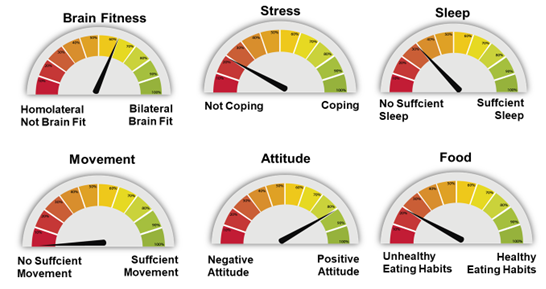
The point of departure for people developing and improving their neuro-agility is to start with optimizing the drivers that increase their brain performance and subsequently their overall brain fitness. These drivers are:

The point of departure for people developing and improving their neuro-agility is to start with optimizing the drivers that increase their brain performance and subsequently their overall brain fitness. These drivers are:

  • Content

    brain fitness

    brain fitness

  • Content

    proactive stress coping skills

    proactive stress coping skills

  • Content

    sleep

    sleep

  • Content

    movement

    movement

  • Content

    mindset/attitude

    mindset/attitude

  • Content

    brain food.

    brain food.

Neuro-Agility: A New Paradigm for Safeguarding Learning Organizations-Neuro-Agility Drivers.png

Content

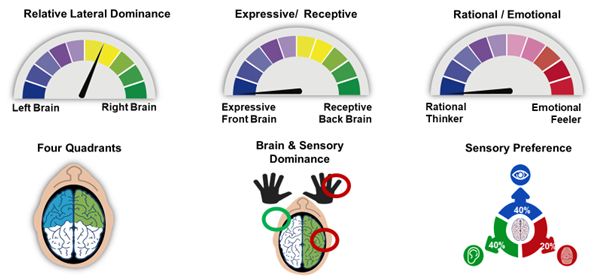
The neuro-design dimension of the neuro-agility framework consists of a set of seven neurophysiological attributes that impact people’s unique learning ability and agility, risk for human error, and how they process information. In addition to 11 intelligence preferences, these neuro-design components are:

The neuro-design dimension of the neuro-agility framework consists of a set of seven neurophysiological attributes that impact people’s unique learning ability and agility, risk for human error, and how they process information. In addition to 11 intelligence preferences, these neuro-design components are:

  • Content

    relative lateral dominance

    relative lateral dominance

  • Content

    expressive-receptive preference

    expressive-receptive preference

  • Content

    four quadrant neo-cortex preferences

    four quadrant neo-cortex preferences

  • Content

    rational-emotional preference

    rational-emotional preference

  • Content

    brain and sensory dominance combination

    brain and sensory dominance combination

  • Content

    sensory preference.

    sensory preference.

Neuro-Agility: A New Paradigm for Safeguarding Learning Organizations-Neuro Design Components.png

Content

Using our neuro-agility framework to assess individual and organizational neuro-agility fills a gap in our understanding of why some people learn faster and are more flexible in learning both within and across situations than others. The conceptual framework of neuro-agility offers innovative solutions to identify people’s unique learning potential, increase their learning ability, and optimize their learning agility. This conceptual framework provides a fresh, neuroscience approach on how to develop talent, improve performance, and reduce risk for human error. It also contributes to significantly increasing a company’s return on their investments as the concept of neuro-agility is grounded in neuroscience, helping them to separate fact from fiction.

Using our neuro-agility framework to assess individual and organizational neuro-agility fills a gap in our understanding of why some people learn faster and are more flexible in learning both within and across situations than others. The conceptual framework of neuro-agility offers innovative solutions to identify people’s unique learning potential, increase their learning ability, and optimize their learning agility. This conceptual framework provides a fresh, neuroscience approach on how to develop talent, improve performance, and reduce risk for human error. It also contributes to significantly increasing a company’s return on their investments as the concept of neuro-agility is grounded in neuroscience, helping them to separate fact from fiction.

Content

The neuro-agility assessment and skill set integrates easily with global talent selection, talent development, performance improvement, learning practices, and initiatives. Developing neuro-agility as a fundamental skill set for all people in an organization that wants to build a culture of learning and future-proof its business against disruptive change is not negotiable, but mandatory.

The neuro-agility assessment and skill set integrates easily with global talent selection, talent development, performance improvement, learning practices, and initiatives. Developing neuro-agility as a fundamental skill set for all people in an organization that wants to build a culture of learning and future-proof its business against disruptive change is not negotiable, but mandatory.

Content

A neuroscience approach to building a culture of learning requires commitment and support from leadership to make learning part of the organization’s strategic success. It's also important to integrate learning with talent management in support of capability development to improve individual and organizational performance and drive business results. In this effort, the organizational will need to create personalized development plans for every employee. Here are some details to keep in mind:

A neuroscience approach to building a culture of learning requires commitment and support from leadership to make learning part of the organization’s strategic success. It's also important to integrate learning with talent management in support of capability development to improve individual and organizational performance and drive business results. In this effort, the organizational will need to create personalized development plans for every employee. Here are some details to keep in mind:

  • Content

    One cannot improve what one cannot measure. Measure the drivers that optimize brain performance and the neuro-design components that influence their unique learning potential, ability, and agility.

    One cannot improve what one cannot measure. Measure the drivers that optimize brain performance and the neuro-design components that influence their unique learning potential, ability, and agility.

  • Content

    Create individual pathways of learning based on peoples’ unique design and potential.

    Create individual pathways of learning based on peoples’ unique design and potential.

  • Content

    Get accountability for the learning specified in those plans.

    Get accountability for the learning specified in those plans.

  • Content

    Optimize drivers that impact brain performance.

    Optimize drivers that impact brain performance.

  • Content

    Develop skills to integrate the neurophysiological components of learning.

    Develop skills to integrate the neurophysiological components of learning.

  • Content

    Unlearn old habits.

    Unlearn old habits.

  • Content

    Learn most desired skills to future-proof the organization and improve learning ease, speed, and flexibility.

    Learn most desired skills to future-proof the organization and improve learning ease, speed, and flexibility.

  • Content

    Monitor, reinforce, reward, and recognize employee learning.

    Monitor, reinforce, reward, and recognize employee learning.

Content

In addition, L&D leaders will need to create organizational awareness about the value of neuro-agility as the cornerstone for becoming and staying a learning organization. Developing neuro-agility, learning agility, and learning ability competencies should be an organization-wide initiative as it is relevant and applicable to all employees. Assimilate information from individual assessments and create an overview of the organization’s neuro-agility and learning agility. You also should set neuro-agility development goals and targets, and create a neuro-agility implementation strategy that integrates with talent selection, talent management, wellness, reducing risk for human error, learning and development, leadership development, and culture of learning development initiatives. As you move forward, don't forget to measure progress and results. These assessments will help you adjust, realign, and continuously develop your efforts.

In addition, L&D leaders will need to create organizational awareness about the value of neuro-agility as the cornerstone for becoming and staying a learning organization. Developing neuro-agility, learning agility, and learning ability competencies should be an organization-wide initiative as it is relevant and applicable to all employees. Assimilate information from individual assessments and create an overview of the organization’s neuro-agility and learning agility. You also should set neuro-agility development goals and targets, and create a neuro-agility implementation strategy that integrates with talent selection, talent management, wellness, reducing risk for human error, learning and development, leadership development, and culture of learning development initiatives. As you move forward, don't forget to measure progress and results. These assessments will help you adjust, realign, and continuously develop your efforts.

Content

Want to learn more? Join me at the 2018 India Summit . We will be meeting in Mumbia on September 18 and Bangalore on September 20.

Want to learn more? Join me at the 2018 India Summit. We will be meeting in Mumbia on September 18 and Bangalore on September 20.

You've Reached ATD Member-only Content

Become an ATD member to continue

Already a member?Sign In


Copyright © 2026 ATD

ASTD changed its name to ATD to meet the growing needs of a dynamic, global profession.

Terms of UsePrivacy NoticeCookie Policy