ATD, association for talent development

ATD Blog

The ROI of a Growth Mindset: How It Pays Off for Organizations

Content

Let’s explore what a growth mindset is—and how it can benefit organizations.

Let’s explore what a growth mindset is—and how it can benefit organizations.

By

Thu Nov 21 2024

Investing money concept. Growing money, having resources and getting monetization. Watering sprout. Green plant with coins.Copyright(C)2000-2006 Adobe Systems, Inc. All Rights Reserved.
Loading...

Content

It’s another weekly team meeting. The team is caught up in a project that keeps delivering the same underwhelming results. Suddenly, a team member presents a fresh idea—one that might actually breathe new life into the project. Instead of doubt or hesitation, the room is full of excitement. Colleagues jump in, voice their thoughts, and build on the concept, while leadership is eager to explore it further. Sounds ideal, right?

It’s another weekly team meeting. The team is caught up in a project that keeps delivering the same underwhelming results. Suddenly, a team member presents a fresh idea—one that might actually breathe new life into the project. Instead of doubt or hesitation, the room is full of excitement. Colleagues jump in, voice their thoughts, and build on the concept, while leadership is eager to explore it further. Sounds ideal, right?

Content

That’s a perfect example of a growth mindset embedded into company culture .

That’s a perfect example of a growth mindset embedded into company culture.

Content

It’s a culture that encourages new initiatives, embraces challenges, and sees failures as growth opportunities. Let’s explore what a growth mindset is—and how it can benefit organizations.

It’s a culture that encourages new initiatives, embraces challenges, and sees failures as growth opportunities. Let’s explore what a growth mindset is—and how it can benefit organizations.

Growth Mindset Definition

Content

As psychologist Carol Dweck defines it , the growth mindset is based on the belief that abilities, intelligence, and skills can be developed through dedication, hard work, and persistence. Now, how does that translate into the workplace? Quite simply, it’s about creating an environment where everyone feels excited—and unafraid—to embrace the challenge of learning something new at every opportunity.

As psychologist Carol Dweck defines it, the growth mindset is based on the belief that abilities, intelligence, and skills can be developed through dedication, hard work, and persistence. Now, how does that translate into the workplace? Quite simply, it’s about creating an environment where everyone feels excited—and unafraid—to embrace the challenge of learning something new at every opportunity.

Benefits of a Growth Mindset Culture for Organizations

Content

Senior leaders see a clear connection between building a growth mindset culture and achieving better results. In fact, in recent TalentLMS research on growth mindset at work , 88 percent of executives agree that a growth mindset is important for organizational success.

Senior leaders see a clear connection between building a growth mindset culture and achieving better results. In fact, in recent TalentLMS research on growth mindset at work, 88 percent of executives agree that a growth mindset is important for organizational success.
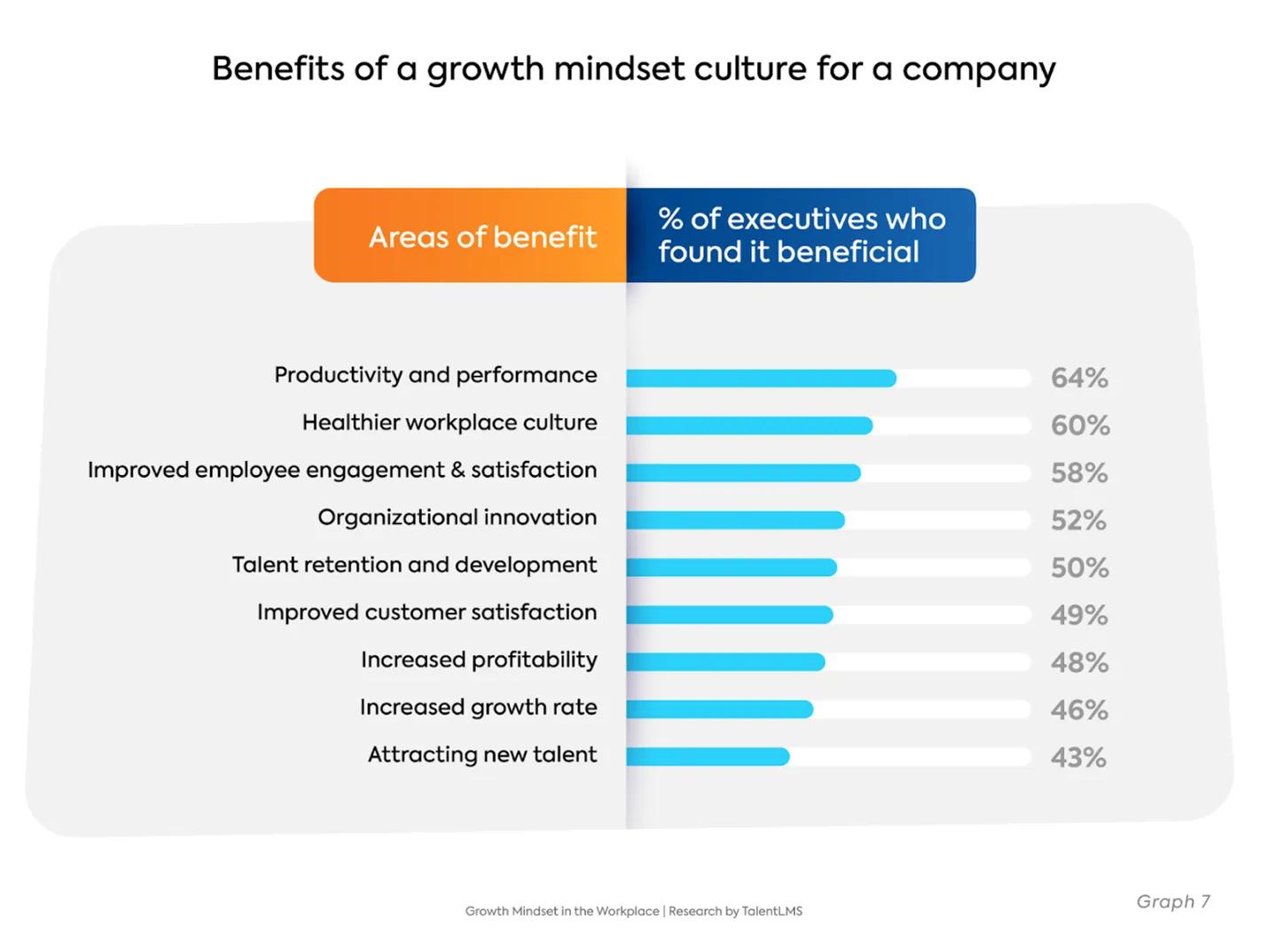
Stats from Talent LMS report that explores benefits of a growth mindset culture

Content

What’s more, over half of the respondents report tangible business gains like higher employee engagement, increased productivity, and healthier workplace culture. Let’s examine the top five benefits in more detail:

What’s more, over half of the respondents report tangible business gains like higher employee engagement, increased productivity, and healthier workplace culture. Let’s examine the top five benefits in more detail:

1. Boosted Productivity and Performance

Content

Growth-minded employees welcome constructive feedback and don't let failures bring them down. Instead, they’re the ones who ask:

Growth-minded employees welcome constructive feedback and don't let failures bring them down. Instead, they’re the ones who ask:

  • Content

    “How can I do this better next time?”

    “How can I do this better next time?”

  • Content

    “What else can I learn?”

    “What else can I learn?”

Content

This mindset naturally leads to higher productivity as they find new ways to get things done and push themselves beyond their comfort zone. For instance, a software development team that cultivates a growth mindset might experiment with new coding practices. As a result, they could reduce their project completion time, enabling faster delivery of new features.

This mindset naturally leads to higher productivity as they find new ways to get things done and push themselves beyond their comfort zone. For instance, a software development team that cultivates a growth mindset might experiment with new coding practices. As a result, they could reduce their project completion time, enabling faster delivery of new features.

2. Healthier Workplace Culture

Content

A growth mindset creates a workplace where collaboration beats competition. Colleagues don’t see each other as rivals. Instead, they celebrate wins together and face challenges as a team. In such settings, teams often host “failure celebrations,” where they openly discuss unsuccessful projects and share the insights gained from those experiences. This supportive environment encourages open communication and trust, leading to stronger team bonds, and, ultimately, a healthier workplace culture.

A growth mindset creates a workplace where collaboration beats competition. Colleagues don’t see each other as rivals. Instead, they celebrate wins together and face challenges as a team. In such settings, teams often host “failure celebrations,” where they openly discuss unsuccessful projects and share the insights gained from those experiences. This supportive environment encourages open communication and trust, leading to stronger team bonds, and, ultimately, a healthier workplace culture.

3. Improved Employee Engagement and Satisfaction

Content

A growth mindset culture encourages individuals to view feedback as a chance for growth. When employees see their skills developing, they become more connected to their work and committed to the organization’s goals.

A growth mindset culture encourages individuals to view feedback as a chance for growth. When employees see their skills developing, they become more connected to their work and committed to the organization’s goals.

Content

For example, in a growth-minded customer support department, the team holds regular “learning circles” to discuss challenging interactions. If an employee struggles with a complex customer issue, they present it to the group, and everyone shares insights and alternative approaches.

For example, in a growth-minded customer support department, the team holds regular “learning circles” to discuss challenging interactions. If an employee struggles with a complex customer issue, they present it to the group, and everyone shares insights and alternative approaches.

Content

As team members feel supported and empowered, their engagement and job satisfaction increase.

As team members feel supported and empowered, their engagement and job satisfaction increase.

4. Innovative Risk-Taking

Content

A growth mindset culture encourages employees to take risks. When faced with obstacles, growth-minded individuals don’t get discouraged. Instead, they analyze what went wrong and identify valuable lessons.

A growth mindset culture encourages employees to take risks. When faced with obstacles, growth-minded individuals don’t get discouraged. Instead, they analyze what went wrong and identify valuable lessons.

Content

This approach can lead to the development of unique products, services, or processes that would not have emerged in a more risk-averse environment.

This approach can lead to the development of unique products, services, or processes that would not have emerged in a more risk-averse environment.

Content

For example, an HR team might decide to implement a new onboarding process using virtual reality to create an immersive experience for new hires. This would lead to higher knowledge retention and foster strong new-hire engagement from day one.

For example, an HR team might decide to implement a new onboarding process using virtual reality to create an immersive experience for new hires. This would lead to higher knowledge retention and foster strong new-hire engagement from day one.

5. Higher Talent Retention and Development

Content

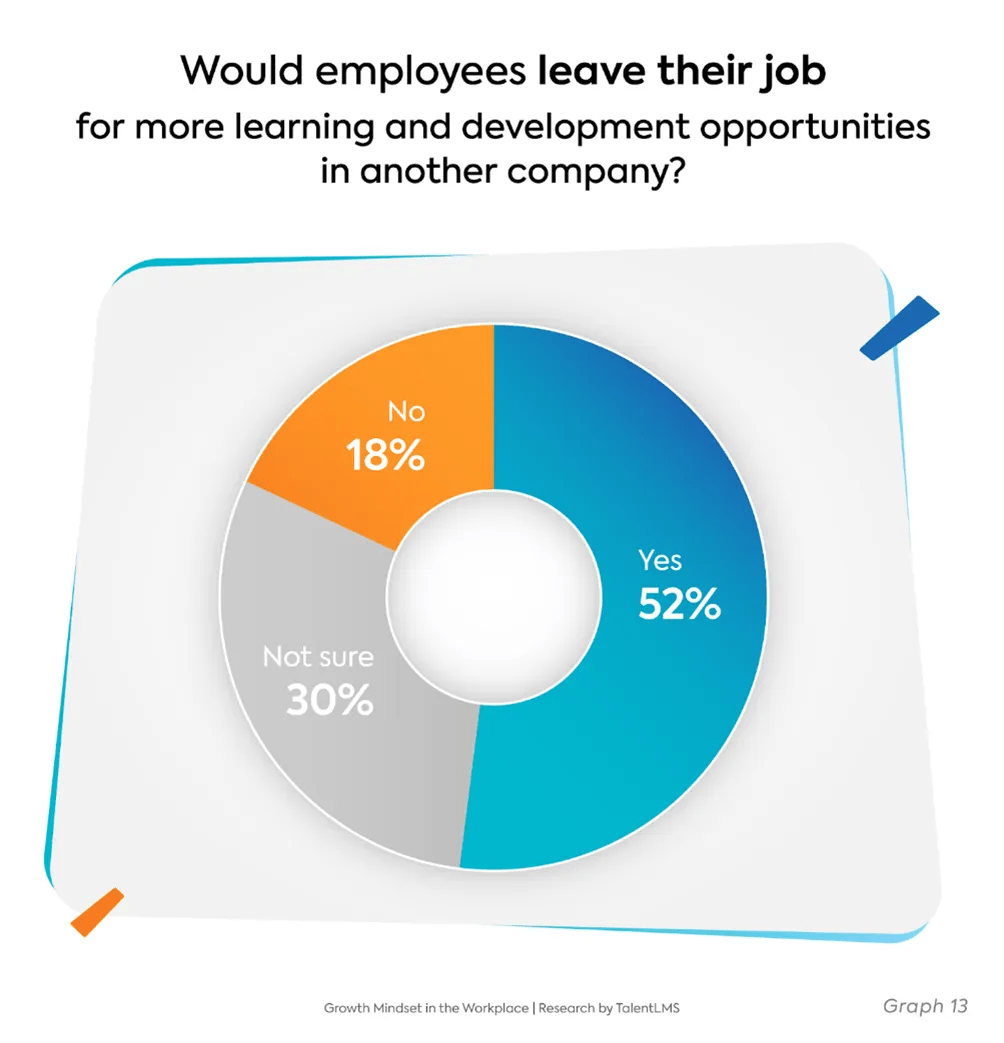
When organizations offer learning opportunities, like training sessions or mentorship, it shows employees that they’re valued. As a result, employees stay loyal to a company that invests in their development. It should come as no surprise that 52 percent of employees would quit their current positions to work for a company that offers more learning opportunities.
When organizations offer learning opportunities, like training sessions or mentorship, it shows employees that they’re valued. As a result, employees stay loyal to a company that invests in their development. It should come as no surprise that 52 percent of employees would quit their current positions to work for a company that offers more learning opportunities.

Stats from 2024 Talent LMS report that examines number of employees would consider leaving an organization and why

Building a Growth Mindset Culture

Content

So, how can organizations cultivate this valuable mindset? It all starts at the top.

So, how can organizations cultivate this valuable mindset? It all starts at the top.

Content

“ As leaders, we must embody this growth mindset and lead by example, ” says Nikhil Arora, CEO at Epignosis, the parent company of TalentLMS . “ We must be the first to embrace new challenges, to admit our mistakes, and to celebrate the learning process. By doing so, we create an environment where everyone feels empowered to be bold and get out of their comfort zones. ”

As leaders, we must embody this growth mindset and lead by example,” says Nikhil Arora, CEO at Epignosis, the parent company of TalentLMS. “We must be the first to embrace new challenges, to admit our mistakes, and to celebrate the learning process. By doing so, we create an environment where everyone feels empowered to be bold and get out of their comfort zones.

Content

In addition, having a robust learning and development program in place is key to:

In addition, having a robust learning and development program in place is key to:

  • Content

    Investing in a learning management platform

    Investing in a learning management platform

    Content

    so employees can access different training materials

    so employees can access different training materials

  • Content

    Encouraging cross-departmental and job-shadowing projects

    Encouraging cross-departmental and job-shadowing projects

  • Content

    Scheduling regular brainstorming sessions where all ideas are welcomed without judgment

    Scheduling regular brainstorming sessions where all ideas are welcomed without judgment

  • Content

    Fostering safe spaces for exploring new ideas—even the bold or untested ones

    Fostering safe spaces for exploring new ideas—even the bold or untested ones

Embrace Growth, Reap the Rewards

Content

With 80 percent of executives linking a growth mindset directly to revenue growth, TalentLMS research shows that the impact on ROI is clear. When organizations and their employees see challenges as chances to learn, they create a cycle of improvement and innovation that pays off: higher productivity, more engaged employees, and improved retention—all of which impact the bottom line and contribute to organizational success.

With 80 percent of executives linking a growth mindset directly to revenue growth, TalentLMS research shows that the impact on ROI is clear. When organizations and their employees see challenges as chances to learn, they create a cycle of improvement and innovation that pays off: higher productivity, more engaged employees, and improved retention—all of which impact the bottom line and contribute to organizational success.

You've Reached ATD Member-only Content

Become an ATD member to continue

Already a member?Sign In


Copyright © 2026 ATD

ASTD changed its name to ATD to meet the growing needs of a dynamic, global profession.

Terms of UsePrivacy NoticeCookie Policy